2026 Best Solid Wood Doors for Global Buyers

Global buyers are examining Solid Wood Doors more carefully in 2026. Price alone no longer proves value. Buyers now compare timber origin, moisture control, joinery, finishing systems, fire performance, and after-sales support. A heavy oak door may look impressive in a showroom, yet perform poorly after shipment if its moisture content is unsuitable. Small details matter.

Grand View Research’s Wood Doors Market Size, Share and Trends Analysis Report identifies renovation, premium residential construction, and sustainability as important market drivers. The Forest Stewardship Council’s latest market information also highlights the growing role of certified forests and traceable timber. These reports support a practical point: responsible sourcing is becoming a purchasing requirement, not a decorative claim. Buyers should request certification evidence, technical sheets, and test documentation.

Scott Sidler, a historic-building specialist and author of The Craftsman Blog, often repeats this warning: “Old houses were built to breathe.” His observation is relevant to modern doors. Timber needs balanced moisture conditions, correct sealing, and installation gaps. Otherwise, warping can appear around the hinges or along the lower rail.

This guide compares the 2026 best Solid Wood Doors for global buyers. It considers durability, design flexibility, acoustic comfort, climate suitability, and supplier reliability. No ranking is perfect. Product performance can change between factories, species, and regions. That uncertainty deserves attention. Good buying decisions come from verified evidence, not polished photographs.
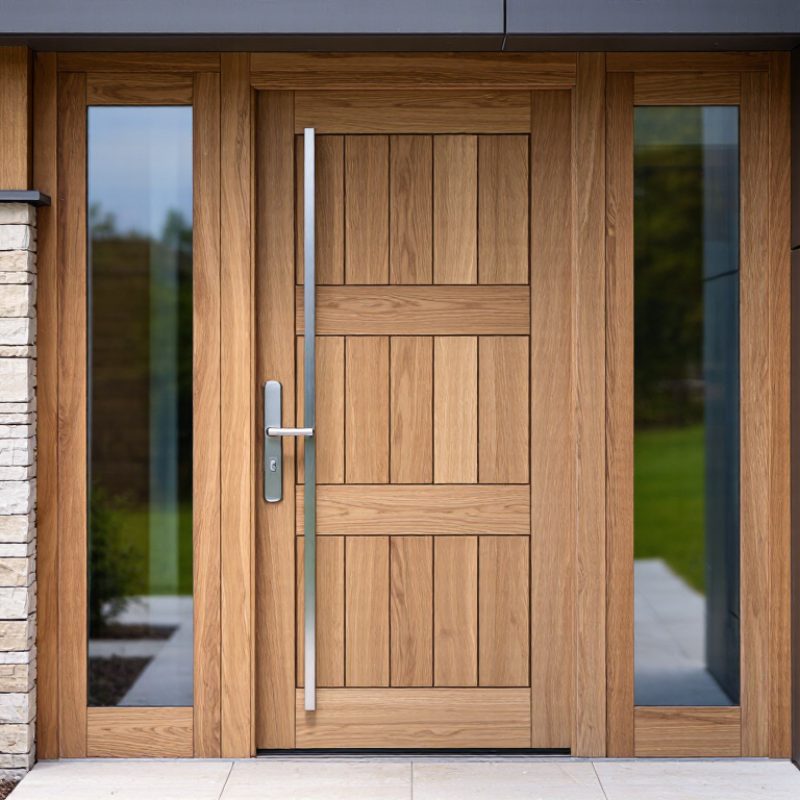
2026 Best Solid Wood Doors for Global Buyers

What Defines a High-Quality Solid Wood Door in 2026

What Defines a High-Quality Solid Wood Door in 2026

A high-quality solid wood door begins with controlled timber, not attractive grain alone. The USDA Forest Products Laboratory’s Wood Handbook explains that wood remains hygroscopic and changes size as moisture shifts below fiber saturation, near 30% moisture content. Reliable manufacturers therefore kiln-dry boards and verify moisture before assembly. For many interior applications, 6–8% moisture is a practical target, but climate matters. A door shipped to a humid coast may need different conditioning than one entering a dry continental region.

Construction reveals more than surface finish. Stable stiles, rails, and panels should be properly joined, with movement allowed rather than trapped. Uneven gaps, twisting, or end checks are warning signs. Small details matter. Inspect the hinge edge and bottom rail.

The 2023 Global Status Report for Buildings and Construction reported that buildings consumed about 30% of global final energy and produced approximately 26% of energy-related emissions. A well-fitted door cannot transform a building alone, yet accurate tolerances, perimeter seals, and low-maintenance coatings can reduce drafts and replacement waste. Buyers should request test methods, moisture records, coating specifications, and dimensional tolerances—not only a product photograph. Certifications can support responsible sourcing, but they do not prove joinery quality. That distinction is often missed. Even premium timber can fail when installation ignores local humidity, drainage, or seasonal movement.

Key Wood Species and Their Performance for Global Climates

Solid wood doors behave differently as climate changes. Moisture movement matters more than appearance. The USDA Forest Products Laboratory Wood Handbook reports that wood reaches about 9% moisture content near 20°C and 50% relative humidity. Coastal homes can exceed that level for long periods.

Teak offers strong dimensional stability, with approximately 7% volumetric shrinkage in USDA data. It suits humid regions, exposed entrances, and buildings with limited climate control. Oak provides higher hardness and impact resistance, but its reported volumetric shrinkage is roughly 15%. It needs careful sealing in tropical or sharply seasonal climates. Mahogany is lighter and relatively stable, making it practical for wide door leaves. Species names still require verification, because commercial grades can vary.

Cold, dry regions create a different risk. Heated interiors may pull moisture from the door, causing joints to open or panels to crack. The International Energy Agency reports that space cooling demand has increased rapidly worldwide, adding more hot, humid operating environments. A door with a sealed end grain, balanced construction, and movement allowance usually performs better than a thicker door without them.

This is where specifications often fail. Buyers may compare hardness but ignore moisture content at installation. That mistake is expensive. Measure local humidity, confirm kiln-dried moisture levels, and request tested coatings. No species wins everywhere. Even stable teak can distort when installation details are poor.

Essential Design, Construction, and Security Features

2026 Best Solid Wood Doors for Global Buyers

A reliable solid wood door begins with properly seasoned timber. Moisture content should match the installation climate. This reduces swelling, shrinking, and twisting. Choose stable construction, such as laminated wood layers or carefully joined hardwood sections. Traditional mortise-and-tenon joints can provide strength when made accurately. They also require skilled workmanship.

Design should support daily use, not only appearance. Deep panels, clear grain, and low-VOC finishes can create a warm entrance. A wider stile gives the door a stronger visual balance. Weather-facing doors need sealed edges, raised thresholds, and water-resistant coatings. Small details matter. Even a beautiful door may fail when its bottom edge absorbs rain.

Security depends on the complete assembly. Select reinforced hinge areas, a strong strike plate, and a tested multi-point locking system. Glazing should use safety-rated glass when included. The frame must be anchored firmly to the surrounding wall.

If fire performance is required, specify a tested door-and-frame assembly, not an attractive door alone. Local climate and building requirements can change the correct specification.

I have seen buyers focus on timber species and overlook installation quality. That mistake is expensive. No solid wood door stays perfect without maintenance. Seasonal movement remains possible. A careful inspection every year can reveal loose hardware, worn seals, or early finish damage. неприխ

How to Compare Suppliers, Certifications, and Total Costs

For global buyers, solid wood door comparison should begin with evidence, not photographs. The FAO Global Forest Products Facts and Figures 2023 reports global roundwood production above 3.8 billion cubic metres in 2022. That scale makes timber traceability essential. Request the species, harvest region, moisture range, and chain-of-custody certificate. FSC or PEFC documentation can support responsible sourcing. However, a certificate does not guarantee perfect machining or stable installation.

Check technical compliance by destination. EN 14351-1 may apply to external pedestrian doorsets in relevant European markets. Other regions may require local fire, weather, or structural testing. Ask for laboratory reports, test dates, sample sizes, and product scope. ISO 9001 certification indicates a quality-management system, not flawless doors. Measure warpage, joint gaps, coating thickness, and moisture content on delivered samples. Small details matter.

Total cost is wider than the factory quotation. Add crating, ocean freight, insurance, customs duties, port handling, local delivery, installation, and possible replacement panels. The World Bank Logistics Performance Index 2023 compares customs, infrastructure, shipment reliability, and timeliness across international markets. Use it to question optimistic delivery promises. A cheaper door can become expensive after storage delays or poor packaging. I would also request a written tolerance policy, although many suppliers resist precise limits. That resistance deserves attention. Prices alone are rarely comparable.

Installation, Maintenance, and Long-Term Performance Considerations

2026 Best Solid Wood Doors for Global Buyers

Installation, Maintenance, and Long-Term Performance Considerations

A solid wood door can last decades, but only when installation matches the building’s climate. I have seen doors swell after rainy-season delivery because installers skipped acclimatization. Store slabs flat and raised from concrete for at least 48 hours indoors. In humid regions, longer conditioning may be safer. Measure the opening twice. Leave the recommended clearance around the slab. Use corrosion-resistant hinges and screws where salt air is common. A heavy door also needs a reinforced frame. Otherwise, alignment problems appear early.

Maintenance should begin before the first visible crack. Check edges, joints, hinges, and the lower rail every six months. Clean with a soft, slightly damp cloth. Avoid soaking the timber. Recoat exposed surfaces when the finish becomes thin, dull, or uneven. Pay special attention to the bottom edge, which often receives less protection. Small scratches should be sealed quickly. They can become moisture paths. Local temperature changes matter too. Heating and air conditioning may dry the wood unevenly.

Long-term performance depends on moisture control, stable hardware, and correct drainage near the entrance. A door exposed to direct sun may need a more UV-resistant finish. Coastal homes require more frequent hardware inspections. Thermal and acoustic performance also depend on frame sealing, not just timber thickness. My practical concern is that buyers sometimes focus on appearance first. That choice can be expensive later. Even excellent wood cannot correct a poorly prepared opening.

2026 Best Solid Wood Doors for Global Buyers - Installation, Maintenance, and Long-Term Performance Considerations

Comparative reference for selecting solid wood door materials by climate, installation conditions, maintenance requirements, and expected long-term performance.
Wood Species Typical Air-Dry Density
(kg/m³)
Janka Hardness
(approx. lbf)
Dimensional Stability Natural Decay Resistance Recommended Door Applications Installation Considerations Maintenance Frequency Long-Term Performance Notes
White Oak 680–770 1,360 Good High Exterior entry doors, high-traffic interior doors, humid or variable climates Use properly kiln-dried stock, sealed end grain, corrosion-resistant hardware, and a weather-shedding overhang outdoors. Inspect annually; renew exterior finish approximately every 2–5 years depending on exposure. Dense and durable. Open grain should be fully sealed to limit moisture exchange and surface checking.
Red Oak 630–710 1,290 Moderate Low to moderate Interior doors and protected entry doors in relatively dry or sheltered locations Allow acclimatization before fitting and provide complete finish coverage, especially on edges and bottom rails. Dust regularly; inspect finish annually; refinish exterior surfaces approximately every 1–3 years when exposed. Strong and widely available, but its more open cellular structure requires careful moisture protection outdoors.
Teak 610–750 1,070 Very good High Exterior doors, coastal environments, tropical climates, and locations with frequent wetting Use stainless or suitably corrosion-resistant fasteners; predrill hardware locations because of the wood’s natural oils. Clean and inspect annually; clear finishes generally need more frequent renewal than weathering to a natural silver-gray surface. Excellent outdoor durability when responsibly sourced and detailed to drain water away from joints.
Genuine Mahogany 480–650 900 Good to very good High Exterior entry doors, decorative doors, and warm or humid climates Use stable, kiln-dried material; seal all six sides where possible and protect exposed joinery from standing water. Inspect every 6–12 months; exterior film finishes commonly require renewal every 2–4 years. Good workability and weather performance, with durability strongly affected by finish quality and water management.
Black Walnut 570–660 1,010 Good Moderate Premium interior doors and protected exterior doors Use UV-resistant finishes for exterior use; avoid direct ground contact and continuously wet conditions. Interior cleaning as needed; inspect exterior finish annually and renew approximately every 2–4 years. Stable, attractive, and dimensionally reliable for interiors, but less suitable than highly decay-resistant species for exposed exteriors.
Ash 600–700 1,320 Moderate Low Interior doors, covered porches, and dry or temperate environments Maintain consistent indoor humidity and apply complete edge sealing; avoid unprotected exterior exposure. Interior inspection every 12 months; refinish when wear or coating failure becomes visible. High strength and shock resistance, but limited natural decay resistance makes drainage and coating essential outdoors.
Douglas Fir 480–560 660 Good Low to moderate Interior doors, sheltered exterior doors, and projects prioritizing structural stiffness Use vertical-grain or carefully selected stock where possible; seal end grain and protect the bottom edge from splashback. Inspect annually; exterior coatings may require renewal every 1–3 years depending on solar and moisture exposure. Good stiffness-to-weight ratio and workability, but exposed applications need disciplined finishing and water control.
Pine 350–550 380–690 Moderate Low Interior doors, low-impact residential use, and protected entry doors Use sound, kiln-dried boards; provide adequate hinge support and protect soft edges from impact during installation. Inspect annually; repair dents and renew exterior finishes approximately every 1–3 years when exposed. Cost-effective and easy to machine, but softer surfaces dent more easily and require stronger moisture protection.
Installation, Maintenance, and Performance Reference
Performance Dimension Recommended Practice Typical Reference Value or Interval Why It Matters
Moisture Content Before Installation Verify that the door has acclimatized to the building environment before final fitting. Common interior target: approximately 6–8%; many exterior projects use approximately 8–12%, adjusted for local climate. Installing wood that is too wet or too dry can lead to later shrinkage, swelling, joint opening, or sticking.
Acclimatization Store the door flat on level supports in a dry, ventilated space, away from direct heat and sunlight. Often 3–7 days; longer periods may be appropriate after major climate changes or for thick door slabs. Allows the wood to approach the moisture conditions of the installation site before machining and hanging.
Door Clearances Set clearances according to local building practice, climate, threshold design, and manufacturer tolerances. A commonly used starting range is about 3 mm at head and jambs, with bottom clearance determined by flooring and threshold conditions. Proper clearance reduces seasonal binding while limiting drafts, light gaps, and excessive air leakage.
Finish Coverage Coat both faces, all edges, cutouts, hinge recesses, and hardware penetrations with a compatible finish system. Use at least the finish system’s specified number of coats; inspect high-exposure surfaces every 6–12 months. Unsealed edges and end grain absorb moisture rapidly and are common locations for swelling and coating failure.
Exterior Weather Protection Combine a roof overhang or canopy, sloped sill, positive drainage, flexible weather seals, and UV-resistant coating. Maintenance intervals commonly range from 1–5 years, depending on sun, rain, salt, altitude, and finish type. Good detailing usually extends service life more effectively than wood species selection alone.
Hardware and Hinge Support Use hinges sized for the door’s weight and thickness, and reinforce high-load areas where required. Three hinges are commonly used for many standard doors; heavier or taller doors may require additional hinges. Correct support helps prevent sagging, latch misalignment, uneven gaps, and premature frame stress.
Routine Cleaning Use a soft cloth and mild, non-abrasive cleaner; avoid excessive water, harsh solvents, and abrasive pads. Clean as needed; inspect seals, joints, thresholds, and finish at least once each year. Early removal of dirt and moisture helps prevent staining, coating degradation, and biological growth.
Thermal and Acoustic Expectations Evaluate the complete door assembly, including slab, frame, glazing, seals, threshold, and installation quality. No universal U-value or sound rating can be assigned to wood species alone; certified assembly data should be used for compliance. Whole-assembly design determines energy efficiency, air leakage, and acoustic performance more than species alone.
Long-Term Service Life Prioritize stable material, sound joinery, complete finishing, drainage, and regular inspection. Actual life varies widely; well-maintained protected doors can remain serviceable for several decades, while exposed poorly maintained doors may deteriorate much sooner. Climate, water exposure, installation quality, maintenance, and repair response are the main life-cycle factors.
Data notes: Density and Janka hardness values are approximate typical values for commonly referenced wood populations and can vary with growing conditions, moisture content, grain orientation, and testing method. “Natural decay resistance” describes untreated heartwood behavior and does not replace proper sealing, drainage, or local building-code requirements. For international projects, confirm regional standards, fire requirements, accessibility rules, security specifications, and certified whole-door performance ratings before procurement.
'