2026 Best Window Awnings for Global Buyers?

Choosing the right Window Awnings in 2026 requires more than comparing colors, prices, and attractive product photos. Global buyers face different sunlight levels, rainfall patterns, wind conditions, building materials, and installation practices. A retractable awning that performs well in coastal Australia may struggle with freezing winters in Northern Europe. Local conditions matter.

Window Awnings can reduce direct solar heat, soften glare, and create useful outdoor comfort beside a window. They can also fail when buyers overlook fabric density, frame corrosion, drainage, or wall strength. Small details matter.

Shade-design consultant Sarah Susanka offers a useful principle: “Good design begins with understanding how people actually live.” That idea applies here. An awning should match daily routines, not merely look modern in a catalogue. A south-facing bedroom may need strong solar control. A café window may need frequent adjustment. A high-rise installation may require stricter wind monitoring and professional access.

This guide examines leading Window Awnings for global buyers in 2026. It considers fabric performance, cassette protection, motor reliability, manual operation, smart controls, maintenance, warranties, and installation support. It also compares practical value, not only the lowest purchase price.

There is no universal winner. Not even close.

Online specifications can be incomplete. Color samples may look different under intense sunlight. Warranty terms may exclude coastal exposure or improper installation. Buyers should verify these points before ordering. A careful site assessment remains more dependable than a polished product ranking. This review aims to make that assessment clearer, while acknowledging one uncomfortable truth: even excellent awnings can disappoint when selected without considering the building itself.
2026 Best Window Awnings for Global Buyers?

What Are Window Awnings and How Do They Work?

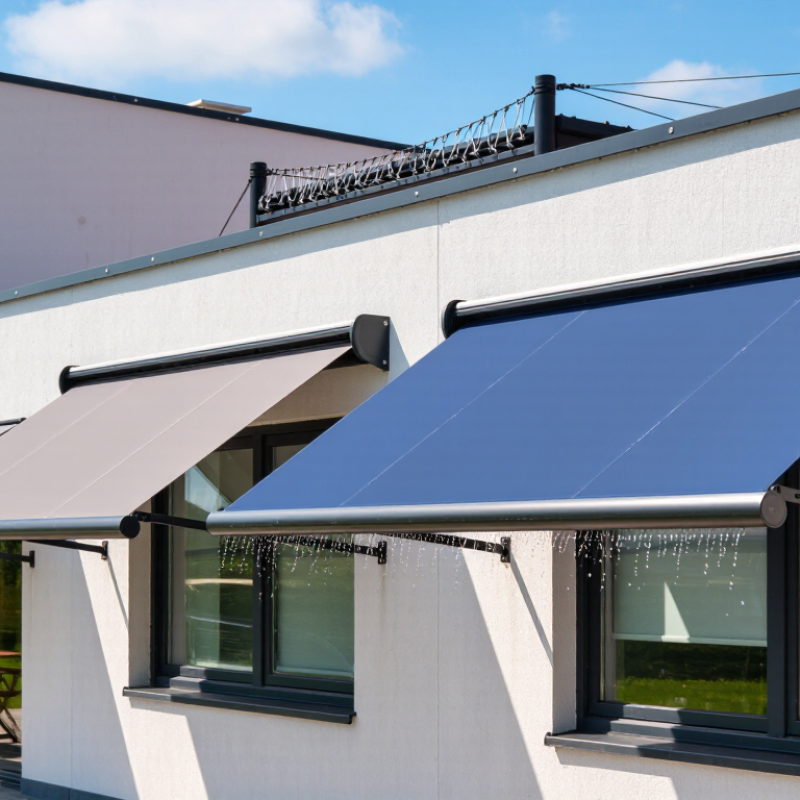
Window awnings are exterior coverings fixed above windows to control sunlight, heat, and light rain. They usually combine a metal frame with acrylic, polyester, or coated fabric. Fixed awnings remain open, while retractable models extend or roll back when needed.

The operating principle is simple. The awning projects outward and creates shade before sunlight reaches the glass. This reduces glare and can lower indoor heat during sunny hours. A sloped fabric surface also guides light rain away from the window. Some retractable systems use a manual crank, while others use a motor, wind sensor, or sun sensor. Small details matter.

In practical installations, the window’s direction, wall material, and local weather should guide the choice. A south-facing window may need deeper projection, while a windy coastal location may require stronger brackets and frequent retraction. Fabric color affects both appearance and heat control, though darker fabric can absorb more heat. An awning is not a magic shield. Strong wind, poor anchoring, or trapped moisture can shorten its service life. Wind matters most.

I have found that buyers sometimes measure only the window width. That is an avoidable mistake. Measure the frame, available wall space, projection, and mounting height. Check drainage paths too. A small installation error can leave water near the wall or block the window handle. For global buyers, material specifications, maintenance instructions, and local building requirements deserve equal attention.

Types of Window Awnings for Different Global Climates

Window awnings should match the climate, not only the facade style. In hot, dry regions, retractable fabric awnings reduce direct solar heat before it reaches the glass. Light-colored, UV-resistant fabric works well where sunlight is intense. Side screens can limit low evening sun, but they may restrict airflow. That trade-off deserves attention.

Tropical climates need fast drainage, breathable materials, and frames that resist corrosion. A steep projection helps rain leave the awning instead of pooling near the window. Coastal homes require stainless or protected hardware because salt air attacks exposed metal. In humid temperate areas, mildew-resistant fabric and regular drying are practical choices. Small gaps around the cassette can improve ventilation, although they may admit dust.

Cold regions need awnings that retract before snow or freezing rain arrives. Fixed systems must meet local wind and snow loads, not rely on appearance. In windy deserts, compact screens and reinforced arms usually outperform broad, lightweight projections. Automatic sensors add convenience, yet they can fail during outages or poor calibration. Manual override remains valuable.

A reliable selection starts with window orientation, projection depth, fabric openness, and mounting strength. South- and west-facing windows often need deeper shading in sun-heavy regions. North-facing windows may need less coverage but still benefit from glare control. Measure the wall, frame, and drainage path carefully. One common mistake is choosing maximum shade and losing daylight. Local installers should verify fasteners, wind ratings, and applicable building requirements before installation.

2026 Best Window Awnings for Global Buyers? - Types of Window Awnings for Different Global Climates

Awning Type Best Climate or Region Typical Projection Recommended Fabric or Material Main Weather Benefit Wind and Rain Considerations Solar-Control Performance Maintenance Level Best Window Applications
Retractable Folding-Arm Awning Mediterranean, warm temperate, and dry subtropical climates 1.5–4.0 m Solution-dyed acrylic fabric; powder-coated aluminum frame Reduces direct sunlight and heat gain while allowing adjustable coverage Retract during strong winds, storms, or heavy rain unless specifically engineered for exposure High when fabric is selected in a medium-to-dark solar-control color Low to moderate; clean fabric periodically and inspect joints Living rooms, balconies, patios, and large glazed openings
Cassette Retractable Awning Urban areas with variable sun, dust, and seasonal rainfall 1.5–4.0 m Acrylic or coated polyester fabric; fully enclosed aluminum cassette Protects the rolled fabric from dust, UV exposure, and light weather when retracted Wind sensors can improve convenience, but the awning should still be retracted in severe weather High; supports frequent adjustment throughout the day Low; enclosed components reduce routine cleaning needs Apartment windows, shopfronts, terraces, and exposed façades
Drop-Arm Awning Warm climates requiring shade with outward visibility 0.6–1.5 m UV-resistant acrylic or polyester textile; aluminum arms Blocks high-angle sunlight while maintaining airflow and a partially open view Suitable for sheltered façades; less suitable for highly exposed or windy elevations Moderate to high, depending on side coverage and fabric openness Low; keep fabric dry before rolling and remove accumulated dust Bedrooms, cafés, narrow windows, and ground-floor façades
Vertical Screen Awning Hot, sunny, humid, or high-glare climates 0.8–3.5 m drop Screen fabric with glass fiber or polyester reinforcement; aluminum side channels Limits glare, solar heat, and ultraviolet exposure while preserving filtered daylight Side guides improve stability; drainage and ventilation are important in humid conditions Very high when using a tightly woven exterior solar screen Moderate; inspect guides and clean mesh without abrasive products Office windows, curtain-wall glazing, west-facing rooms, and high-rise façades
Fixed Window Hood Awning Tropical, coastal, and rainy climates needing permanent protection 0.5–1.2 m Aluminum, galvanized steel, or UV-stabilized polycarbonate panels Provides continuous shade and helps divert rain away from the window Requires secure structural anchoring; use corrosion-resistant fasteners near the coast High for fixed-angle sunlight; less adaptable to seasonal sun angles Low; occasional washing and corrosion inspection are usually sufficient Kitchens, service windows, bathrooms, and façades exposed to rain
Louvered or Adjustable Slat Awning Hot climates with strong seasonal or daily changes in sun angle 0.6–1.5 m Powder-coated aluminum or treated timber with corrosion-resistant hardware Allows users to fine-tune shade, daylight, airflow, and outward visibility Fixed systems tolerate weather better; adjustable systems should be secured in high winds High when slat angle is adjusted to the sun’s position Moderate; clean slats and lubricate moving parts where permitted Modern homes, offices, façades with design requirements, and deep windows
Traditional Canvas or Fabric Canopy Dry, warm, and temperate climates with moderate exposure 0.8–2.5 m Water-repellent acrylic, polyester, or treated canvas Offers economical shading with a wide range of colors, shapes, and patterns Use adequate slope for water runoff; avoid leaving fabric wet or exposed to storms Moderate to high, depending on fabric density and color Moderate; fabric may require periodic re-treatment and mildew prevention Residential windows, small balconies, restaurants, and heritage-style buildings
Retractable Roof or Window Pergola Awning Large openings in hot, dry, or mixed climates 2.0–6.0 m PVC-coated polyester or acrylic fabric; reinforced aluminum structure Creates broad adjustable shade for wide windows, patios, and glazed extensions Needs engineered anchoring, suitable drainage, and retraction during severe wind Very high for large areas when correctly sized and tensioned Moderate to high; inspect fabric tension, tracks, drainage, and motor controls Glass extensions, conservatories, wide façades, and outdoor living areas

Note: Projection ranges are representative planning values. Final selection should consider local wind exposure, building structure, sun orientation, rainfall, corrosion risk, and applicable safety requirements.

Key Materials, Features, and Performance Factors

2026 Best Window Awnings for Global Buyers?

Choosing a window awning starts with material, not appearance. Solution-dyed acrylic resists strong sunlight and usually keeps its color longer. Coated polyester can cost less, but its finish may weaken faster in humid climates. Aluminum frames are light, corrosion-resistant, and practical near coastal areas. Steel offers greater strength, yet poor protection can lead to rust.

Performance depends on more than fabric and frame. Check the awning’s wind rating, water-shedding design, UV resistance, and mounting depth. A steep pitch helps rain move away from the wall. Sealed joints reduce moisture entry. Manual systems are simple and easier to repair. Motorized systems offer convenience, but they need protected wiring and dependable controls. Local weather records matter more than attractive product photos.

Tips: Ask for tested load data, fabric specifications, and installation guidance. Inspect the wall structure before ordering. Measure twice. Leave clearance for shutters, handles, and opened windows. Buyers in snowy regions should consider removable or retractable designs. Coastal buyers should request corrosion-resistant fasteners. Do not trust vague claims such as “all-weather.” I have seen small mounting errors create noise, sagging, and water stains. Even strong materials perform poorly when installed carelessly. Some recommendations remain uncertain because climate, wall construction, and maintenance habits differ widely.

2026 Best Window Awnings for Global Buyers

Key materials, features, and performance factors for international procurement

Solution-Dyed Acrylic

A common choice for retractable awnings because the color is integrated into the fiber. It offers good UV stability, low water absorption, and broad color availability.

PVC-Coated Polyester

Suitable where waterproofing and easy cleaning are priorities. It is often selected for wet climates, commercial installations, and high-maintenance environments.

Aluminum Components

Aluminum frames and front bars provide corrosion resistance with relatively low weight. Powder-coated finishes help protect the surface in outdoor conditions.

Selection Priorities

Compare wind class, projection, fabric openness, UV resistance, drainage behavior, mounting substrate, motor compatibility, and local installation requirements.

The chart shows the maximum wind speeds associated with EN 13561 wind resistance Classes 1–3: 28, 38, and 49 km/h respectively. Actual product performance depends on size, projection, installation quality, building exposure, and the manufacturer’s tested rating. Awnings should be retracted when wind conditions exceed their certified class.

How to Choose the Best Window Awning for Your Property

Choosing the best window awning starts with your property, not appearance. Climate matters. In hot regions, prioritize solar control, breathable fabric, and adjustable projection. In colder areas, avoid blocking useful winter sunlight. The U.S. Department of Energy reports that windows can cause 25–30% of residential heating and cooling energy use. External shading can reduce direct solar gain before heat reaches the glass.

Measure each window carefully. Record width, height, wall condition, and the required drop. A small error can leave bright gaps beside the fabric. Check the awning’s wind rating, drainage design, and mounting method, especially on upper floors. Coastal buyers should inspect corrosion resistance and fastener quality. A fabric rated for strong sun may still fade faster in humid, salty air.

Material choice requires practical judgment. Acrylic-coated textiles often provide useful UV resistance, while aluminum offers firmer structure and simpler cleaning. However, heavier systems may require reinforced masonry. Ask for tested performance data, not vague claims. Look for recognized product testing, warranty terms, installation instructions, and maintenance requirements. Energy labels for windows do not automatically prove awning performance. That distinction is easy to miss.

Control style also affects daily value. Manual operation costs less, but motorized adjustment helps manage sudden glare and changing sunlight. Sensors can react quickly, although they add maintenance points. I would not choose automation without checking local repair access. It sounds efficient. Sometimes, simple is better. The best awning balances shade, weather exposure, structural limits, and how people actually use the room.

Installation, Maintenance, and International Buying Considerations

2026 Best Window Awnings for Global Buyers?

Installation should begin with the wall, not the awning catalogue. Measure the opening, masonry condition, drainage path, and local wind exposure. The U.S. Department of Energy reports that awnings can reduce summer solar heat gain by up to 65% on south-facing windows and 77% on west-facing windows. These figures are useful, but they are not guarantees. Glass type, fabric color, projection, and nearby buildings change the result.

For international buyers, check performance standards before comparing prices. EN 13561 covers external blinds and awnings, including wind-resistance requirements. Ask for tested wind classifications, fixing instructions, fabric composition, and corrosion information. Coastal buyers need stainless or properly protected hardware. Salt air is relentless. In humid regions, allow airflow beneath the fabric and prevent water from pooling near brackets. Installation teams should verify anchors on-site, because imported drawings cannot reveal weak concrete or hollow masonry.

Maintenance is simple, but often neglected. Inspect brackets, stitching, joints, and retraction mechanisms twice yearly. Remove dust with mild soap, never aggressive solvents. The International Energy Agency’s 2024 buildings report states that buildings consume about 30% of global final energy and produce roughly 26% of energy-related emissions. External shading can support cooling efficiency, especially when used before afternoon heat arrives. Still, my practical concern remains: buyers sometimes purchase oversized awnings for maximum shade, then face stronger wind loads and difficult operation. A smaller, correctly installed awning may perform better.

'