2026 Best Inflatable Dome Buying Guide for Global Buyers
Choosing an Inflatable Dome in 2026 requires more than comparing prices and attractive photographs. Global buyers must assess design, materials, safety systems, operating conditions, and supplier reliability. A dome beside a coastal beach faces salt air, strong sunlight, and sudden gusts. A winter event may need reinforced fabric, heating compatibility, and dependable anchoring. These details can change the correct specification completely.
This buying guide explains how experienced purchasers can compare PVC or TPU fabrics, air blowers, seams, doors, windows, insulation, and emergency deflation systems. It also considers production quality, installation support, warranty terms, spare parts, and transparent technical documentation. Ask for fabric thickness, flame-performance test results, load information, and maintenance instructions. Verify every claim with current certificates and independent inspection when possible. Local building, fire, electrical, and event requirements may differ, so buyers should confirm them with qualified authorities before ordering.
Small details matter.
A reliable supplier should explain airflow rates, backup power options, repair procedures, and expected service life without vague promises. Factory photographs help, but they cannot replace a documented quality process or a realistic reference project. Even experienced buyers can overlook drainage, ground preparation, noise levels, or cleaning access. This guide is practical, but it is not perfect. Weather changes, regulations evolve, and product performance depends on correct installation. Careful questions remain essential. With disciplined comparison and professional advice, buyers can select an Inflatable Dome that is safer, more durable, and better suited to its intended use.
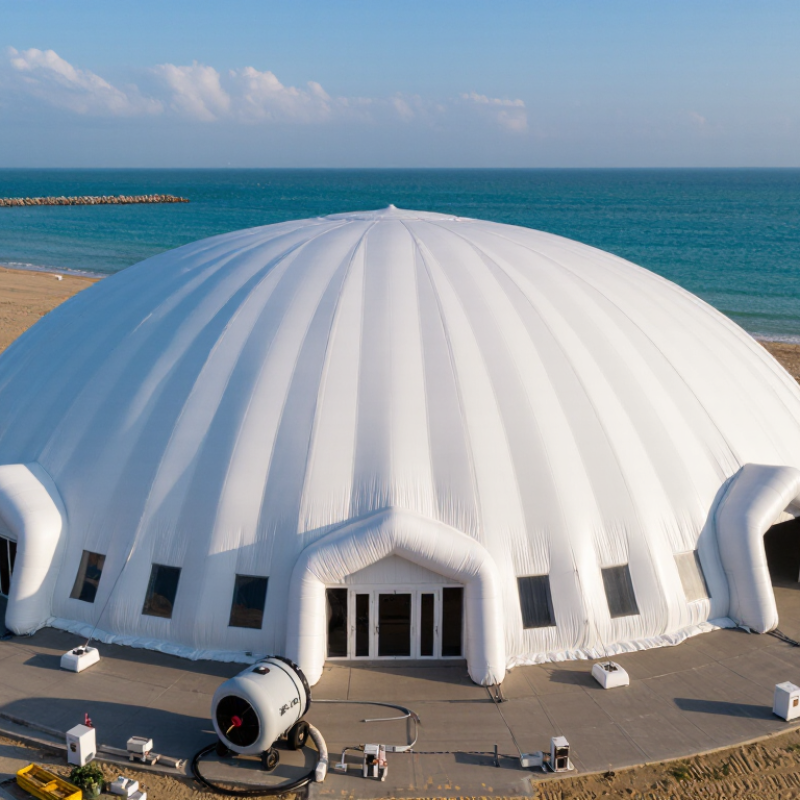
Define Dome Type, Use Case, and Capacity with NFPA 101 Egress Data
Choosing an inflatable dome starts with its use case, not its color or air pressure.
A sports dome, event venue, and temporary classroom need different layouts, fire controls, and exit plans. NFPA’s Fire Loss in the United States During 2023 report recorded about 1.39 million fires, showing why emergency movement deserves early attention. NFPA 101 is a strong reference, but the local authority having jurisdiction must approve the final design.
NFPA’s Fire Loss in the United States During 2023 report recorded about 1.39 million fires, showing why emergency movement deserves early attention.
For assembly spaces, NFPA 101 commonly uses 7 net square feet per person for concentrated seating and 15 net square feet for less concentrated areas. A 30-by-50-foot dome provides 1,500 square feet before equipment, aisles, and walls.
Its theoretical capacity could range from 100 to 214 people.
That number is not a buying promise. NFPA 101 generally requires two means of egress for occupant loads up to 500, three for 501–1,000, and four above 1,000. Door width, travel distance, emergency lighting, and anchoring still require review.
Tips:
Draw the occupied floor area first. Mark every exit and aisle. Ask the supplier for tested material performance, pressure-loss behavior, and maintenance records. A spreadsheet can still mislead. Weather, furniture, and queue lines reduce usable capacity. Keep a written calculation for the inspector, and leave room for honest correction.
Compare PVC and TPU Fabrics Using ISO 1421 Tensile-Strength Testing
For global buyers choosing an inflatable dome in 2026, fabric tensile performance deserves close attention. ISO 1421 offers a controlled method for measuring tensile strength and elongation at break in coated fabrics. The test pulls prepared strips until they fail and records force and extension. Test data matters.
PVC and TPU can behave differently under the same test conditions. PVC often provides stable dimensional control and cost efficiency. TPU may offer stronger flexibility and better resistance to repeated folding. However, coating weight, yarn structure, thickness, temperature, and manufacturing quality can change the result. A material name alone proves very little. Ask for test results in both machine and cross directions. Confirm specimen size, conditioning method, test speed, units, and failure mode. Small details change conclusions.
A strong fabric can still fail at a welded seam. Therefore, inspect panels, joints, windows, anchor points, and repair areas during purchasing. ISO 1421 does not fully simulate ultraviolet exposure, abrasion, snow loads, or thousands of inflation cycles. Our first comparison was too simple: we treated higher tensile force as automatically better. That missed controlled stretch, low-temperature flexibility, weld compatibility, and air retention. Buyers should compare independent samples under realistic service conditions, not only review supplier paperwork. A laboratory result is useful, but it is not the whole dome.
2026 Best Inflatable Dome Buying Guide for Global Buyers
Compare PVC and TPU fabrics using ISO 1421 tensile-strength testing
The chart compares representative tensile-strength values commonly specified for coated inflatable-fabric constructions when tested by ISO 1421. Values are shown in N/5 cm and separated by fabric direction. Actual performance varies with coating formulation, base cloth, thickness, test speed, and supplier specification.
Higher tensile strength can support durability under inflation and handling loads, but buyers should also evaluate air retention, seam strength, abrasion resistance, UV stability, weldability, temperature range, and total fabric weight before selecting PVC or TPU.
Verify Fire Performance Through NFPA 701 and EN 13501-1 Ratings
2026 Best Inflatable Dome Buying Guide for Global Buyers
Fire performance deserves careful verification before purchasing an inflatable dome. NFPA 701 evaluates flame propagation through certain textile and membrane materials. EN 13501-1 classifies construction products by reaction to fire, including flame spread, smoke, and burning droplets. These standards are not interchangeable. A supplier’s test report should show the exact fabric, coating, thickness, color, and production batch. Ask whether testing covered the finished membrane or only a small material sample. That difference matters.
Tips: Request current, traceable reports from an accredited laboratory. Check the standard edition, test method, classification, and validity. Confirm that seams, windows, doors, flooring, and printed graphics use compatible materials. Fire resistance can change after cleaning, repair, UV exposure, or repeated inflation. Keep the documents with the installation records. Simple, but often missed.
In practical inspections, examine seams and anchor areas closely. A compliant fabric does not automatically make every dome component fire-safe. Air pressure, ventilation, internal equipment, and evacuation planning also affect risk. EN 13501-1 ratings may apply to a specific product configuration, not the entire structure. NFPA 701 results may also depend on mounting and test conditions. Be cautious with vague claims such as “fireproof” or “internationally certified.” They sound reassuring, but they can hide limits. I would also ask for retesting after material changes. This step costs time, yet skipping it can create an expensive blind spot.
Assess Blower Pressure, Energy Use, Shipping, and Lifecycle Costs
Choosing an inflatable dome in 2026 requires more than checking its diameter and fabric thickness. Blower pressure must match the dome’s volume, entrance design, and expected weather. A unit that barely maintains pressure may sag during frequent door opening. Excess pressure can waste electricity and stress seams. Ask for tested airflow and operating pressure, not only maximum specifications. In field use, real performance often differs from a showroom demonstration.
Energy cost deserves a simple calculation. Multiply blower power by daily operating hours and local electricity rates. A 1.5-kilowatt blower running twelve hours daily consumes about 18 kilowatt-hours. Variable-speed control may reduce consumption, but savings depend on air leakage and maintenance. Keep filters clean. Small blockages can increase load quietly. I would also request noise data, because a steady mechanical hum can affect staff and visitors.
Shipping changes the purchase price significantly. Compare packed dimensions, gross weight, spare parts, and unloading requirements. A compact package may still need special handling at the destination. Confirm insurance, customs documents, delivery terms, and local import responsibilities in writing. Lifecycle costing should include anchors, repairs, replacement blowers, storage, cleaning, and eventual fabric disposal. Some estimates ignore labor, which is a serious weakness. A cheaper dome can become expensive after repeated setup, energy use, and weather-related maintenance.

 '
'
