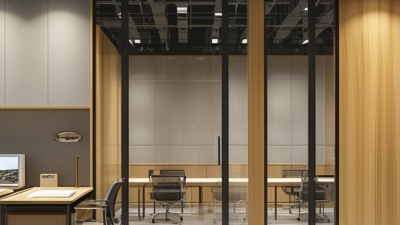
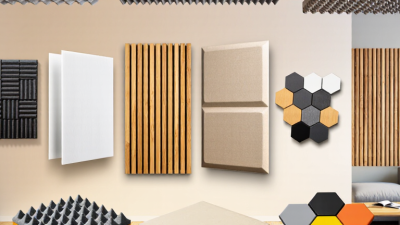
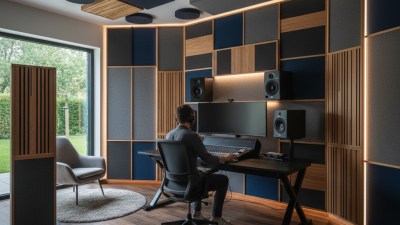
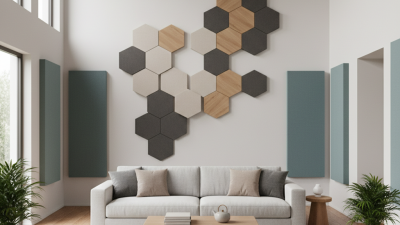
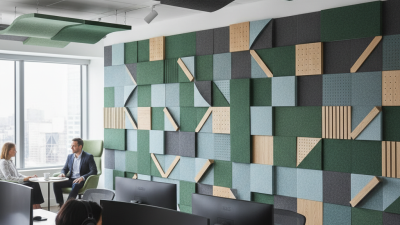
Choosing the right sound proof panels in 2026 requires more than comparing colors, thicknesses, or online prices. Global buyers need to understand how each panel performs in real spaces. A recording studio, hotel bedroom, factory office, and classroom face different noise problems. Some panels reduce echo inside a room. Others help limit sound transmission through walls, ceilings, or doors. The difference is important.
This guide examines leading panel types, including fabric-wrapped acoustic panels, polyester fiber panels, mineral wool boards, perforated wood systems, foam products, and composite barrier panels. Each option has practical strengths. A 50-millimeter fabric panel may soften speech reflections in a meeting room. A dense mineral wool core can provide stronger absorption across wider frequencies. Decorative wood panels may suit a hotel lobby, but their performance depends on backing materials and installation gaps. Materials should also be checked for fire performance, moisture resistance, durability, and indoor air quality.
Reliable purchasing decisions should use tested data, not impressive claims alone. Look for independent laboratory results, absorption ratings, transmission-loss information, and clear installation instructions. Regional building requirements may also affect acceptable materials and mounting methods. Specifications can vary between manufacturers. Product names are not always technically consistent. That is a weakness worth remembering. A panel that works well in one project may disappoint in another because of room volume, wall construction, or poor sealing around edges. This overview offers a practical comparison for architects, contractors, distributors, and facility managers seeking dependable solutions across international markets.
Soundproof Panel Basics: How Noise Control Works
Choosing the right soundproof panel begins with understanding how noise travels. Sound moves through air, walls, ceilings, floors, and tiny gaps around doors. Panels mainly control reflected sound inside a room. They reduce echo and improve speech clarity, but they do not automatically block heavy traffic or machinery noise.
Effective noise control uses three principles: absorption, mass, and separation. Fibrous or perforated panels absorb mid and high frequencies, making a room sound calmer. Dense barriers add mass and resist sound transmission. Decoupled layers reduce vibration between surfaces. Sealed edges matter greatly. A small opening can weaken an otherwise strong assembly. Low-frequency noise remains difficult. No panel solves every room.
Tips: Test the noise source before buying. Use a simple recording and inspect wall joints, vents, doors, and ceilings. For offices, fabric-faced absorbers may improve comfort. For studios, thicker panels and bass traps are often necessary. In humid regions, check moisture resistance and cleanability. Fire performance should match local building requirements. Installation errors are common, even with good materials. Measure twice. Listen again.
Global buyers should compare acoustic test data, thickness, density, mounting method, and expected frequency range. Ask for independent laboratory results when available. Product labels can sound impressive but remain incomplete. A practical on-site trial is often more useful than a perfect brochure. Budget for sealing, framing, and professional installation, not panels alone.
2026 Top Sound Proof Panel Types for Global Buyers
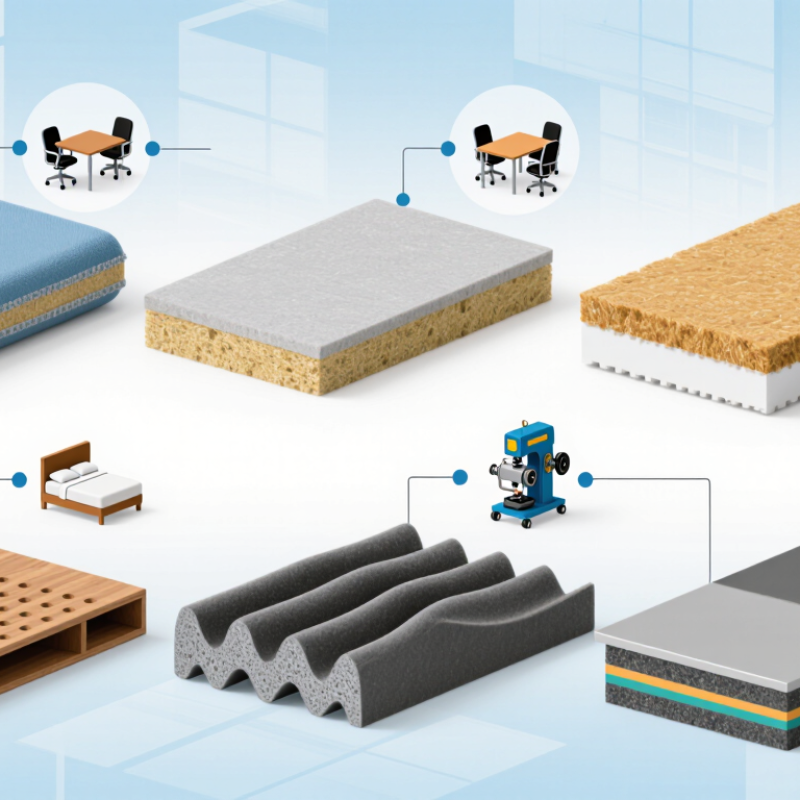
2026’s Main Soundproof Panel Types and Their Structures
Soundproof panels are not one universal product. Each structure controls noise differently. Fabric-wrapped mineral wool panels use dense fibers behind a porous textile surface. They absorb speech, machinery hum, and reverberation across mid and high frequencies. PET felt panels use compressed recycled fibers, often with layered or molded surfaces. They are lighter, safer to handle, and suitable for offices or classrooms.
Perforated wood panels combine a rigid face, drilled holes, an air cavity, and an absorptive backing. The cavity improves low-frequency performance when designed correctly. Composite panels may add mass-loaded layers, resilient channels, or gypsum skins. These systems reduce airborne transmission better than thin decorative panels. However, they usually require careful sealing around joints and penetrations.
According to the WHO Environmental Noise Guidelines, bedroom exposure should remain below 40 dB Lnight for road traffic. That target shows why absorption alone cannot solve every noise problem. It reduces reflections, but it does not block sound through walls. ISO 354 evaluates absorption in reverberation rooms, while ASTM C423 reports absorption coefficients and NRC values. Buyers should request tested data, thickness, density, fire classification, and mounting details. The numbers can mislead.
A 2024 Grand View Research analysis identifies acoustic insulation as a growing construction material segment, driven by urbanization and stricter indoor comfort expectations. Yet laboratory performance may change after installation. A panel with excellent test results can underperform beside open doors, hard ceilings, or unsealed edges. That practical gap deserves more attention.
2026 Top Sound Proof Panel Types for Global Buyers?
Comparing Panel Performance: NRC, STC, Thickness, and Density
Global buyers should separate sound absorption from sound blocking. NRC measures how much sound a panel absorbs inside a room. Higher NRC can reduce echoes around machinery, voices, or hard concrete walls. It does not prove that the panel stops sound crossing a partition. STC focuses on airborne sound transmission through walls, doors, and assemblies. This distinction is often missed.
Thickness strongly affects low-frequency absorption, especially when panels use an air gap. A 50 mm panel may control speech clearly, while deeper construction can perform better near engines or heavy equipment. Density matters, but “higher” is not automatically better. Fibrous materials need suitable airflow resistance, and rigid barriers need mass, sealed joints, and stable framing. A dense decorative panel may look impressive but perform poorly in a real wall.
During project checks, I compare laboratory reports with the intended installation. Test methods and ratings can differ between regions, so buyers should request standard references, frequency data, and field installation details. A panel tested alone may lose effectiveness when cut, compressed, or mounted without edge sealing. That is a practical weakness in many specifications. I would also inspect fire classification, moisture resistance, and mechanical durability before ordering. These factors are less visible than NRC or STC, yet they influence long-term performance in factories, offices, and transport facilities.
| Panel Type | Primary Function | Typical Thickness | Typical Density | NRC Range | STC Relevance | Typical Applications | Key Advantages | Main Limitations |
|---|---|---|---|---|---|---|---|---|
| Mineral Wool Acoustic Panel | Sound absorption and cavity treatment | 50–100 mm | 40–100 kg/m³ | 0.90–1.10 | Does not have a reliable standalone STC rating. Can substantially improve a tested wall or ceiling assembly when installed in a cavity. | Stud walls, ceilings, recording rooms, mechanical rooms, cinemas | High absorption across a broad frequency range; non-combustible options are available; effective at medium and low frequencies when thick enough. | Requires a frame or cavity; exposed surfaces may need fabric or a protective facing. |
| Fiberglass Acoustic Panel | Sound absorption and reverberation control | 25–100 mm | 24–96 kg/m³ | 0.70–0.95 | STC is assembly-dependent. It can improve the sound insulation of a wall or ceiling cavity but is not a sound-blocking barrier by itself. | Offices, studios, classrooms, conference rooms, commercial interiors | High absorption-to-weight ratio; good performance at mid and high frequencies; easy to fabricate into decorative panels. | Low-mass panels provide limited direct sound blocking; moisture and impact resistance depend on the facing system. |
| PET Felt Acoustic Panel | Decorative sound absorption | 12–50 mm | 150–250 kg/m³ | 0.35–0.85 | Normally not assigned a standalone STC rating. It primarily reduces reflected sound rather than blocking airborne noise transmission. | Open-plan offices, schools, restaurants, wall décor, meeting rooms | Lightweight, recyclable-content options are common, easy to CNC-cut, and available in many colors and shapes. | Thin products have limited low-frequency absorption; insufficient by themselves for room-to-room sound isolation. |
| Acoustic Foam Panel | Absorption of reflected sound and flutter echo | 25–100 mm | 20–60 kg/m³ | 0.30–0.95 | Usually has no meaningful standalone STC rating. It treats reverberation inside a room rather than stopping sound transmission through a partition. | Voice booths, broadcast rooms, studios, equipment enclosures | Lightweight, easy to install, and effective for high-frequency reflections when correctly spaced and distributed. | Limited low-frequency performance at small thicknesses; fire performance must be verified for the specific product and market. |
| Perforated Wood Absorber | Decorative absorption using perforated or slotted facing | 16–50 mm | 350–700 kg/m³ including wood facing |
0.45–0.90 | STC depends on the complete wall or ceiling assembly. The wood facing alone is not a reliable sound barrier. | Auditoriums, hospitality spaces, cultural buildings, executive interiors | Combines architectural appearance with absorption; can be tuned with an air cavity and acoustic backing. | Heavier and typically more costly than PET or fabric panels; performance varies significantly with perforation ratio and backing. |
| Fabric-Wrapped Composite Panel | Broadband absorption and interior acoustic comfort | 50–100 mm | 40–120 kg/m³ core material |
0.85–1.10 | Standalone STC is generally not applicable. It can support a higher-rated partition only when incorporated into a tested construction. | Conference rooms, theaters, offices, educational facilities | Strong broadband absorption; customizable appearance; suitable for wall clouds, baffles, and large-area installations. | Fabric can be vulnerable to staining or impact; edge detailing and installation quality affect real-world results. |
| Mass-Loaded Vinyl Barrier | Sound transmission reduction through added mass | 1.5–3.0 mm | 1,500–2,000 kg/m³ | 0.05–0.20 | STC improvement is possible only as part of a complete wall, floor, ceiling, door, or equipment-enclosure assembly. It is not an absorber. | Stud walls, floors, ceilings, doors, vehicle and equipment enclosures | High surface mass in a thin flexible layer; useful where cavity depth is limited; can complement resilient channels and insulation. | Heavy for its thickness; seams, penetrations, flanking paths, and installation gaps can greatly reduce isolation performance. |
| Composite Sound-Isolation Panel | Combined absorption, damping, and sound blocking | 25–100 mm | 80–300 kg/m³ depending on layers |
0.40–0.95 | STC must be verified for the complete tested system. Layered construction can provide better isolation than a single lightweight absorber. | Machine rooms, industrial enclosures, partitions, acoustic cabinets | Can combine porous absorption, mass layers, and vibration damping in one product; suitable for specialized noise-control designs. | Performance varies widely by construction; higher mass and multilayer installation can increase handling and shipping costs. |
2026 Top Sound Proof Panel Types for Global Buyers
Choosing soundproof panels starts with the building and the noise source. Offices often need fabric-wrapped absorbers to reduce speech and echo. Recording rooms require broadband absorbers, bass traps, and carefully placed diffusers. Residential walls may need dense barrier panels combined with resilient channels. These systems reduce airborne noise between rooms. They do not fully stop footsteps or structural vibration. For impact noise, floor underlays and isolated ceilings usually perform better. Industrial spaces need durable panels that resist dust, moisture, and repeated cleaning. Low-frequency machinery remains difficult. Thin panels may look effective but deliver limited isolation.
In site assessments, I check wall construction, ceiling height, ventilation paths, and equipment location. Sound can travel around a well-installed panel through doors, ducts, and unsealed joints. Laboratory ratings from recognized ASTM or ISO methods help compare products, but field performance can differ. Installation quality matters greatly. I have seen attractive panels fail because installers ignored edge gaps. That mistake is common.
Tips: Match absorption to reverberation, and isolation to transmission. Measure noise before purchasing. Use thicker treatment for low frequencies. Keep panels away from blocked fire equipment and ventilation outlets. Request test data, cleaning guidance, and reaction-to-fire information. Consider humidity and temperature changes in the building. A practical trial area can reveal problems early. It may also challenge your original design.
Global buyers should compare panel types by performance, not appearance alone. Mineral wool panels offer strong absorption and useful fire resistance. Recycled PET panels are lightweight, clean-looking, and easier to handle. Perforated wood panels can improve room acoustics while adding a natural finish. However, an acoustic panel usually controls echoes; it may not fully block noise through walls. That distinction prevents costly mistakes.
Ask suppliers for tested data, including ISO 10140, ISO 717, ASTM E90, or ASTM C423 results, where relevant. Standards differ by country, so local building and fire requirements still matter. Installation also changes performance. Seal gaps, use suitable anchors, and avoid compressing soft cores. A poorly fitted panel can create disappointing results. I have found that drawings often look perfect, while real rooms contain pipes, corners, and uneven ceilings.
Tips:
Request a sample, test one room, and measure before buying in bulk. Compare total cost, including frames, labor, transport, maintenance, and replacement panels. For sustainability, check recycled content, product lifespan, indoor-air certifications, and environmental product declarations. A low-carbon claim without verified documentation deserves caution. PET may reduce material waste, but disposal options can remain limited locally. Sometimes the greener choice is the panel that lasts longer, not the one with the highest recycled percentage.
We now offer custom-made commercial vehicle tarps, along with the ability to design your own curtains, noise panels, and strip doors—tailored to your exact needs!
At Singer Safety, we specialize in manufacturing high-performance tarps engineered to safely secure and protect your vehicle loads during transport.