What Is the Best Aluminum Dropper Bottle in 2026?

Choosing the best Aluminum Dropper in 2026 takes more than comparing polished product photos. A bottle must protect its contents, dispense a steady dose, and feel reliable in daily use. Small details matter. Check the glass pipette, bulb fit, neck finish, and whether the dropper reaches the bottle’s bottom. For aluminum bottles, inspect the inner lining too. It should suit the intended formula, not merely look premium.

Sustainability claims deserve a closer look. The International Aluminium Institute reports that about 75% of all aluminum ever produced remains in use, reflecting the metal’s long history of recycling. That figure describes aluminum broadly, not the recycling outcome of any particular dropper bottle. The OECD’s Global Plastics Outlook, meanwhile, estimates that only 9% of global plastic waste was recycled in 2019. These figures offer useful context, but they do not prove that one package is always better. Material choice, local collection systems, coatings, and product protection all affect the real result.

This guide compares aluminum dropper bottles by practical performance: leak resistance, dispensing control, material compatibility, usability, and supplier transparency. It also separates measurable specifications from vague sustainability language. A sleek bottle can still disappoint. And testing matters. The “best” option depends on what you are packaging, how people will use it, and whether the supplier can document its claims. That last point is easy to overlook.
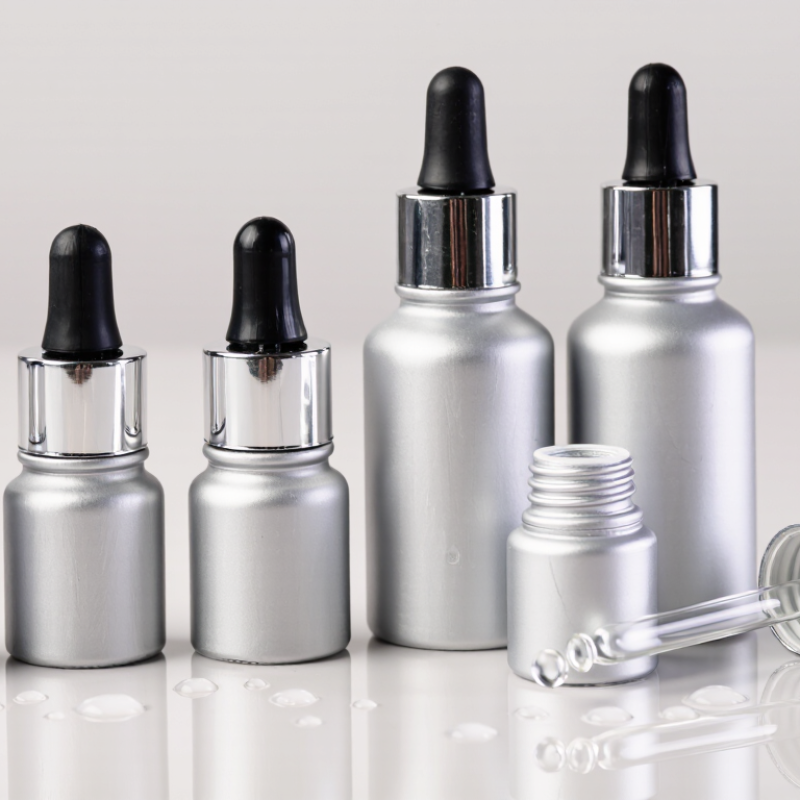
What Is the Best Aluminum Dropper Bottle in 2026?

What an Aluminum Dropper Bottle Is and How It Works

An aluminum dropper bottle combines a protective bottle body with a dropper-style closure. Depending on its design, the liquid may sit inside an aluminum container or a glass inner bottle surrounded by aluminum. Check the product specifications; “aluminum” does not always describe every surface that touches the contents.

The dropper usually has a narrow glass pipette, a threaded cap, and a soft rubber bulb. Squeeze the bulb, place the pipette in the liquid, then release it to draw liquid upward. A gentle squeeze releases drops onto a fingertip or into a measured mixture. Slow pressure helps prevent sudden drips. Small detail, real difference.

Aluminum blocks light and feels light in the hand, which can help protect light-sensitive formulas during storage. The opaque body also hides the fill level, so users may need to open it and check. Compatibility matters: oils or other liquids can react differently with bottle linings, seals, and pipettes. A tight cap helps limit leaks, but it cannot fix a poor fit. Before filling, confirm that the full bottle assembly suits the specific liquid, and store it upright. I would not assume every aluminum dropper works the same way; construction varies, and that can be easy to miss.

Key Features That Affect Bottle Quality and Performance

A good aluminum dropper bottle is more than a lightweight shell. Check the wall thickness, seams, and finish for dents, sharp edges, or uneven coating. Aluminum blocks light, which can help protect light-sensitive contents, but it does not guarantee freshness on its own. The inner liner matters. It should be compatible with the liquid being stored; when details are unclear, ask the supplier rather than guessing.

The dropper assembly affects everyday performance. A snug cap and well-fitting neck help reduce leaks, while a pipette should draw and release a consistent amount. Bulb material and liner quality also matter, especially if the bottle will be opened often. Test a filled sample upright and on its side before ordering in volume. A bottle may look sturdy and still seep around the cap. That detail is easy to overlook.

Tips: Check that the pipette reaches near the bottle’s base, and confirm the stated capacity includes usable liquid space. Inspect the inner coating and closure specifications. Small details matter. No single feature makes one bottle best for every liquid, so compare the container with its intended use.

What Is the Best Aluminum Dropper Bottle in 2026?

Material density is one factor that affects bottle weight and portability. These approximate typical densities describe the raw materials—not finished bottles.

Aluminum’s typical density is about 2.70 g/cm³. Actual bottle weight also depends on wall thickness, shape, and components such as the dropper and closure. Check liner compatibility and seal performance when choosing a bottle for a specific formula.

How to Compare Aluminum Dropper Bottles in 2026

When comparing aluminum dropper bottles in 2026, start with the liquid, not the finish. A thin serum may need a different pipette and seal from a thicker oil. Check the neck size, pipette length, and bulb feel. A pipette that touches the base can chip or feel awkward. Small details matter.

An aluminum body can reduce light exposure, but it does not guarantee formula compatibility. Ask what inner coating and neck liner are used, then test filled samples with your actual formula. Look for seepage around the collar, changes in odor or color, and coating wear after repeated use. A quick hand check helps, but it cannot replace a storage test.

Compare how consistently each bottle dispenses. Drop size can change with liquid thickness, pipette shape, and squeeze pressure, so test several bottles rather than relying on one sample. Check that the bulb returns easily and the cap closes without cross-threading. I still find label readability easy to overlook: a curved, reflective surface can make small print hard to read. Hold a filled bottle under ordinary room lighting before approving its size and finish.

Choosing a Bottle for Different Formulas and Uses

The best aluminum dropper bottle depends on the formula, not just its appearance. A thin facial serum needs a pipette that releases drops evenly, while a thicker oil may cling to the tube. Test the actual formula in the complete package. Check the pipette material, bulb, neck insert, and inner coating; the liquid may touch these parts rather than the aluminum shell. Small details matter.

For light-sensitive formulas, an opaque aluminum body can help limit light exposure. But it does not prove the contents stay stable. Ask suppliers for compatibility and leakage test results, then check dose consistency after repeated use. The International Aluminium Institute reports that recycling aluminum uses about 95% less energy than producing primary aluminum. The Aluminum Association also reports that roughly 75% of all aluminum ever produced remains in use. These figures support considering recycled content, though collection access varies by location.

For travel, prioritize a secure closure and a pipette that resists loosening in a toiletry bag. For precise skincare use, a narrow, controlled dropper may be easier to handle. One judgment remains imperfect: thicker formulas can dispense differently with temperature and storage time. Test a filled sample under realistic conditions before choosing a bottle size or dropper style.

Compatibility, Care, and Safe Storage Considerations

For the best aluminum dropper bottle in 2026, look beyond its outer finish. Compatibility depends on the inner lining, the dropper bulb, and the liquid itself. Acidity, oils, and solvents can affect materials differently. Ask the supplier for written compatibility guidance, then test a small amount before filling a full bottle. Small details matter. A glass pipette may suit one formula, while its bulb or seal may not.

Care for the bottle gently. Use mild detergent and warm water if the materials allow it, then rinse and dry every part fully. Residue can linger around the pipette tip. Avoid abrasive pads and long soaking, which may damage a lining or seal. Reuse is not always wise. If you cannot confirm the bottle’s cleaning limits, choose a fresh container rather than guessing.

Store the bottle upright, tightly closed, and away from direct sun or heat, such as a bright windowsill or warm car. Aluminum can shield contents from light, but it does not prevent heat damage. Label the contents and filling date, and check regularly for leaks, unusual odors, or visible changes. These checks are practical, not proof of safety. I would pause use if anything seems off.

What Is the Best Aluminum Dropper Bottle in 2026? — Compatibility, Care, and Safe Storage Considerations

Use case Recommended bottle construction Dropper and closure considerations Compatibility and storage guidance Practical assessment
Light-sensitive cosmetic oils Aluminum outer body with a continuous, product-compatible internal coating. Use a glass pipette and a bulb and seal materials confirmed compatible with the formula. The opaque body helps limit light exposure. Keep the bottle tightly closed and store it away from heat. Confirm that the coating is suitable for the oil and any additives. A strong option when light protection is useful and the complete package has been compatibility-tested.
Water-based serums Lined aluminum may be suitable, but the coating, seams, and closure must be designed for aqueous products. Check the dropper assembly for leakage and material compatibility; water-based formulas may also require appropriate preservation. Do not assume bare aluminum is suitable. Follow the formula’s storage instructions and assess corrosion, coating integrity, and leakage over time. Choose only after testing the filled package; a compatible glass package may be simpler for some formulas.
Alcohol-containing formulations Use a coated aluminum container only when the lining is rated for the specific alcohol concentration and formula. Verify the bulb, pipette seal, and closure liner; some elastomers can swell, soften, or otherwise deteriorate depending on the formulation. Keep away from ignition sources where the product is flammable. Follow the product’s safety data and storage requirements. Potentially suitable with documented material compatibility; do not select based on the aluminum body alone.
Essential-oil blends A lined body may work if the lining is tested with the specific blend, including its individual oils. Check all wetted parts, especially the bulb and seals. Essential oils can affect some plastics and elastomers. Store tightly closed, upright, and away from heat. Test for odor change, leakage, swelling, and coating damage during a realistic storage period. Use only with formulation-specific compatibility evidence; “essential-oil safe” should not be assumed for every component.
Strongly acidic or alkaline liquids Do not use an aluminum bottle unless the complete lined package is specifically approved for that formulation. Closures and dropper parts also need chemical-resistance review. Strong acids and alkalis can attack aluminum, and a damaged or unsuitable lining may expose the metal. Follow the chemical supplier’s packaging guidance. Generally avoid as a default choice; select packaging specified for the exact chemical and concentration.
Frequent dispensing or travel Select a sturdy bottle with a durable, intact lining and a secure, well-fitting neck finish. Check that the dropper seats securely and that the cap resists leakage. A separate protective cap can reduce accidental dispensing. Carry upright where practical and protect the glass pipette from impact. Avoid leaving the bottle in hot vehicles or direct sunlight. Convenient when portability and light protection matter, but the dropper assembly may be more vulnerable to impact and leakage than a simple screw cap.

Selection rule: There is no universally best aluminum dropper bottle. Verify compatibility for the complete package—aluminum body, internal coating, pipette, bulb, seals, and closure—using the exact formulation and intended storage conditions. Inspect periodically and discontinue use if you notice corrosion, coating damage, swelling, leakage, or an unexpected change in the product.

'