China Best Freeze Dried Cat Treats Supplier?

Choosing the China Best Freeze Dried Cat Treats Supplier requires more than comparing prices or attractive packaging. A reliable supplier should demonstrate ingredient traceability, controlled processing, hygienic facilities, and consistent batch testing. Freeze Dried Cat Treats may look simple, but moisture control, raw material quality, and storage conditions strongly affect safety and texture. A firm, dry cube should not feel oily, damp, or unusually brittle.

Dr. Lisa M. Freeman, a veterinary nutritionist, states, “Treats should make up no more than 10% of a pet’s daily calories.” This reminder matters when evaluating product claims. A professional Chinese supplier should provide nutritional data, feeding guidance, laboratory reports, and clear information about animal protein sources. Buyers should also inspect manufacturing experience, export documentation, recall procedures, and responsiveness before placing a large order. Small details reveal a lot.

No supplier is perfect. That deserves honest attention. A factory may offer excellent chicken treats but weaker packaging for humid markets. Another may provide impressive certificates but inconsistent communication. Therefore, the best choice depends on verified performance, not promotional language. Request samples from several China-based manufacturers, compare smell, color, cube size, and rehydration behavior, then review independent test results. Ask difficult questions about salmonella control, allergen separation, shelf-life validation, and lot tracking. A trustworthy supplier will answer clearly, admit limitations, and improve when problems appear. That practical attitude builds long-term confidence for retailers, distributors, and cat owners.
China Best Freeze Dried Cat Treats Supplier?

What Are Freeze-Dried Cat Treats and Why Are They Popular?

Freeze-dried cat treats are made from meat, fish, or organs with moisture removed in a vacuum at low temperatures. This process creates a light, crisp texture while preserving much of the original aroma and flavor. Cats often respond strongly to that smell. The pieces can be broken into tiny rewards or rehydrated with clean water.

Their popularity comes from convenience and simple ingredient profiles. Many products contain one main animal protein, which helps owners identify possible food sensitivities. They are also easy to store and carry. However, freeze-drying does not automatically make raw ingredients free from harmful microorganisms. Reliable suppliers should use tested raw materials, controlled processing, sealed packaging, and clear batch information.

Portion control matters.

Treats are not complete meals. A high-protein piece may still add unnecessary calories when offered freely. Practical feeding experience also shows that some cats reject the dry texture, even when the ingredients seem appealing. That surprised me. Adding a little water can improve acceptance, but it may reduce convenience. Owners should introduce new treats slowly and watch for vomiting, diarrhea, or unusual itching. Suppliers with strong quality systems should provide storage guidance, ingredient details, expiration dates, and basic feeding instructions rather than relying only on attractive claims.

China Best Freeze Dried Cat Treats Supplier? - What Are Freeze-Dried Cat Treats and Why Are They Popular?

Product facts and supplier evaluation dimensions for freeze-dried cat treats

Evaluation Dimension Typical Information or Range Why It Matters to Cat Owners Supplier Verification Point
Production Method Frozen raw or cooked ingredients are placed under vacuum so ice changes directly from solid to vapor. The process removes water at low temperature and helps preserve the ingredient’s original shape, aroma, and texture. Request a clear process description covering freezing, primary drying, secondary drying, and packing.
Typical Moisture Content Usually about 2%–8% in a properly dried product; the exact value depends on the recipe and process. Low moisture supports shelf stability and creates a light, crisp texture, but the treat still needs protection from humidity. Check laboratory moisture results, packaging performance, and the stated storage instructions.
Protein Profile Animal-based recipes commonly provide a high crude-protein percentage on an as-fed label basis because water has been removed. Cats are obligate carnivores and generally favor meat-based flavors and aromas. Review the guaranteed analysis, ingredient list, amino-acid adequacy, and whether plant proteins are used as fillers.
Ingredient Composition Common single-protein options include chicken, turkey, duck, beef, fish, or organ meats; recipes may also contain supplements. Short ingredient lists can make it easier to identify potential allergens and match a cat’s taste preferences. Verify ingredient traceability, species identification, allergen controls, and consistency between samples and labels.
Calorie Density Calories per gram are often higher than those of wet meat because most water has been removed; the actual value varies by fat content. Small pieces can contain meaningful calories, so portion control is important. Require a measured kcal value per treat or per gram, not only a guaranteed-analysis panel.
Feeding Role Most freeze-dried cat treats are intended for intermittent or supplemental feeding, not as a complete and balanced diet. Treats should complement a nutritionally complete cat food rather than replace daily meals. Check whether the label clearly identifies the product as a treat or complementary food and provides feeding guidance.
Palatability The concentrated aroma and meat texture often appeal to cats, although acceptance differs between individuals. Strong aroma can support training, medication administration, enrichment, and appetite stimulation. Use blind sample testing with different cats and record acceptance rate, breakability, and odor consistency.
Texture and Rehydration Pieces are usually light and brittle; they can be fed dry or softened with clean water when the product instructions allow it. Different textures suit crunchy-treat preferences, older cats, and cats that need additional moisture in their diet. Evaluate piece size, dust level, breakage rate, rehydration time, and texture after rehydration.
Microbiological Safety Low water activity limits microbial growth, but it does not guarantee that a product is free from pathogens. Safe handling and validated testing are essential, especially when animal ingredients are used. Request batch testing for relevant pathogens, water activity results, sanitation records, and a documented recall procedure.
Packaging Requirements Moisture-barrier pouches, airtight seals, oxygen control, and resealable closures are commonly used. Good packaging helps prevent softening, oxidation, odor loss, and quality deterioration after opening. Conduct seal-strength, leak, shelf-life, and transport tests under realistic temperature and humidity conditions.
Shelf Life A commercial shelf life is commonly established through stability testing; the exact period depends on moisture, fat, packaging, and storage. A reliable expiry date helps protect flavor, texture, and nutritional quality. Ask for real-time or accelerated stability data and verify lot coding, expiry-date control, and post-opening guidance.
Quality Management A robust facility should operate documented controls for incoming materials, processing, sanitation, packaging, and finished products. Consistent controls reduce variation between production batches and support product safety. Review applicable food-safety certifications, audit reports, corrective-action records, and batch traceability.
Customization Capability Customization may include protein selection, piece size, recipe formulation, packaging format, and language-specific labeling. Different markets and cat sizes may require different formats, feeding instructions, and regulatory information. Confirm minimum order quantities, sample-development steps, formulation ownership, lead times, and change-control procedures.
Best-Use Summary Freeze-dried treats are lightweight, aromatic, portable, and suitable for occasional rewards when fed according to the label. They are popular because they combine meat-forward palatability, convenient storage, and flexible serving options. Select a supplier based on verified safety data, transparent labeling, stable quality, suitable packaging, and dependable delivery performance.

Note: Nutritional values, shelf life, calorie density, and microbiological specifications vary by recipe, processing conditions, packaging, and applicable market regulations. Always use the finished product label and laboratory documentation for final verification.

What Makes a China-Based Cat Treat Supplier Reliable?

China Best Freeze Dried Cat Treats Supplier?

What Makes a China-Based Cat Treat Supplier Reliable?

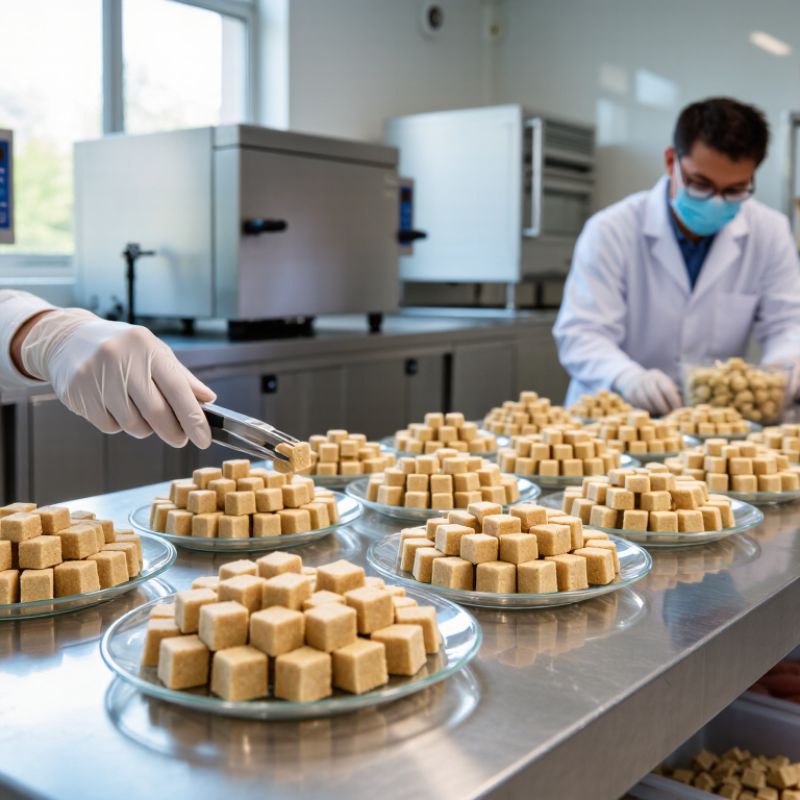
A reliable China-based cat treat supplier should make quality visible, not merely promise it. During a practical supplier review, ask for ingredient specifications, production records, and recent test reports. The facility should show clean processing areas, controlled storage, and clear separation between raw and finished products. Small details matter. Check whether workers record freeze-drying temperatures, drying time, and batch numbers consistently.

Product safety also depends on traceability. Each carton should connect to a production date, ingredient lot, and inspection record. Moisture testing is important because excess moisture can reduce shelf stability. Microbial testing should follow suitable food-safety procedures. A professional supplier can explain its sampling method without avoiding difficult questions. Packaging samples should arrive sealed, dry, and free from strong odors.

Communication reveals reliability too. Replies should be specific, with realistic lead times and clear minimum order quantities. A supplier that admits a production delay may be more trustworthy than one promising everything immediately. No supplier is flawless. I would still question unclear test reports, changing specifications, or unexplained price differences. A trial order can expose practical problems, such as crushed treats, weak cartons, or inconsistent sizes. Written corrective actions and regular updates help turn those problems into measurable improvements.

How Are Freeze-Dried Cat Treats Manufactured and Tested?

China Best Freeze Dried Cat Treats Supplier?

How Are Freeze-Dried Cat Treats Manufactured and Tested?

Quality freeze-dried cat treats begin with traceable animal ingredients and controlled receiving. The factory records supplier details, batch numbers, temperature, and inspection results. According to FEDIAF’s 2024 Facts & Figures, 139 million European households own pets, increasing demand for transparent pet-food production. Freeze-drying removes ice under low pressure, preserving texture without traditional high-heat cooking. It is not sterilization.

The process usually includes grinding, portioning, pre-freezing, vacuum drying, metal detection, and sealed packing. Moisture and water activity are measured for stability. Laboratories test Salmonella, E. coli, yeast, mold, heavy metals, and selected chemical contaminants. AAFCO’s 2024 Official Publication provides ingredient and labeling guidance, while FDA preventive-control rules require hazard analysis and documented controls. Good suppliers keep retained samples for every lot.

Testing can still miss problems. That deserves honesty. Sampling is limited, and handling after production may introduce contamination. Strong facilities verify sanitation records, calibrate instruments, and investigate abnormal results instead of hiding them. Buyers should request certificates of analysis, microbiological limits, moisture data, packaging specifications, and recall procedures. A supplier’s clean workshop helps, but documented evidence matters more. The process should be repeatable, not merely impressive during an audit.

Which Quality Standards Should Buyers Check?

China Best Freeze Dried Cat Treats Supplier?

Which Quality Standards Should Buyers Check?

A reliable supplier should provide more than attractive packaging and low prices. FEDIAF’s 2024 Facts and Figures report records 299 million pets in Europe and €29.3 billion in annual pet food sales. This growth increases the need for traceable production. Ask for a HACCP plan, GMP records, and an active ISO 22000 or equivalent food safety certification. Certificates should match the factory address and product scope.

Check the raw material trail. Each batch should identify the meat source, processing date, moisture level, and lot number. Freeze-dried treats usually require low water activity, not only low moisture. Request recent laboratory results for Salmonella, pathogenic E. coli, heavy metals, and oxidation indicators. The report should name the testing laboratory and show the sample lot.

Look closely.

Packaging also matters. It should protect the treats from humidity, oxygen, and handling damage. Ask whether the supplier validates seal strength and storage stability. A 2024 pet food market review by FEDIAF highlights the scale of modern production, but scale does not guarantee quality. I have seen polished samples hide weak documentation. That possibility deserves attention. Buyers should review a retained sample, inspect production areas remotely or in person, and test an independent shipment before committing to large volumes.

How Can Importers Choose the Best Supplier for Their Needs?

China Best Freeze Dried Cat Treats Supplier?

Importers should judge suppliers by evidence, not attractive catalog photos or low quotations. Request product samples from the actual production lot. Check aroma, color, texture, and package seals after opening. A reliable supplier should provide ingredient specifications, nutritional analysis, microbiological results, and lot traceability. Documents matter, but clear answers matter more.

Ask how the supplier controls raw materials, freeze-drying temperature, moisture levels, and storage conditions. Excess moisture can reduce crunch and shorten shelf life. Review packaging performance with a practical test. Leave samples in normal warehouse conditions for several weeks. Then inspect odor, texture, and seal strength. Confirm production capacity, minimum order quantity, lead time, and batch consistency before signing a purchase agreement.

Communication reveals operational maturity. Can the supplier explain a delayed shipment without vague promises? Can they share corrective actions after a quality issue? Factory audits, video inspections, and independent laboratory testing add useful confidence. Importers should also verify labeling, claims, customs documents, and destination-market requirements with qualified specialists. Requirements differ by country.

Be careful with “best” as a permanent label. A supplier suitable for small trial orders may fail during seasonal demand. I once underestimated packaging damage during transit; the product quality was good, but the cartons arrived crushed. That mistake changed my evaluation process. Price still matters, though it should be compared with testing, logistics, waste, and service costs. No checklist catches everything.

China Best Freeze-Dried Cat Treats Supplier? How Can Importers Choose the Best Supplier for Their Needs?

A practical 100-point supplier evaluation framework for importers. The criteria reflect common pet-food sourcing priorities, including food safety documentation, product consistency, traceability, production capability, and export readiness.

Importers should prioritize suppliers that can provide verifiable compliance records, consistent batch quality, complete traceability, stable production capacity, and reliable export documentation before comparing price.

'