Best IR Filters for Global Buyers in 2026?
The demand for IR Filters is expected to surge in 2026. Companies across various sectors rely on these filters for optimal performance. Infrared technology plays a key role in imaging, sensing, and communication.
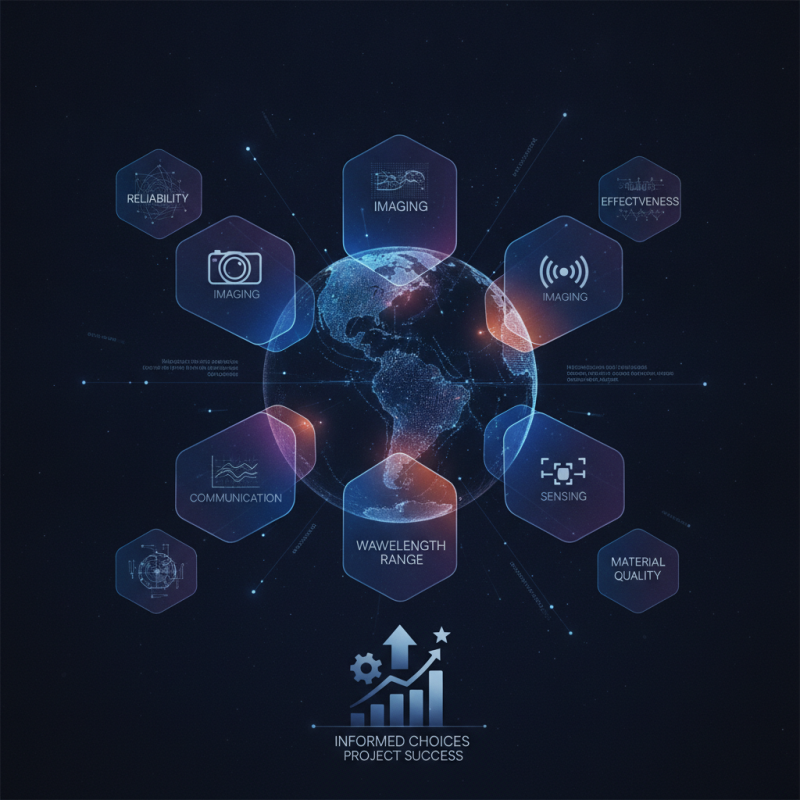
Global buyers now seek high-quality IR Filters that offer reliability and effectiveness. The market is filled with options, but not all filters perform equally well. Buyers must consider factors such as wavelength range and material quality when making decisions.
Navigating the available choices can be overwhelming. Some filters may not meet all the technical requirements. It’s essential to assess vendor expertise and product specifications. In this ever-evolving industry, informed choices are crucial for achieving success. Choosing the right IR Filter can impact your project significantly.
Understanding Infrared Filters: Types and Functions
Infrared (IR) filters are essential tools in various fields, particularly in photography, medical imaging, and security surveillance. These filters selectively allow infrared light to pass while blocking visible light. The most common types include bandpass, longpass, and shortpass filters. Bandpass filters are popular because they allow a specific range of IR wavelengths, optimizing image clarity.
Recent industry reports indicate that the IR filter market is expected to grow significantly. According to a report by Grand View Research, the market size for optical filters, which includes IR filters, is projected to reach $5.4 billion by 2025. This growth is driven by advancements in technology and the increasing demand for applications in remote sensing and night vision. This trend showcases the versatility and necessity of IR filters in modern imaging techniques.
However, choosing the right filter can be challenging. Users often face dilemmas regarding filter material and thickness. Not all filters perform equally well under different conditions. Some filters may introduce unwanted artifacts in images. Therefore, understanding the characteristics of each filter type is crucial for optimal performance. Experimentation and careful selection can lead to better outcomes in your projects.
Best IR Filters for Global Buyers in 2026
Key Features to Consider When Choosing IR Filters
When choosing an infrared (IR) filter, several key features should guide your decision-making. Start with the wavelength range. Different filters operate effectively at various wavelengths. A wider range can enhance flexibility in applications but may compromise specific performance. It's essential to find a balance that meets your unique needs.
Another crucial factor is optical density (OD). Higher OD values absorb more light, protecting sensitive components from excessive exposure. However, this can also lead to reduced image quality if not matched properly with your equipment. Test results often reveal significant differences in performance based on OD levels, so hands-on evaluation is beneficial.
Consider the filter's material too. Glass and optical plastics differ in durability and weight. Glass filters tend to be more robust but can be heavier. In contrast, plastic can be prone to scratches but is lighter and easier to handle. Assess your application environment. Extreme conditions can exacerbate material weaknesses, affecting filter lifespan and performance.
Top IR Filters on the Market for Global Buyers in 2026
In 2026, the demand for infrared (IR) filters continues to rise due to advanced imaging technologies and growing applications in various industries. Reports indicate that the IR filter market is expected to grow by over 12% annually. This surge is driven by sectors like medical imaging, automotive night vision, and security surveillance.
When selecting IR filters, understanding the different types, such as bandpass and longpass filters, is crucial. Bandpass filters selectively transmit light in certain wavelengths, enhancing image clarity. Longpass filters block unwanted wavelengths, improving noise reduction in thermal imaging. These factors are essential in applications requiring precise imaging.
**Tip:** Consider factors such as the spectral range and transmission efficiency when evaluating filters. High-quality IR filters can significantly impact the performance of your imaging system. **Tip:** Test your selected filters in real-world conditions to assess their practicality. This can reveal issues not evident in initial assessments. Make sure to stay updated with recent research and development reports from credible sources to optimize your choices.
Comparative Analysis of Leading Brands in IR Filters
In the realm of infrared (IR) filters, several contenders stand out in 2026. A comparative analysis shows varying features and effectiveness, making them unique in their own right. Professionals often look for filters that balance durability and clarity. Some brands excel in blocking unwanted wavelengths while maintaining optimal transmission for essential infrared light.
Quality control is critical in this space. Small discrepancies in filter thickness can lead to significant deviations in performance. This raises questions about consistency. How much do filters deliver on their promises? Aesthetic design also plays a role; a well-crafted filter can enhance both functionality and appeal.
Feedback from users has highlighted issues with certain filters not meeting expectations in harsh environments. Longevity and resilience are vital. Some filters show signs of wear sooner than anticipated, which affects reliability. In the end, buyers must weigh their options carefully, considering specifications and real-world performance to find the best IR filters for their needs.
Best IR Filters for Global Buyers in 2026? - Comparative Analysis of Leading Brands in IR Filters
| Specification | Filter Type | Cut-off Wavelength (nm) | Optical Density | Transmission (%) | Price ($) |
| Standard IR Filter | Bandpass | 900 | 3.0 | 85 | 150 |
| Advanced IR Filter | Low-pass | 800 | 3.5 | 90 | 250 |
| Budget IR Filter | Bandpass | 850 | 2.5 | 80 | 100 |
| Premium IR Filter | Bandstop | 950 | 4.0 | 95 | 300 |
| Specialty IR Filter | Notch | 920 | 3.8 | 88 | 400 |
Future Trends and Innovations in Infrared Filtering Technology
The future of infrared (IR) filtering technology is poised for remarkable advancements. Emerging trends show more versatile applications across industries. Researchers are developing filters that improve sensitivity and reduce noise. This innovation is crucial for applications in surveillance and environmental monitoring.
As users seek products, they should consider specific needs. Different materials will offer varied performance. For instance, look for filters with a broad spectral response. This helps in maximizing efficiency and results.
However, not every innovation will meet expectations. Some filters may falter in real-world applications. Users should verify specifications through testing. Consult experts in the field for guidance. This adds credibility and reinforces the decision-making process. Future developments promise exciting innovations, but skepticism remains vital.

 '
'
