Best Sleeping Bag Manufacturers in China for Buyers?

Choosing the best Sleeping Bag manufacturers in China takes more than comparing factory prices. Buyers need to assess insulation consistency, shell fabrics, stitching, zipper quality, temperature ratings, and sample workmanship. A polished catalog photo cannot show whether a zipper snags or insulation shifts after repeated compression. Small details matter. Outdoor-industry pioneer Yvon Chouinard is often associated with the reminder, “The more you know, the less you need.” For sourcing teams, that idea means defining actual use conditions before requesting quotations. Specify expected temperatures, user profiles, packed size, weight, and care requirements. Ask how suppliers test warmth claims and maintain material consistency between production batches. Compare documented methods, not just promised numbers. Evidence helps.

China has a broad manufacturing base, but suppliers differ in equipment, experience, and quality controls. Some specialize in lightweight down models; others focus on synthetic insulation, family camping products, or custom designs. Request samples, material specifications, and clear inspection records. Check whether the factory can explain its temperature-rating method and show how it handles defects. Do not assume a low quote includes the same fabric, fill, or packaging as a competitor’s offer. I would not treat one polished sample as proof; that assumption is easy to make, and easy to regret. The guide that follows looks at manufacturer capabilities, product ranges, customization, quality checks, and communication, helping buyers ask sharper questions before choosing a production partner.
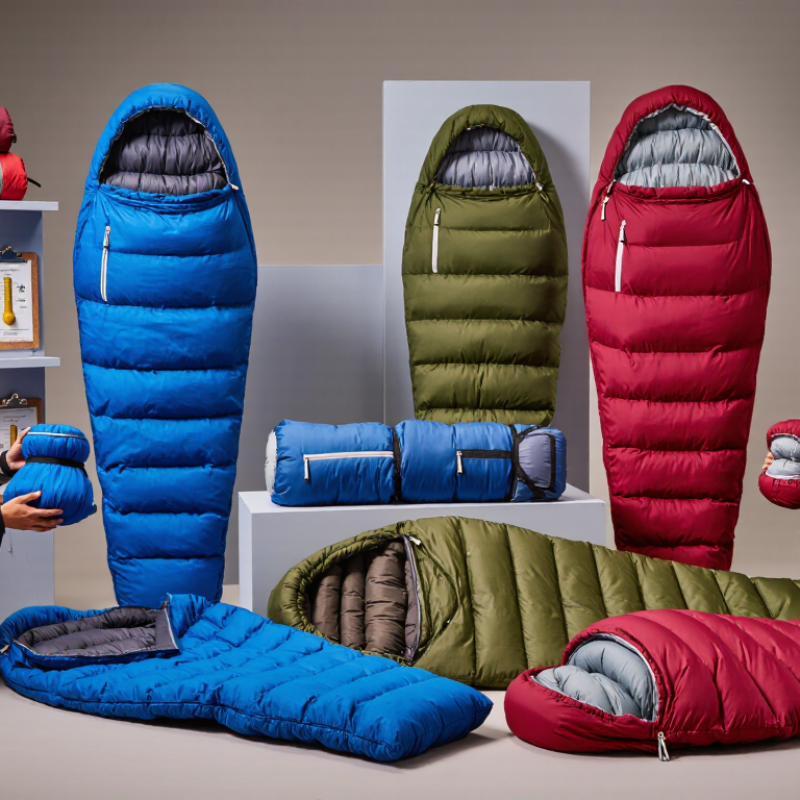
Best Sleeping Bag Manufacturers in China for Buyers?

Understanding China’s Sleeping Bag Manufacturing Landscape

China’s sleeping-bag manufacturing base sits within a much larger textile ecosystem. That scale matters. The China National Textile and Apparel Council reported that above-designated-size textile enterprises earned 4.7 trillion yuan in operating revenue and 180.2 billion yuan in profit in 2023. These figures describe the wider textile industry, not sleeping-bag production alone. Still, they help explain the depth of local fabric and component supply. Factories may source shells, linings, zippers, and synthetic insulation through established networks. Down-filled products require especially careful fill control. The picture is not perfectly tidy.

For buyers, production quality is more useful than a polished sample-room display. Ask for records covering fill weight, seam strength, loft recovery, and wash performance. Temperature claims also need context. ISO 23537-1 sets requirements for thermal, dimensional, and ergonomic testing of adult sleeping bags; request relevant test reports when applicable. Check whether the tested model matches the production sample, including its fabric and insulation. Small changes can affect warmth. A factory’s sample may look excellent, while repeatability across a full order remains the harder test. Compare specifications, inspection methods, and defect limits before approving bulk production.

Key Factors for Evaluating Sleeping Bag Manufacturers

Choosing a sleeping bag manufacturer starts with the intended use, not a low quote. Ask how insulation is specified and whether temperature ratings come from a recognized test method. A “comfortable” rating without test details is hard to compare. Request a sample and inspect the stitching, zipper guard, hood drawcord, and lining after repeated use. Look closely.

Materials deserve equal attention. For down or synthetic fill, request composition data, fill weight, and batch-level quality records. Check shell fabric denier, water resistance, and whether performance claims are supported by current test reports. Small differences matter: a cold zipper seam or compressed footbox can affect sleep outdoors. Ask about fabric substitutions before production; quiet changes can alter warmth and feel.

Review factory capacity, sampling lead times, minimum order quantities, and inspection steps in writing. Clear answers matter more than polished sales language. Yet documents alone are not enough. Compare a pre-production sample with goods from a pilot run, and record any mismatch. Communication should stay specific when problems arise, though no checklist catches everything.

Best Sleeping Bag Manufacturers in China for Buyers? - Key Factors for Evaluating Sleeping Bag Manufacturers

Use this weighted checklist to compare prospective suppliers. The scores are buyer-assigned evaluation criteria, not ratings of any specific manufacturer. Product requirements, prices, lead times, and minimum order quantities should be confirmed directly with each supplier.

Evaluation factor Suggested weight What buyers should check Useful evidence to request
Thermal performance and temperature labeling 18% Check that the intended temperature rating is supported by testing and that the label clearly distinguishes comfort, limit, and extreme values where applicable. Confirm the rating suits the intended user and conditions. A current test report for the relevant model and construction. For adult sleeping bags, ask whether testing follows the applicable edition and scope of ISO 23537-1.
Materials and traceability 15% Review shell and lining fabric specifications, insulation type, fill weight, and consistency between the approved sample and bulk production. For down, request clear composition and sourcing information. Material data sheets, incoming inspection records, batch or lot traceability, and applicable third-party test or transaction documents for any sourcing claims.
Manufacturing quality control 15% Evaluate controls for dimensions, stitching, insulation distribution, zipper operation, and finished-product defects. Confirm how inspection findings and corrective actions are recorded. A sample quality plan, inspection checklist, defect classification, and recent anonymized inspection records. Agree on the inspection method and acceptance criteria before production.
Product safety and regulatory documentation 20% Identify the destination market and verify the product-specific chemical, labeling, and general product-safety requirements that apply. Requirements vary by market and product composition. Relevant test reports and declarations for the finished product or its materials. Check the issuing laboratory, test scope, model details, and report date; do not treat a general certificate as proof of every requirement.
Sampling and product development 10% Assess whether the supplier can produce and revise samples to a written specification, including size, shape, materials, construction, colors, and packaging. A signed or approved sample record, specification sheet, revision history, and written confirmation of sample fees and development timelines.
Production capacity and delivery planning 8% Check whether the proposed schedule accounts for material procurement, sampling approval, production, inspection, and shipping. Treat quoted capacity and lead times as order-specific estimates. A production schedule, confirmation of material availability, shipment milestones, and a documented process for communicating delays.
MOQ, pricing, and contract clarity 7% Compare quotations on the same product specification and Incoterms. Confirm minimum order quantities by style and color, payment terms, packaging costs, and how price changes are handled. A detailed written quotation and purchase terms that identify the product specification, quantity, currency, delivery basis, payment schedule, and responsibility for rework or nonconforming goods.
Communication and after-sales support 7% Assess response accuracy, clarity on technical questions, ownership of action items, and the process for handling complaints or warranty claims. A named contact role, written complaint procedure, agreed response expectations, and a record of how defects, replacements, or corrective actions will be managed.
Total suggested weight 100% Score each factor from 1 (weak evidence) to 5 (strong, verified evidence), then apply the weight to compare suppliers consistently.

Practical tip: Request a production-representative sample and verify that the approved specification, test documentation, and final purchase order refer to the same model and material configuration.

Comparing Materials, Construction, and Product Performance

Material choice shapes warmth, packed size, and care. Down offers strong warmth for its weight, but dampness can reduce loft. Synthetic fill is often more forgiving in wet conditions, though it may pack larger. Compare shell fabric, stitching, and fill distribution—not just the advertised temperature. ISO 23537-1:2022 sets testing and labeling requirements for sleeping-bag thermal performance, giving buyers a more consistent basis for comparison.

Construction matters. Box-wall baffles can limit cold spots, while stitch-through seams may create thin areas where insulation compresses. Check zipper guards, hood adjusters, and seam finishing by handling samples and inspecting repeated stress points. The Outdoor Industry Association’s 2024 Outdoor Participation Trends Report counted 175.8 million U.S. outdoor participants in 2023. That figure is not sleeping-bag sales, but it signals demand across varied activities and conditions. Performance still depends on fit and user layering.

Tips: Request the test method and temperature rating, then compare like with like. Ask for fill-weight details and sample inspection photos. Small details count. I would also test a sample in realistic conditions; specifications alone can miss awkward zipper placement or a drafty footbox.

Assessing Certifications, Production Capacity, and Quality Control

For buyers comparing sleeping bag manufacturers in China, certification claims should be checked against the exact model being purchased. ISO 23537-1 sets requirements for measuring sleeping bag thermal performance. Ask for a current test report showing the tested design, materials, and temperature ratings. A certificate for a different model proves little. Small details matter.

Factory capacity needs more than a monthly output figure. Ask how many sewing lines are dedicated to sleeping bags, what peak-season output looks like, and whether any work is subcontracted. The Outdoor Industry Association’s 2024 Outdoor Participation Trends Report estimated that 175.8 million Americans participated in outdoor recreation in 2023. This signals a substantial end market, but it is not evidence of any factory’s capacity. I would not treat a large production claim as proof; it can conceal bottlenecks or outsourced steps.

Quality control should be visible on the production floor. Request inspection records for fill weight, seam consistency, zipper operation, and finished dimensions. For down-filled products, check that incoming material documentation matches the specification and batch. Ask how defects are logged and corrected, not just how many inspections occur. A sample can look excellent while bulk production varies. That is easy to miss. A factory visit or independent audit can help verify records, though neither replaces model-specific testing and ongoing checks.

Best Sleeping Bag Manufacturers in China: Buyer Evaluation Priorities

A practical framework for comparing suppliers by certification evidence, production capacity, and quality control.

Illustrative evaluation weights, not audited supplier data or a manufacturer ranking. Verify certificates and their scope, confirm capacity with production records, and assess quality controls through documented inspections and product testing. ISO 23537 is a relevant performance standard for sleeping bags.

How Buyers Can Select and Verify a Suitable Manufacturer

A suitable sleeping bag manufacturer should be assessed against the conditions the product must handle, not just its quoted price. Share a written brief covering temperature range, fill type, shell fabric, dimensions, packed size, zipper direction, and target weight. Ask how warmth claims are measured and whether the test method fits your needs. Ask for evidence. Compare quotations only after specifications match; a cheaper sample may use thinner insulation or different fabric.

Request a production sample and inspect its seams, baffles, zipper operation, stitching, and labeling. Weigh it on a digital scale, then compare its measurements with the approved specification. Pack and unpack it. If practical, test it in controlled conditions, while treating one field trial as limited evidence. Check that the factory can show quality procedures, material records, and inspection reports for similar products. Confirm how defects and corrective actions are documented.

Verify the manufacturing site through a live video walkthrough or a recent independent audit. Ask to see cutting, filling, sewing, and final inspection areas, not only a showroom. With permission, contact recent buyers about delivery consistency and communication after approval. A detailed contract should define tolerances, sample sign-off, payment milestones, lead times, and remedies for nonconforming goods. Even a good supplier can miss a detail, so record decisions in writing and recheck the first production run.

'