China Top Custom 3D Medals Manufacturer and Supplier

Choosing a China-based manufacturer and supplier for Custom 3D Medals involves more than comparing unit prices. The design must translate into clear relief, readable lettering, and comfortable edges. A capable partner can review artwork, recommend suitable dimensions, and explain how depth affects the finished appearance. Small details matter. A raised emblem may look sharp on screen but lose definition when reduced. Requesting a proof or sample review helps reveal issues before a full production run. Discuss base metals, plating colors, attachment options, and packaging early. These choices affect weight, appearance, and production planning. Clear communication can prevent avoidable revisions.

This guide explores how to evaluate suppliers, plan a medal design, and check production quality. It also covers practical questions about mold development, finishes, order quantities, and delivery schedules. Look for clear specifications and consistent answers, rather than relying on broad promises. Ask how the supplier checks dimensions, surface details, and color between samples and finished pieces. Samples can still surprise you. That happens. A first proof may need adjustments to lettering, relief depth, or edge shape, so allow time for review. The right sourcing process balances visual impact with durability, budget, and realistic deadlines. With careful planning, a detailed concept can become a medal that feels substantial in the hand and looks polished when presented.
China Top Custom 3D Medals Manufacturer and Supplier

Custom 3D Medals: Definition and Key Features

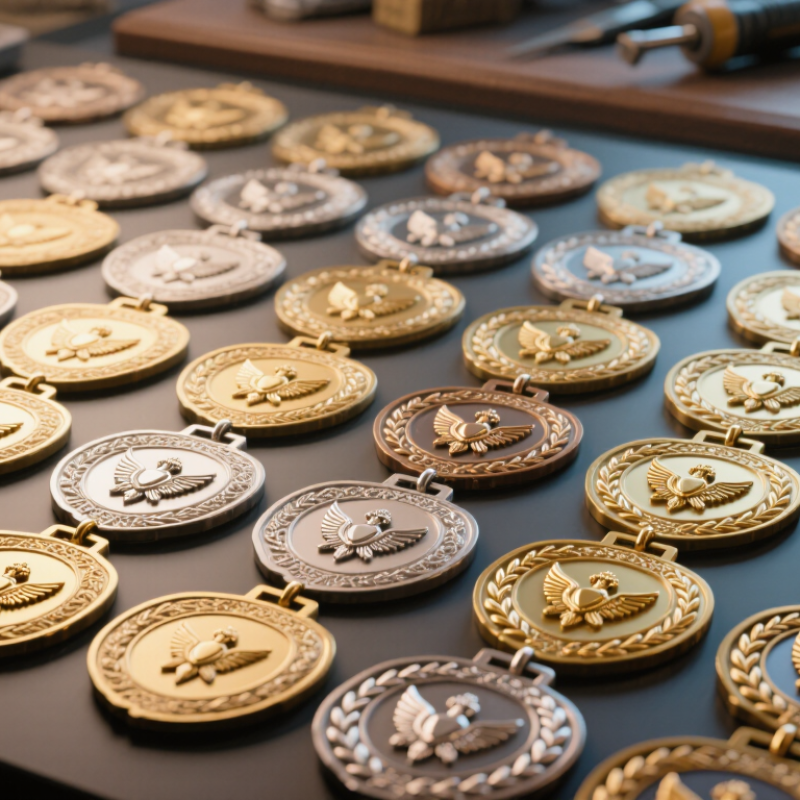
A custom 3D medal is a commemorative piece with raised and recessed details that create visible depth. Unlike a flat printed design, its shape is built into the metal surface. A portrait may stand above a textured background, while lettering sits in a recessed band. The effect is both visual and tactile.

That matters. Height differences catch light from changing angles, helping important features stand out. Designers can combine relief, cutouts, textured fields, and colored finishes, but each detail needs enough space to reproduce clearly. Very thin lines or crowded lettering may soften during production. Small details count.

In practical production planning, the artwork should be reviewed for depth, edge definition, and readability at the medal’s actual size. A deep recess can collect finish unevenly, while sharp, narrow projections may be more vulnerable to wear. These are not reasons to avoid complex designs; they are points to check early. A sample can reveal whether the relief feels balanced in hand and whether small text remains legible. The final appearance also depends on lighting and finish, so a digital preview is useful, but not always a perfect guide.

Custom 3D Medals: Definition and Key Features

Medal weights can vary with material, size, and design. These official Paris 2024 Olympic medal weights show how finished medals may differ.

Key features: A 3D medal uses raised or recessed details to create depth. Custom designs can specify the shape, dimensions, base material, finish, and relief details. Paris 2024 Olympic medals weighed 529 g (gold), 525 g (silver), and 455 g (bronze); each measured 85 mm in diameter and 9.2 mm thick.

Source: Paris 2024 official medal specifications.

How Custom 3D Medals Are Designed and Manufactured

How Custom 3D Medals Are Designed and Manufactured

A custom 3D medal starts with a sketch and a clear purpose: recognition, commemorative use, or event participation. Designers turn the artwork into a digital 3D model, shaping raised lettering, recessed backgrounds, and textured borders. They check thickness and spacing so details remain visible at medal size. A tiny line can disappear after casting.

Details do matter.

The Wohlers Report 2024 reported that the additive manufacturing industry reached $20.035 billion in revenue in 2023, an 11.1% increase from 2022. This figure covers the wider industry, not medal production alone. Still, it reflects the growing role of digital design and prototyping in manufacturing.

Once a medal design is approved, a production tool is made, then metal is formed, finished, and inspected. Depending on the design, raised relief may come from casting or stamping. Plating and color fills add contrast, but can also reveal small design flaws. I have found that a slightly simplified model often produces a clearer final medal.

Tips: Request a 3D proof before production. Check lettering, edge detail, and color placement at actual size. Ask how the sample compares with the approved model.

Materials, Finishes, and Personalization Options

Material choice determines a medal’s weight, detail, and feel. Zinc alloy suits raised lettering and layered relief at a practical cost; brass offers a denser hand feel, while stainless steel resists everyday wear. The Wohlers Report 2024 estimated that the additive manufacturing industry generated US$21.9 billion in revenue in 2023. That figure describes the wider production sector, not medal sales, but it reflects growing interest in digital design and short-run customization. A 3D model still needs careful review before tooling or production.

Finishes shape the final impression. Polished gold, silver, or copper tones catch light; antique finishes darken recessed lines and make sculpted details easier to read. Soft or hard enamel can add color, though very narrow color areas may fill unevenly. Not every detail survives production. A tiny date or thin outline may look clear on screen but soften on metal. That trade-off deserves a sample and a second look.

Tips: Request a physical sample when color matching matters. Check the medal’s weight, edge, and raised lettering under ordinary light. Share artwork as vector files, and confirm the minimum line thickness with your supplier. For personalization, names, event dates, serial numbers, and custom ribbons can be specified before production; variable details may require extra checks, and that part is easy to underestimate.

China Top Custom 3D Medals Manufacturer and Supplier - Materials, Finishes, and Personalization Options

Option Typical Characteristics Finish Choices Personalization Options Common Applications
Zinc alloy Suitable for die-cast shapes, raised relief, recessed details, and complex outlines. Antique gold, silver, or bronze; polished or matte plated surfaces. 3D sculpted elements, cutouts, custom edges, soft enamel color, and engraved text. Sports events, commemorations, awards, and collectible designs.
Iron A sturdy, cost-conscious option commonly used for die-struck or stamped medal designs. Gold-, silver-, or copper-tone plating; antique or brushed effects. Raised and recessed artwork, stamped lettering, color fill, and custom-shaped outlines. Large event runs, participation medals, and general recognition awards.
Brass A metal alloy that supports crisp struck details and a substantial, traditional appearance. Natural brass tone, polished plating, satin finish, or antique patina. Detailed relief, engraved names or dates, selective color, and custom edge treatments. Formal ceremonies, commemorative issues, and premium presentation pieces.
Stainless steel Offers a hard-wearing base metal with a clean, contemporary look; designs may use engraving or formed relief. Brushed, polished, or matte surface; color effects may be added by printing or coating. Laser marking, engraved details, printed graphics, and selective surface contrast. Modern awards, durable keepsakes, and designs with a minimalist style.
3D relief design Uses raised and recessed surfaces to create depth; suitable detail depends on the chosen material and production method. Antique plating can emphasize recessed areas; polished highlights can accent raised details. Sculpted figures, layered landscapes, dimensional lettering, and front-and-back artwork. Mascots, landmarks, anniversary themes, and detailed commemorative artwork.
Color and enamel Color is applied to recessed areas or printed onto a smooth surface, depending on the artwork and construction. Soft enamel provides recessed color with raised metal borders; printed color supports gradients and fine images. Custom color matching, multiple color areas, logos or event artwork, and selective color placement. Team events, branded event artwork, and colorful commemorative designs.
Ribbon and packaging Presentation details can be selected to suit the medal size, event format, and distribution needs. Woven or printed ribbon; optional presentation pouch or box. Ribbon colors, printed wording, attachment style, and optional individual packaging. Race finishers, school awards, ceremonies, and gifts.

Material availability, achievable detail, finish appearance, and production specifications depend on the final design and manufacturing method.

China’s Custom Medal Manufacturing and Supply Process

China’s custom medal manufacturing process begins with a clear brief: quantity, size, metal, finish, colors, and delivery date. A supplier then turns sketches into a digital proof, checking raised details, recessed lettering, and edge thickness before making a mold. Small details matter. A shallow relief can disappear after polishing, while tight lettering may fill with enamel. Reviewing a physical sample is useful when the design is intricate, even if it adds time.

After approval, the factory casts or stamps the medals, trims the edges, polishes the surfaces, and applies plating or color fills. Each stage needs inspection. Check the sample against the approved proof, then review the finished batch for color consistency, scratches, and attachment strength. The World Bank’s 2023 Logistics Performance Index reports an average international shipment journey of 44 days. That makes realistic production and shipping schedules important, rather than promising an arrival date based only on factory time. Packaging should also protect raised surfaces from rubbing in transit.

One detail is easy to overlook: a perfect digital proof does not guarantee a perfect batch. A small sample run can reveal weak lettering or uneven plating before full production. It costs extra time. But skipping that check can cost more.

How to Select a Custom 3D Medal Manufacturer in China

Selecting a custom 3D medal manufacturer in China starts with checking how a sketch becomes a production-ready design. Ask for a CAD rendering that shows the front, back, edge, thickness, and raised details. Fine lettering, deep relief, and narrow gaps may look clear on screen but become muddy after casting or plating. Small details matter. Request photos of comparable finished medals, not only polished digital mockups, and ask what changes were needed between the sample and final production.

Before approving an order, review a physical sample for weight, surface texture, sharp edges, color, and attachment strength. Confirm the metal, dimensions, finish, packaging, sample fee, production schedule, and inspection process in writing. A useful supplier should explain limits clearly, especially when a design has delicate lines or several levels of relief. Compare quotations against the same specifications; a low price may leave out mold costs, individual packaging, or sample revisions. Not always obvious.

Communication is part of quality control. Send artwork with clear measurements, then check that the revised drawing matches your intended layout before production begins. Ask how defects are recorded and whether replacement pieces are possible if a batch misses agreed specifications. Keep approval files and written changes together. A perfect rendering can still hide a weak detail, and buyers sometimes approve too quickly. Allow time for one round of careful review, even when the deadline feels tight.

'