
China Top 10 Blow Up Slide Rental Manufacturers?
China’s blow-up slide manufacturing sector has become a major source for event companies, amusement operators, and party-rental businesses worldwide. However, selecting a reliable supplier requires more than comparing colorful product photographs. A professional buyer must examine material thickness, stitching quality, blower performance, load limits, safety features, factory experience, and after-sales support.
Inflatable-entertainment safety consultant James Barber once said, “A safe inflatable begins with honest inspection, not attractive photography.” This principle matters when evaluating the China Top 10 Blow Up Slide Rental Manufacturers. A bright slide may look impressive, yet weak seams or unclear testing records can create avoidable problems. The strongest manufacturers usually provide detailed specifications, reinforced climbing areas, secure platforms, repair guidance, and clear operating instructions.
This introduction will compare leading Chinese manufacturers through practical rental-industry criteria. It will consider product customization, production capacity, export experience, delivery communication, and maintenance support. It will also examine how each company serves different rental needs, from compact backyard slides to large commercial units with splash pools and themed designs.
Real-world experience still matters. A manufacturer may offer low pricing, but delayed replacement parts can affect an entire weekend schedule. That risk deserves attention. Some supplier information may also change over time, so buyers should verify certifications, factory details, and current customer references before ordering.
The goal is not to declare one universal winner. It is to identify manufacturers that combine dependable construction, transparent communication, and practical value for Blow Up Slide Rental businesses. Availability, budget, climate, and local safety requirements can change the final choice.
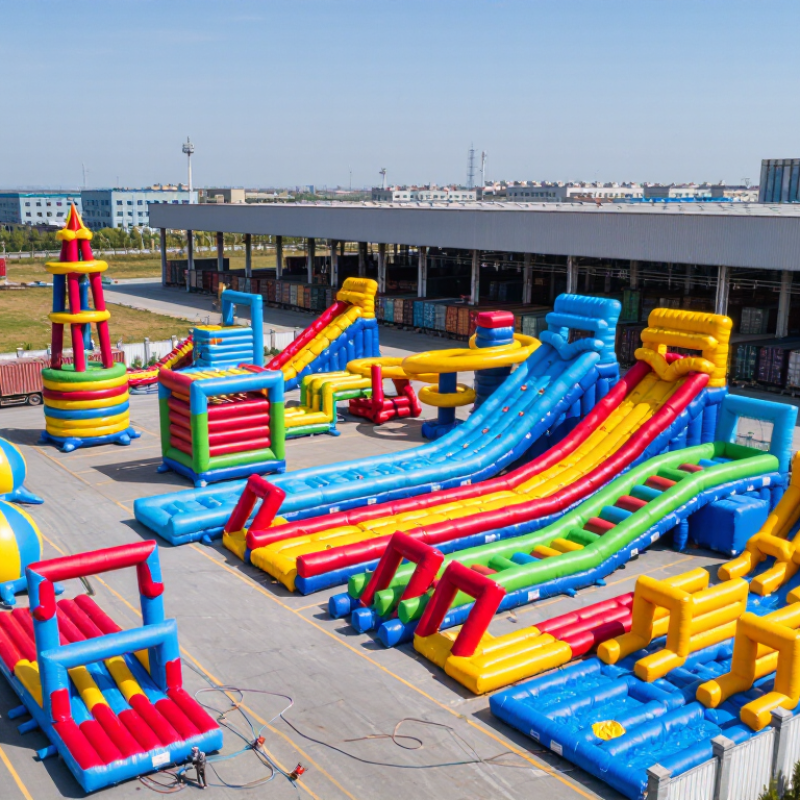
What Are Blow-Up Slide Rental Manufacturers?
Blow-up slide rental manufacturers are specialized companies that design, fabricate, test, and sometimes repair inflatable slides for rental operators. They are not simply event-rental businesses. Their work covers coated PVC selection, welded seams, anchor points, blower systems, climbing lanes, splash areas, and controlled deflation. A commercial slide may look playful, but its structure requires careful engineering.
Grand View Research valued the global amusement parks market at about USD 56 billion in 2022 and projected continued growth through 2030. This wider market does not measure inflatable slides alone. Still, it shows why durable, portable attractions matter to event suppliers. Manufacturers serving this segment should provide load guidance, setup instructions, inspection records, and replacement-part support. ASTM F2374 and EN 14960 are useful reference points for inflatable amusement equipment, although local requirements may differ.
Experienced rental operators usually examine seam quality, reinforced stress points, blower performance, and cleaning access before comparing prices. A practical test is simple: inspect the slide after repeated inflation, not only when it is new. Manufacturing photos can help, but they do not replace documented testing. Some buyers focus too much on colorful artwork. That can be a costly mistake. The less exciting details often matter more, including drainage, anchoring, repair response, and clear user-height limits. Real-world performance is still difficult to judge from a catalogue alone.
China Top 10 Blow Up Slide Rental Manufacturers? - What Are Blow-Up Slide Rental Manufacturers?
| No. | Evaluation Dimension | Typical Rental-Oriented Benchmark | Why It Matters | Recommended Verification |
|---|---|---|---|---|
| 1 | Product Definition | An inflatable slide designed for repeated commercial setup, operation, cleaning, dismantling, and transport. | Rental equipment requires greater durability and serviceability than occasional private-use inflatables. | Request product drawings, intended-use information, and a commercial-use specification sheet. |
| 2 | Main Fabric | Commercial inflatables commonly use coated PVC fabric, often specified around 0.55–0.90 mm depending on the component and design. | Fabric thickness, coating quality, and seam construction affect abrasion resistance, airtightness, and service life. | Check material declarations, thickness measurements, abrasion performance, and representative fabric samples. |
| 3 | Seam Construction | High-frequency welded seams are commonly preferred for load-bearing and airtight sections; reinforced stitching may be used in selected areas. | Seam failure is a major cause of air leakage, deformation, and downtime during rental operations. | Inspect seam width, weld consistency, corner reinforcement, load points, and sample air-retention results. |
| 4 | Safety Design | Typical features include enclosed climbing areas, protected slide exits, safety netting, handholds, guardrails, and clearly defined user flow. | A rental operator must control climbing, sliding, landing, and exit areas for different user groups. | Review risk assessments, age and height limits, user instructions, and applicable inflatable-playground standards. |
| 5 | Anchoring System | Products should include designed anchor points and anchoring instructions suitable for the intended ground conditions. | Wind and uneven anchoring can cause movement, tipping, or unsafe changes in slide geometry. | Verify anchor-point locations, anchor hardware, required quantities, wind limits, and setup diagrams. |
| 6 | Blower and Air System | Commercial units generally use continuous-duty blowers, separate air tubes, protective screens, and suitable electrical protection. | Stable airflow supports structural firmness and helps reduce operational interruptions. | Confirm blower specifications, electrical requirements, noise level, spare availability, and replacement procedures. |
| 7 | Setup and Transport | Rental-focused designs usually include carrying handles, storage bags, repair kits, drainage provisions, and folding instructions. | Fast loading and repeatable installation directly affect labor cost and daily rental capacity. | Ask for packed dimensions, net weight, setup workflow, recommended crew size, and transport requirements. |
| 8 | Cleaning and Maintenance | Practical designs use smooth, cleanable surfaces and provide accessible areas for inspection, drying, patching, and disinfection. | Frequent public use requires consistent hygiene and preventive maintenance. | Request cleaning instructions, compatible chemicals, drying guidance, inspection checklists, and repair materials. |
| 9 | Testing and Documentation | A professional supply package should include user manuals, inspection records, material information, safety labels, and test documentation. | Documents help operators train staff, demonstrate due diligence, and manage recurring inspections. | Check conformity claims against relevant requirements such as EN 14960 or ASTM F2374 where applicable. |
| 10 | After-Sales Support | Rental buyers typically need replacement blowers, repair patches, valves, anchor accessories, technical advice, and warranty support. | Reliable parts and service reduce downtime and protect the equipment’s operating value. | Confirm warranty coverage, response time, spare-part pricing, repair support, and availability of replacement components. |
Note: The benchmarks above are general purchasing guidelines for commercial blow-up slide rental equipment. Exact specifications vary by product size, design, operating environment, and applicable local regulations.
 '
'
