China Top 10 Custard Jelly Manufacturers for Global Buyers
For global buyers, choosing a Custard Jelly manufacturer means looking beyond bright packaging and a low quotation. The product must hold its texture through filling, sealing, shipping, and storage. A spoonful should feel smooth, not watery or overly firm. Small differences count. Flavor consistency, ingredient control, and clear production records can shape repeat orders.
This guide introduces ten manufacturers for buyers comparing suppliers across markets. It considers practical signals: product range, production capacity, export experience, quality systems, packaging choices, and responsiveness to sample requests. No single factor proves a supplier is right. Buyers should confirm current certifications, facility capabilities, ingredient specifications, shelf-life data, and destination-market requirements directly with each company. Details matter. A catalog may look complete, yet samples and technical documents often tell a more useful story.
Commercial terms deserve equal attention. Ask about minimum order quantities, lead times, carton dimensions, storage conditions, and how formula changes affect cost. Where possible, evaluate sealed samples after realistic transit and storage—not just at the first tasting. Rankings can simplify a complex decision, and they may not reflect every buyer’s priorities. This list is a starting point, not a guarantee. Even careful comparisons leave questions; a small trial order can reveal issues that a polished presentation misses. With clear checks and honest communication, buyers can identify partners suited to their product brief and market.
Understanding Custard Jelly and Its Global Market
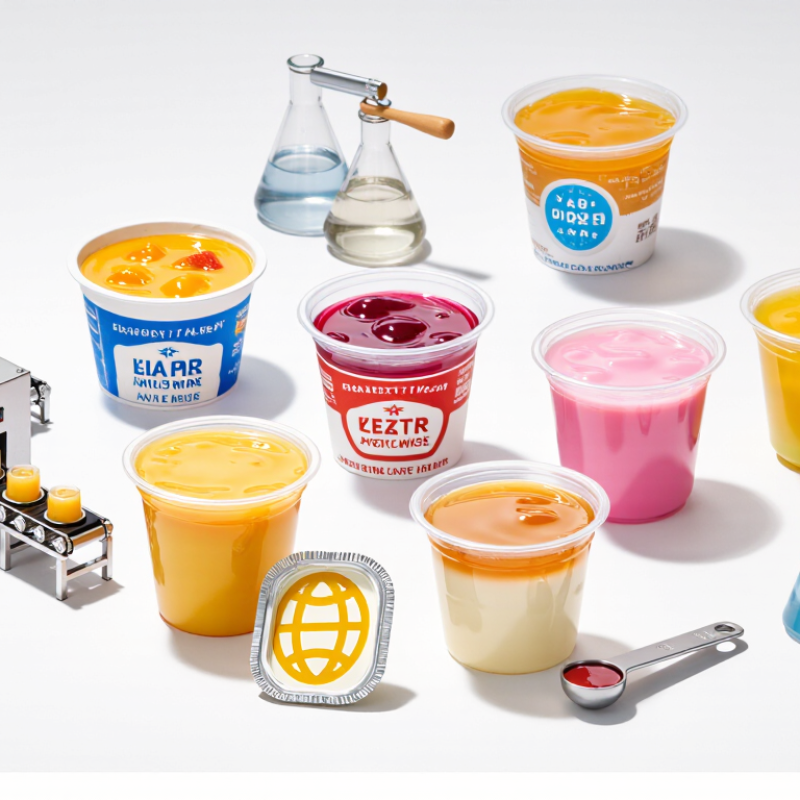
Custard jelly sits between spoonable custard and a set dessert. It commonly combines milk or milk powder, sugar, starch, and a gelling agent. Recipes vary across markets. Some products are served chilled in cups; others use firmer gels for easier transport and portioning. Consumers notice smoothness, clean flavor, and whether the dessert holds its shape after opening. Small texture flaws matter.
Industry figures offer context, not a direct measure of custard jelly sales. Allied Market Research valued the global gelatin market at $2.7 billion in 2021 and projected $5.0 billion by 2031, a 6.5% compound annual growth rate. Gelatin is only one possible setting agent, so this estimate should not be treated as the category’s market size. The OECD-FAO Agricultural Outlook 2024–2033 projects world milk production to grow about 1.6% annually, reaching roughly 1,060 million tonnes by 2033. This gives buyers useful context on dairy supply, but it cannot guarantee stable costs or consistent quality. Check ingredient declarations, storage requirements, cup seals, and texture after shipping. That last test is easy to miss. A dessert may look perfect at the factory, then soften during a warm transit leg.
How to Evaluate Chinese Custard Jelly Manufacturers
A practical evaluation of Chinese custard jelly manufacturers starts with a written product specification, not a sales claim. Ask for the ingredient list, serving size, texture targets, and shelf-life conditions. Details matter. Check whether each batch can be traced to production records and ingredient lots. A clear answer is more useful than a polished brochure.
Review the factory’s quality controls and request relevant test reports for the finished product. Ask how staff check filling weights, seal strength, and hygiene during production. If the jelly needs specific storage conditions, confirm these on the label and shipping documents. Request packaging samples, too. A neat pouch may still leak after handling. Ask again if test results or process descriptions are vague.
Before a large order, compare samples made under normal production conditions, not only hand-prepared ones. Assess flavor, firmness, color, and consistency across several cups. Confirm minimum order quantities, lead times, carton dimensions, and how the factory handles defects. It is easy to focus on taste and overlook seal consistency. No checklist catches everything, so record open questions and resolve them before approving a specification. A brief factory audit, when feasible, can help verify that documented procedures match the production floor.
Profiles of 10 Leading Custard Jelly Manufacturers in China
Profiles of ten Chinese custard jelly manufacturers are most useful when they compare production strengths, not just product photos. The range includes cup-pudding specialists, jelly-and-custard lines, export-focused factories, private-label producers, high-volume automated plants, flexible small-batch makers, ambient-fill operations, chilled dessert suppliers, texture-focused formulators, and firms offering custom packaging. Grand View Research estimated the global confectionery market at USD 232.6 billion in 2023, with projected growth through 2030. That broad category is not a custard-jelly sales figure, but it signals a competitive sweets market where consistency and packaging matter.
For each profile, buyers should check batch capacity, minimum order quantities, filling accuracy, and whether samples match bulk production. Ask for shelf-life test conditions, ingredient specifications, and recent third-party food-safety audit records. A clear answer should identify storage temperature and handling needs. Small details count: a sealed cup that leaks after transport can outweigh attractive pricing. Very practical. Also compare texture after storage, since a smooth sample may become watery or firm over time. The profiles should distinguish verified factory capabilities from sales claims. Grand View Research’s market data gives context, not proof that any supplier is export-ready; that judgment needs product testing and document review. A neat catalog is not enough.
Comparing Product Range, Certifications, and Production Capacity
Comparing ten custard jelly manufacturers requires more than counting flavors. Check whether each supplier offers cups, pouches, or multipacks, and whether recipes can be adjusted for sweetness, texture, or fruit content. Ask for samples in the intended package. A jelly that holds its shape in a cup may behave differently after transport or warm storage.
Certifications matter when their scope matches the actual factory and product. Request current documents, confirm the production site and covered processes, and check whether audits address hygiene, traceability, and allergen controls. A certificate alone does not prove that every shipment will meet expectations. Ask how batches are tested and how complaints are investigated. A neat brochure is not proof.
Production capacity should be checked against realistic order volumes and delivery windows. Compare stated monthly output with line count, minimum order quantities, lead times, and seasonal availability. Ask for evidence such as recent production schedules or a sample batch record, with confidential details removed. Capacity figures can be optimistic. Buyers should also discuss backup plans for packaging delays and how changes are approved before a run begins. One missed detail, such as cup dimensions, can slow a shipment.
Export, Packaging, and Supplier Selection Considerations
For global buyers, export readiness means more than a quoted price. Ask suppliers for a current product specification, ingredient list, allergen information, and shelf-life data. Confirm that the stated shelf life reflects the actual recipe and packaging, not an estimate. Small details matter. Request samples from a recent production batch and compare texture, sweetness, and portion size with your target market.
Packaging should protect custard jelly through storage and transport. Check cup and lid seals, carton strength, and how many units fit safely on a pallet. Ask for photos of packed cartons and clear loading details before approving an order. Temperature and humidity can affect quality, so discuss the planned shipping route and storage conditions. Labels should match the destination market’s requirements and the approved product information. A neat mock-up is useful, but it is not proof of compliant printing.
Supplier selection also needs practical checks. Review the factory’s quality procedures, production capacity, export documents, and response time when problems arise. A video call can clarify processes, though it cannot replace a suitable independent inspection when the order is large. Consider a trial shipment before committing to volume. That is not enough. Buyers sometimes focus on unit cost and overlook fees, delays, or inconsistent batches; I would compare the full landed cost and keep written acceptance criteria. No supplier is risk-free, and a small pilot can reveal gaps on both sides.
Custard Jelly Supplier Selection: Buyer Scorecard
Suggested evaluation weights for comparing manufacturers; these are buyer-defined priorities, not measured market statistics or ratings of specific companies.
Use the 100-point framework as a starting point, then adjust the weights for destination-market regulations, product specifications, order size, and delivery requirements.

 '
