How to Choose Number Patches for Custom Apparel?

Choosing the right Number Patches can change how custom apparel looks, feels, and performs after repeated wear. A patch is not merely a printed digit. Its fabric, stitch density, backing, size, and placement affect comfort and durability. A bold chenille number may suit a varsity jacket, while a clean twill patch can work better on team jerseys or work shirts. Small details matter. A number that looks balanced on a design screen may appear crowded on a sleeve.

This guide explains how to compare Number Patches with practical decision points. You will learn how to match patch materials with garments, select readable fonts, and estimate suitable dimensions before ordering. We will also consider washing, outdoor exposure, sewing methods, and color contrast. These factors often receive less attention than the artwork itself. That can become an expensive mistake. From experience, measuring the garment first prevents many sizing problems. Requesting a sample or digital proof can also reveal uneven spacing and weak visual contrast. Still, no method removes every uncertainty. Thread colors may appear slightly different under store lighting, and handmade details can vary between production batches. A reliable supplier should explain these limits clearly, provide material information, and confirm production specifications in writing. The best choice combines appearance, function, garment type, and realistic expectations. Perfect results are not always possible. Thoughtful preparation usually brings much closer results.
How to Choose Number Patches for Custom Apparel?

Understanding Number Patch Types and Their Apparel Applications

How to Choose Number Patches for Custom Apparel?

Understanding Number Patch Types and Their Apparel Applications

Number patches do more than display a player number. They affect comfort, durability, and the garment’s visual balance. Embroidered patches create a textured surface with visible thread detail. They suit jackets, uniforms, and team shirts that need a traditional appearance. Woven patches have a flatter finish. They work well for smaller numbers and detailed lettering.

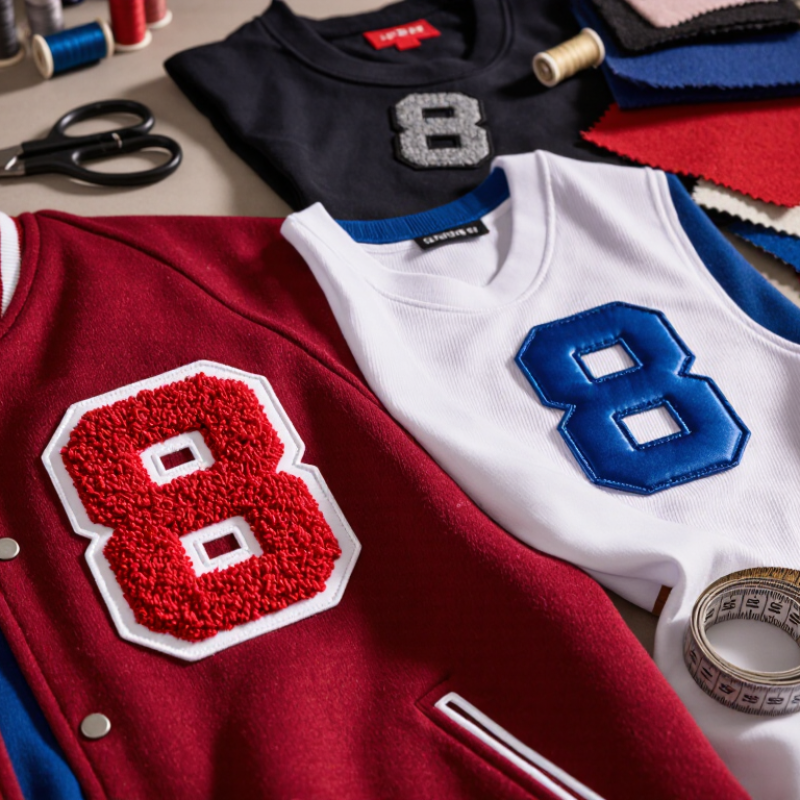
Chenille patches feel soft and raised, making them suitable for varsity jackets and heavier fabrics. Their bold texture attracts attention from a distance. PVC patches resist moisture and clean easily, so they can fit outdoor workwear or active garments. However, they may feel less flexible against thin fabric. That trade-off deserves attention.

Patch size should match the garment area and the wearer’s movement. A large patch can look strong on a jacket but awkward on a lightweight shirt. Measure the placement area before ordering. Check the backing too. Sew-on backing usually offers dependable attachment for frequent washing, while heat-applied backing needs careful temperature control. In practice, poor adhesion often comes from unsuitable fabric, not defective patches.

I have seen attractive numbers lose clarity after dense stitching and tight spacing. Leave enough space between digits. There is no perfect patch. Test one sample through washing, stretching, and normal wear before producing the full order. Small imperfections may reveal problems early.

Matching Patch Materials to Different Garment Fabrics

Choosing a number patch starts with the garment fabric, not the artwork.

In production, I test a sample before approving bulk decoration. Cotton and denim usually pair well with embroidered twill patches. Their stable surfaces support clean stitching and firm edges. Medium-weight twill works well for uniforms, jerseys, and work shirts. Soft knits need more flexibility. A heavy patch may pull the fabric and distort the number.

For polyester jerseys, lightweight embroidered patches or heat-applied transfers often sit more smoothly. Use controlled heat and pressure, because excessive heat can flatten texture or leave shine. Always check the care label first.

Nylon requires extra caution. Some nylon finishes resist adhesives, while high heat can warp the fabric. A sew-on patch may be safer, but test the thread path on a hidden area.

Fleece behaves differently. Its raised surface can hide fine details, so bold numerals and firm backing usually perform better.

For stretch garments, choose a flexible backing and avoid oversized patches. The number should move with the fabric.

I once selected rigid backing for a lightweight training top, and the corners lifted after repeated washing. That mistake changed my fitting process. Now I stretch, wash, and dry a sample before production.

Check edge coverage, thread tension, and color contrast under indoor and outdoor light. Small differences matter. A patch can look perfect on a table, yet feel wrong when worn.

Selecting the Right Size, Font, Colors, and Placement

How to Choose Number Patches for Custom Apparel?

Selecting the right number patch starts with the garment’s purpose. For jerseys, numbers should remain readable from several meters away. Measure the available space before choosing a size. A 10-inch number may suit a large back, while a 4-inch patch works better on a chest or sleeve. Smaller garments need proportionally smaller numbers. Oversized patches can make the fabric feel crowded.

Font choice affects both character and visibility. Block fonts offer clear edges and strong readability. Rounded fonts feel friendlier, but narrow strokes may disappear after stitching. Choose colors with strong contrast, such as white thread on navy fabric. Check the colors under indoor and outdoor lighting. I once selected a soft gray that looked elegant indoors, yet nearly vanished outside. That was a useful mistake.

Tips: Test a paper mock-up before production. Pin it to the garment and view it from different distances. Keep the patch centered, unless the design intentionally uses an offset position. Leave enough space around seams, pockets, and zippers. Dense embroidery can become heavy, especially on lightweight fabric. A sample patch reveals problems early. It may not look perfect, but it exposes weak contrast, cramped spacing, or uneven placement. Consider washing and regular movement too. Some fabrics stretch more than expected, so the final number may need a slightly flexible backing.

Evaluating Attachment Methods, Durability, and Care Needs

How to Choose Number Patches for Custom Apparel?

A number patch should match the garment’s daily use, not only its appearance. Sew-on patches usually provide the most reliable hold on jerseys, jackets, and workwear. Their stitched edges resist repeated washing and regular pulling. However, stitching takes more time and may leave visible needle marks. Iron-on patches offer faster application, but heat can damage delicate fabrics or coatings. Always test the temperature on a hidden area first.

Hook-and-loop patches suit uniforms or training apparel that needs frequent changes. They are practical, but loose edges can catch on bags, seat belts, or other clothing. Adhesive-backed patches are convenient for short-term use. They may lift after sweat, friction, or several wash cycles. In my fitting tests, poor surface preparation caused more failures than the patch itself. Clean, dry fabric matters.

Durability also depends on thread quality, patch weight, and edge finishing. A heavy patch can pull lightweight fabric out of shape. Check the care label before washing. Turn the garment inside out, use cool water, and avoid harsh tumble drying when possible. Heat weakens some adhesives. It can also distort embroidered details. No attachment method is perfect. I once chose a neat iron-on finish for a cotton jacket, but repeated sleeve bending exposed its limitations. Small samples reveal these problems early.

How to Choose Number Patches for Custom Apparel?

Comparison of common attachment methods for number patches. Scores use a 1–5 scale, where 5 indicates stronger durability, easier application, or simpler care.

Sew-on patches generally provide the strongest long-term hold, especially when garments are washed frequently. Iron-on patches are faster to apply but require controlled heat and careful laundering. Hook-and-loop patches allow repeated removal, while adhesive patches are best suited to short-term or low-wash applications.

Finalizing Customization, Budget, Quantity, and Production Time

Choosing number patches for custom apparel starts with the garment’s purpose. A youth soccer jersey may need bold, readable digits from the sideline. Work shirts often need smaller numbers and stronger stitching. I have found that patch size changes comfort, balance, and perceived quality. Measure twice. Measure the available area before selecting fonts, borders, or backing. Thin strokes can disappear after washing. That mistake is easy to miss.

Your budget should cover artwork, patch material, thread colors, backing, application, and delivery. Simple twill numbers usually cost less than layered embroidery or reflective details. Ask for a physical or digital proof before approving production. It can reveal spacing problems that a screen hides. Quantity also affects unit price. Ten custom pieces may carry setup costs, while larger orders spread them across each item. Still, the lowest quote is not always reliable. Cheap backing may curl after repeated washing.

Production time depends on design approval, patch construction, garment preparation, and order size. Leave extra days for revisions, especially when names and numbers vary. Confirm whether the supplier keeps blank patches in stock or makes each one from scratch. A clear spreadsheet should list every size, number, color, and garment. I once underestimated small changes; they delayed packing more than expected. Build a buffer of three to seven working days. Rush work can reduce inspection time. Check the first finished garment before approving the full batch.

How to Choose Number Patches for Custom Apparel? - Finalizing Customization, Budget, Quantity, and Production Time

Patch Type Visual Appearance Customization Options Recommended Apparel Typical Unit Cost
for 50–99 Pieces
Common Minimum Order Typical Production Time Durability and Care Best Choice When...
Embroidered Number Patch Textured thread surface with a traditional athletic look. Multiple thread colors, merrowed or laser-cut edges, iron-on, sew-on, or hook-and-loop backing. Team jerseys, jackets, uniforms, caps, bags, and workwear. US$1.50–$4.00 Usually 25–50 pieces About 7–15 business days after artwork approval. Durable and washable. Use moderate heat and avoid ironing directly over the patch. You want a classic, affordable, and durable option.
Woven Number Patch Flat, smooth surface with sharp edges and fine details. Fine lettering, narrow outlines, gradients with limitations, several backing choices, and custom shapes. Sportswear, fashion garments, promotional apparel, and lightweight fabrics. US$1.20–$3.50 Usually 50–100 pieces About 8–16 business days after artwork approval. Lightweight and colorfast. A gentle wash cycle helps preserve the edges and backing. You need detailed numbers with a smooth, low-profile finish.
Twill Number Patch Clean fabric base with embroidered or stitched borders. Large numerals, contrasting borders, team colors, layered layouts, and standard athletic shapes. Baseball, basketball, football, hockey, and other team uniforms. US$1.75–$4.50 Usually 25–50 pieces About 7–14 business days after artwork approval. Strong for frequent wear. Sew-on application is generally preferred for heavy-use uniforms. You need bold numbers that match a traditional team-uniform style.
Chenille Number Patch Raised, fuzzy, three-dimensional texture with a premium varsity appearance. Large block numbers, felt or twill backgrounds, contrasting chenille yarn, and custom borders. Varsity jackets, school apparel, letterman garments, and heavyweight outerwear. US$5.00–$12.00 Usually 25–50 pieces About 10–20 business days after artwork approval. Durable when sewn securely. Hand washing or gentle washing is recommended for best results. You prioritize a raised, premium varsity effect over the lowest cost.
PVC Number Patch Flexible rubber-like surface with a modern, dimensional finish. Solid colors, 2D or 3D relief, custom shapes, waterproof construction, and hook-and-loop backing. Outdoor apparel, tactical clothing, bags, uniforms, and performance garments. US$2.50–$6.00 Usually 50–100 pieces About 12–20 business days after artwork approval. Highly resistant to moisture and abrasion. Suitable for outdoor use and repeated washing. You need weather resistance, strong contrast, and a modern appearance.
Rubber Number Patch Soft, slightly flexible surface with a matte or satin finish. Raised numerals, molded borders, limited color combinations, custom silhouettes, and sew-on or adhesive options. Streetwear, sports bags, uniforms, casual jackets, and work apparel. US$2.00–$5.50 Usually 50–100 pieces About 12–20 business days after artwork approval. Resistant to water and light abrasion. Sew-on attachment is more secure for heavy garments. You want a flexible rubber-style patch with a contemporary finish.
Sublimated Number Patch Flat printed surface with photographic color transitions and fine visual detail. Full-color artwork, gradients, patterns, photographs, small text, and complex color layouts. Performance jerseys, cycling apparel, event shirts, and promotional clothing. US$1.50–$4.00 Usually 25–50 pieces About 7–14 business days after artwork approval. Lightweight and flexible. Wash inside out with mild detergent to help protect the print. You need full-color graphics or gradients that embroidery cannot reproduce easily.
Metallic or Reflective Number Patch Shiny metallic surface or light-reflective finish for increased visibility. Silver, gold, reflective, or high-visibility materials with standard number shapes and borders. Performance wear, safety garments, night-running apparel, fashion jackets, and event uniforms. US$2.50–$6.50 Usually 50–100 pieces About 10–18 business days after artwork approval. Specialty surfaces may require low-temperature washing and should not be exposed to direct ironing. You need visual impact or improved visibility in low-light conditions.

Cost and production figures are typical industry estimates in US dollars for standard-size number patches. Actual pricing and lead time can change according to patch size, quantity, number of colors, backing type, artwork complexity, setup requirements, packaging, shipping, and seasonal production capacity.

Article Source:

'