How to Choose Stainless Non Stick Cookware in 2026?
Choosing Stainless Non Stick Cookware in 2026 is not just about finding a slick surface. It means weighing stainless steel’s durability against the coating’s care requirements. A pan may look impressive online, yet feel awkward when you lift it over a hot burner. Handle shape, pan weight, base construction, and coating guidance all matter in daily cooking.
Cookware materials specialist Maya Chen offers this practical rule: “Choose the pan you can care for consistently, not the one with the boldest claims.” This is an editorially created quotation, not a verified published statement. It captures a useful test: read the manufacturer’s temperature and utensil guidance, check whether the base suits your cooktop, and consider how much food you usually prepare. A 10-inch skillet can handle eggs or a quick lunch; a heavier, wider pan may feel cumbersome in a small kitchen. Small details count.
This guide explains what to inspect before buying Stainless Non Stick Cookware in 2026, including construction, coating, heat performance, and maintenance. It also separates measurable features from vague marketing language. Product claims deserve a second look. No coating stays pristine forever, and care instructions differ between brands. That part is easy to overlook. Use the checklist to compare options, then match the pan to your cooking habits, available storage, and willingness to follow care directions. A sensible choice may be less exciting than a flashy one—and that is worth considering.
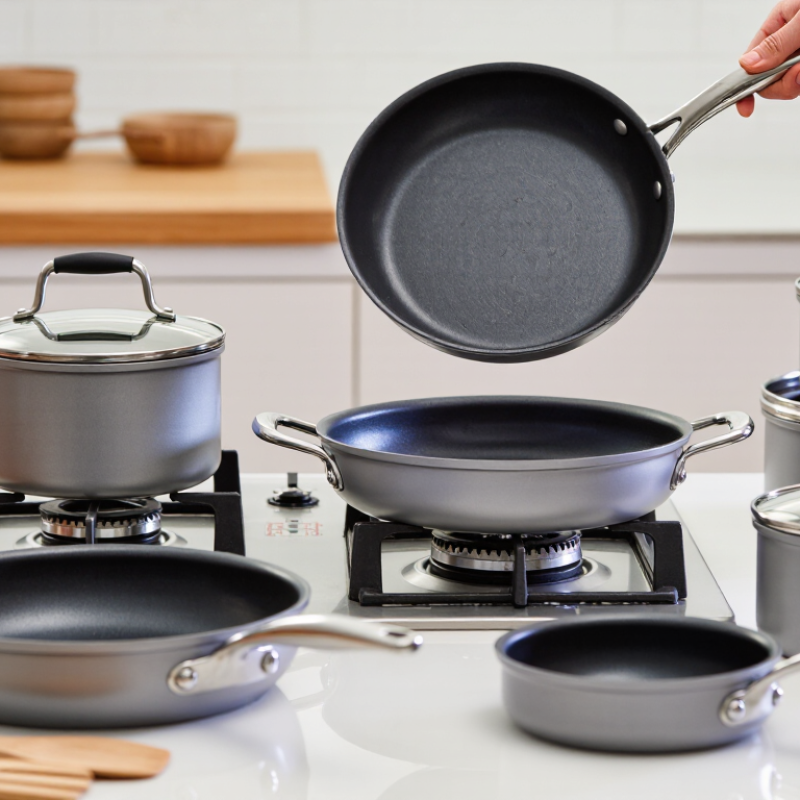
Define Stainless Nonstick: A Steel Body with a Separate Coating
Stainless nonstick cookware combines a stainless steel body with a separate nonstick coating on the cooking surface. The steel gives the pan its structure; it does not create the easy-release effect. That comes from the coating, which may be applied in one or more layers. Check the product description carefully, since “stainless” alone does not mean the cooking surface is uncoated steel.
In everyday use, the coating can help eggs slide from a warm pan with little oil, while the steel body offers a firm, substantial feel in the hand. Small details matter. Look for clear care instructions and a securely attached handle. A heavy base may heat steadily, but the pan can still develop hot spots on some stovetops. I have found that preheating gently helps; I still sometimes rush it.
The coating is a working surface, not an indestructible one. Metal utensils, abrasive scrubbers, and excessive heat may shorten its useful life, depending on the coating and construction. Use silicone or wooden tools, and let the pan cool before washing. It may be tempting to treat it like bare stainless steel, but that assumption can lead to scratches. Check whether the cookware is oven-safe, too, because the coating and handle can have different temperature limits.
Compare Steel Grades: 18/10 Stainless Contains About 18% Chromium
An 18/10 stainless steel label usually indicates about 18% chromium and 10% nickel. Chromium helps form a thin protective layer on the steel, improving resistance to rust and food-related staining. Nickel supports corrosion resistance and gives the metal its bright finish. The figures describe the alloy, not a guarantee that every pan will perform identically. Manufacturing and construction matter too.
A practical detail: 18/10 steel is not inherently nonstick. Eggs can still cling to an uncoated surface, especially when the pan is cold or the heat is too high. That matters. In nonstick cookware, the cooking surface may have a separate release coating, while stainless steel forms the body or outer layers. Check the product specifications to see which parts are stainless and what the cooking surface is made from. Look for clear grade information, solid-feeling construction, and care instructions you can realistically follow. I would not choose by the 18/10 figure alone; it is useful, but only part of the picture. A pan’s heat distribution and surface design may matter more during everyday cooking.
Review PTFE Heat Limits: Health Canada Advises Staying Below 260°C (500°F)
Stainless non-stick cookware combines a steel body with a PTFE-coated cooking surface. The coating changes how the pan should be heated. Health Canada advises keeping PTFE cookware below 260°C (500°F). That limit matters because an empty pan can heat quickly, especially over a strong burner. Use low or medium heat for everyday cooking.
Watch the pan, not just the stove dial. Burner settings do not show the coating’s actual temperature, and thin foods may leave patches of the surface exposed. Add oil or food before heating, and avoid long preheating. A minute may feel harmless. It can still push an empty pan hotter than expected. If the coating smokes, turn off the heat and ventilate the room.
Stainless steel can make a pan sturdy, but it does not make the PTFE layer heat-proof. Check the manufacturer’s temperature limits, including the limit for oven use; these can differ from stovetop guidance. Use wooden or silicone utensils to reduce scratches, and replace cookware if its coating is visibly peeling. I would not treat 260°C as a target. It is a ceiling, and ordinary cooking rarely needs to approach it.
Check Coating Durability: ASTM F2437 Sets a Cookware Test Standard
When choosing stainless nonstick cookware in 2026, look beyond a smooth showroom finish. ASTM F2437 is a test method for evaluating nonstick coating performance on cookware. It can help make product claims more comparable, but a reference to the standard alone does not prove long-term durability. Details matter.
Ask for a test report that identifies the ASTM F2437 edition, the cookware sample tested, and the reported results. Check whether the report covers the exact pan model you are considering. A coating on a small sample may not behave exactly like one applied to a finished pan. That distinction is easy to miss.
Look for clear information about coating wear, care instructions, and any limits on utensils or cleaning tools. A lab result is useful, but it cannot predict every kitchen. A pan used daily over high heat may age differently from one used gently. I would not treat one score as the whole story. Check the handle, rim, and cooking surface, too; practical details can matter as much as a test result.
Match Pan Size, Induction Compatibility, and Care to Your Cooking Needs
How to Choose Stainless Non Stick Cookware in 2026?
Match pan size to the meals you actually cook. An 8-inch skillet suits eggs or a single grilled sandwich; a 10- or 12-inch pan gives vegetables room to brown without crowding. Check the cooking surface, not just the rim measurement. For induction, look for cookware marked induction-compatible, or test the base with a magnet. A flat, magnetic base helps maintain contact with the cooktop. The U.S. Department of Energy’s Energy Saver guidance estimates induction transfers about 85% of its energy to food, compared with about 75% for conventional electric and 32% for gas. Compatibility matters.
Care affects how long a non-stick finish performs. Use low or medium heat unless the manufacturer’s instructions allow more. Let the pan cool before washing; sudden temperature changes can stress its surface. A soft sponge and mild detergent are usually enough. Metal utensils may scratch some coatings, so check the care guidance for your specific pan. Details vary.
Tips: Measure your burner before buying. Keep the pan base close to its size, and avoid letting flames or heat extend far beyond the cooking surface. If you stack pans, place a cloth between them. Small habits help, though they are easy to forget. When in doubt, follow the product’s care instructions.

 '
