Choosing the best Artificial Leather for your business is not a simple color decision. It is a materials decision.
A surface may look like genuine leather under showroom lights, yet crack after months of bending. Another option may feel softer, but absorb stains near zippers, seams, or vehicle seats. Your final choice should match the product’s real working conditions. Consider abrasion resistance, flexibility, hydrolysis performance, UV stability, cleanability, thickness, backing fabric, and bonding strength. Request technical data sheets and independent test reports. Samples matter, but laboratory evidence matters more.
Dr. Richard P. Wool, a respected materials scientist and bio-based polymer researcher, has said, “The future of materials is bio-based.” His observation encourages buyers to examine more than appearance. Ask whether the Artificial Leather uses recycled or bio-based content, how its coating is produced, and whether its environmental claims are measurable. Certifications can help, but they should not replace careful verification.
Think about the whole product.
For furniture, repeated sitting, cleaning chemicals, and seam tension deserve attention. For footwear, flex testing and moisture resistance may matter more. For bags, edge durability and color transfer can decide customer satisfaction. Cost remains important, although the cheapest roll may create higher replacement expenses later. I have seen purchasing teams focus on price per meter and overlook failure costs. That approach sounds efficient, but it is incomplete.
A reliable supplier should provide consistent batches, clear specifications, realistic lead times, and responsive technical support. Test the material in your own production process before placing a large order. Artificial Leather is never perfect for every application. The best choice is the one that performs honestly where your customers will use it.
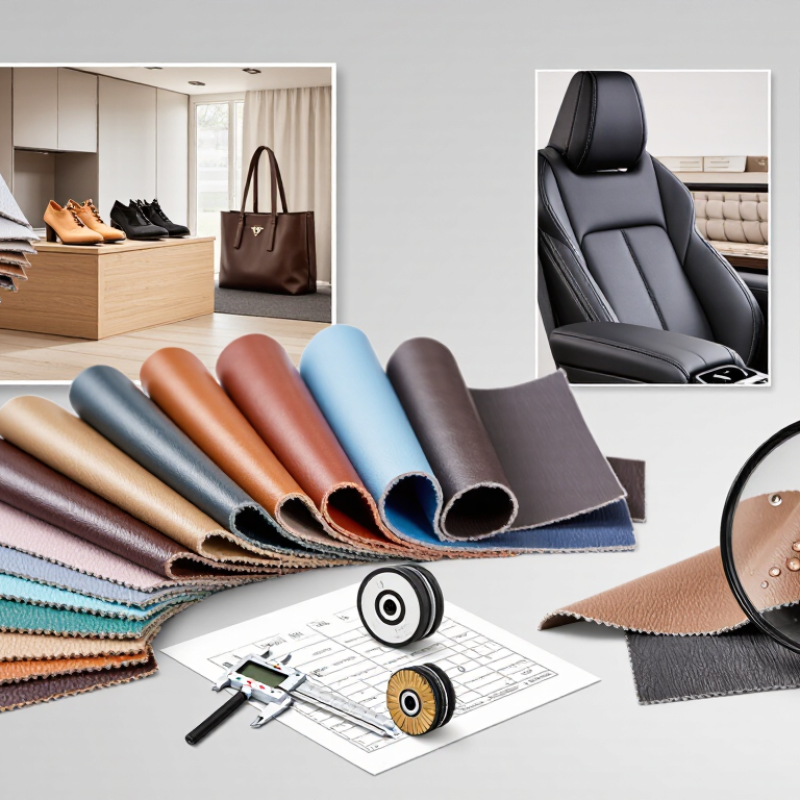
Before choosing artificial leather, define where and how it will be used. A restaurant seat needs strong abrasion resistance, easy cleaning, and stable color. A handbag may need softness, edge flexibility, and a refined grain. For vehicle interiors, heat, cold, UV exposure, and hydrolysis resistance matter more. Grand View Research reports that the global synthetic leather market was valued at approximately USD 39.5 billion in 2023. This growth reflects wider demand, but market size alone cannot identify the right material for your business.
Write a clear material brief. Include thickness, backing fabric, surface finish, color tolerance, cleaning chemicals, and expected service life. Ask suppliers for test results, not only samples. Martindale abrasion testing, tensile strength, flex resistance, and accelerated ageing data can reveal weaknesses hidden by attractive showroom lighting. Chemical performance also deserves attention. A material that survives mild soap may fail after repeated exposure to disinfectant. That difference can create costly replacements. I have seen teams specify “premium quality” without defining it. The phrase sounds professional, but it is not a measurable requirement.
Tips: Test finished goods, not just flat swatches. Compare three production batches. Request technical data sheets and traceable test methods. Check the backing, because surface appearance can hide weak bonding. Consider recycled content carefully; Textile Exchange’s Materials Market Report shows rising interest in recycled inputs, yet recycled content does not automatically mean better durability. My own preference is to balance performance, maintenance, appearance, and price. One factor should not dominate. Recheck your assumptions after a small field trial. That step may expose an uncomfortable mistake.
Choosing artificial leather starts with its material structure, not its color or grain. A finished sheet normally combines a surface film, resin layer, textile backing, and embossed texture. PVC leather uses polyvinyl chloride and often delivers strong abrasion resistance at a controlled cost. PU leather feels softer and bends more naturally. Microfiber leather adds a dense, three-dimensional nonwoven base for improved strength and recovery. That distinction matters.
Grand View Research estimated the global synthetic leather market at about US$39.5 billion in 2023. Fortune Business Insights reported a lower figure because its market scope differs. These gaps deserve attention. Report definitions can change the purchasing decision. For furniture, I test repeated flexing, seam tension, and surface transfer. PU may feel premium, yet heat and humidity can accelerate hydrolysis in weak formulations. PVC can resist moisture better, but its surface may feel less breathable. Microfiber usually performs well under repeated bending, although its higher price needs commercial justification.
Ask suppliers for coating thickness, backing composition, abrasion results, hydrolysis testing, and batch consistency. A showroom sample is not enough. I once trusted softness too quickly. The finished material later showed edge cracking after aggressive folding. That mistake changed my inspection routine. Compare identical thicknesses and backing weights. Check the reverse side, where weak adhesion often becomes visible. Choose the structure that matches real use, cleaning frequency, temperature, and expected service life.
| Artificial Leather Type | Typical Material Structure | Breathability | Abrasion Resistance | Hydrolysis Resistance | UV and Weather Resistance | Flexibility and Hand Feel | Cleaning and Chemical Resistance | Relative Cost | Common Business Applications |
|---|---|---|---|---|---|---|---|---|---|
| PVC Leather | Polyester, cotton, or knitted textile backing coated with polyvinyl chloride and plasticizers; often embossed with a grain pattern. | Low | Good | Good | Good to very good | Firm to medium; can become less flexible at low temperatures depending on formulation. | Good resistance to water, oils, and many household cleaning agents; strong solvents may damage the coating. | Low | Contract seating, automotive interiors, bags, footwear, luggage, protective covers, and cost-sensitive upholstery. |
| Solvent-Based PU Leather | Textile backing with a polyurethane coating formed using organic solvents; commonly built with one or more PU surface layers. | Low to medium | Good to very good | Variable | Good | Soft, smooth, and leather-like; usually more supple than PVC. | Good resistance to normal wear and mild cleaners; strong alkalis, solvents, and excessive heat can affect the coating. | Low to medium | Fashion accessories, footwear, furniture upholstery, vehicle trim, handbags, and consumer products. |
| Waterborne PU Leather | Textile backing coated with an aqueous polyurethane dispersion; water replaces most of the organic solvent used during coating. | Medium | Good to very good | Variable to good | Good | Soft and flexible, with a natural-looking surface when properly formulated. | Good resistance to routine cleaning; performance depends strongly on crosslinking, topcoat, and curing conditions. | Medium | Indoor furniture, footwear, bags, apparel accessories, and products where lower solvent emissions are preferred. |
| Microfiber PU Leather | Three-dimensional nonwoven microfiber base, usually made from ultra-fine polyester or nylon fibers, impregnated and coated with polyurethane. | Medium to high | Very good | Good to very good | Good | Dense, strong, and highly flexible; can provide a suede-like or full-grain-like feel. | Good resistance to abrasion and repeated flexing; cleaning suitability depends on the finish and pigment system. | Medium to high | Premium footwear, automotive trim, furniture, bags, sports equipment, and high-wear products. |
| Silicone Leather | Woven or knitted textile backing coated with silicone elastomer, usually with a cured silicone surface layer. | Medium | Very good | Excellent | Excellent | Soft, elastic, and smooth; maintains flexibility over a wide temperature range. | Very good resistance to water, stains, UV exposure, and many cleaning chemicals; bonding and printing require compatible systems. | High | Healthcare seating, marine interiors, outdoor upholstery, transportation interiors, hospitality, and demanding contract environments. |
| Bio-Based PU Leather | Polyurethane coating and textile backing incorporating a specified portion of plant-derived feedstock; the structure remains PU-based. | Medium | Good to very good | Variable | Good | Comparable to conventional PU when the same coating technology and topcoat are used. | Generally similar to the equivalent PU product; performance must be confirmed through product-specific testing. | Medium to high | Fashion goods, furniture, footwear, accessories, and products with renewable-content targets. |
| PVC-Free TPO or TPU Coated Fabric | Textile backing coated with thermoplastic polyolefin or thermoplastic polyurethane; may be laminated or embossed. | Low to medium | Good to very good | Good to very good | Good to excellent | Flexible and resilient; TPU generally provides a softer, more leather-like hand than TPO. | Good resistance to water and many chemicals; exact performance varies with polymer grade and topcoat. | Medium to high | Automotive interiors, technical bags, outdoor products, protective covers, and PVC-free applications. |
| Comparative guidance only: performance varies with resin grade, backing fabric, coating thickness, plasticizers, pigments, topcoats, lamination, and manufacturing conditions. Before purchase, request technical data and verify relevant tests such as abrasion, flexing, hydrolysis, UV exposure, adhesion, and cleaning resistance under the intended use conditions. | |||||||||
Durability begins with the product’s intended use. Seating in a busy café needs stronger abrasion resistance than decorative wall panels. Ask for abrasion results, flex testing, and coating thickness. A showroom sample can mislead. Request a production sample instead. Bend it repeatedly by hand. Look for cracking, color change, or surface peeling. Check stress around stitched edges. In my experience, pale materials reveal dirt faster than darker finishes. That detail affects cleaning costs and customer impressions.
Appearance should support your space, not compete with it. Inspect the material under daylight and warm indoor lighting. Compare grain depth, gloss, and color consistency across several samples. Poorly printed patterns may look artificial when installed over large areas. Safety requires more than a supplier’s verbal assurance. Ask for current test documents covering flame behavior, restricted substances, and indoor emissions. Confirm that the documents match the exact material and intended application. A faint chemical odor is worth investigating, although odor alone does not prove a safety problem.
Maintenance can determine whether the material remains attractive after a year. Wipe a sample with the cleaner your staff will actually use. Then inspect it after repeated cleaning. Some coatings resist stains but weaken under harsh chemicals. Others feel soft but mark easily. Create a simple care schedule and train employees to follow it. I once underestimated routine cleaning time, and the labor cost changed the original calculation. Real use is messier than the sample room.
Choosing artificial leather begins with checking the supplier, not admiring a color chart. Request business registration details, factory photographs, production capacity, and recent customer references. A video inspection can reveal storage conditions, cutting equipment, and poor ventilation. Ask for a physical sample from current production. One perfect sample proves little.
Certifications need careful reading. Request complete test reports, issuing laboratory details, test dates, and product scope. Check performance for abrasion, hydrolysis, colorfastness, and restricted substances. Requirements may differ for furniture, footwear, automotive interiors, or bags. Do not accept a certificate as decoration. Confirm that the tested material matches the proposed backing, coating, and thickness.
Customization should cover grain, color, gloss, softness, width, embossing, and backing fabric. Approve a sealed production sample before placing a large order. Record acceptable tolerances for shade and thickness. Small differences can become expensive across hundreds of meters. Minimum order quantities also deserve negotiation. Ask about setup fees, repeat-order quantities, lead times, and leftover stock. A trial order may cost more per meter, but it exposes problems early. I would rather lose a little money testing than discover peeling after delivery. Still, trial orders are not perfect; one shipment cannot predict every seasonal variation. Keep inspection records, retain reference samples, and review defects with the supplier in writing.
Choosing artificial leather should begin with total cost, not the roll price. A cheaper surface may create higher cutting waste, slower sewing, or earlier replacement. In production work, I compare material price, usable width, thickness, yield, labor, freight, storage, and expected service life. The calculation must follow the finished product, not the supplier’s quotation alone.
Use this practical formula:
total unit cost = material cost + processing cost + logistics cost + maintenance cost + replacement allowance.
For example, a 1.4-meter roll may look economical, but uneven edges can reduce usable area. Measure actual yield from a cutting trial. Record discarded sections. Small losses become expensive at scale. Add inspection time and repair labor, too. These costs are often missed.
Then compare materials against their working conditions. A softer polyurethane-based option may suit bags or upholstery requiring flexibility. A denser coated option may perform better where abrasion and frequent cleaning matter. Test stitching, bending, color transfer, surface cracking, and moisture resistance. Use the same needle, thread, and production speed as your workshop. A sample can look excellent on a table and fail after repeated folding. My early estimates were too optimistic because I ignored operator handling time. That mistake changed the final cost more than the material price. Leave a reasonable allowance for defects, but review it after real production data arrives.
We now offer custom-made commercial vehicle tarps, along with the ability to design your own curtains, noise panels, and strip doors—tailored to your exact needs!
At Singer Safety, we specialize in manufacturing high-performance tarps engineered to safely secure and protect your vehicle loads during transport.