Choosing blackout curtains in 2026 is less about picking the darkest fabric. It is about balancing sleep, temperature, privacy, design, and daily usability. A bedroom facing a bright street needs different protection from a nursery with gentle morning light. Measure the window recess, frame, and curtain rod before browsing. Measure twice. A two-layer setup often performs better than one heavy panel. Check the lining, edge coverage, and center overlap. Small gaps can turn a dark room into a glowing outline at dawn.
Current products may include thermal linings, recycled fibers, motorized tracks, and app controls. Yet “blackout” is not a universal performance guarantee. Fabric testing, installation quality, and wall color can change the result. Dark navy panels may reduce visible light, while pale coated fabrics can work surprisingly well. Not always. Online photos rarely show real nighttime performance, and that limitation deserves attention. Look for clear specifications, care instructions, warranty details, and independent reviews. Test a sample against the window, if possible. Notice heat, odor, noise, and how smoothly the panels move. A perfect choice may not exist. This guide compares materials, measurements, mounting styles, maintenance, and value, helping you choose blackout curtains with evidence rather than guesswork.
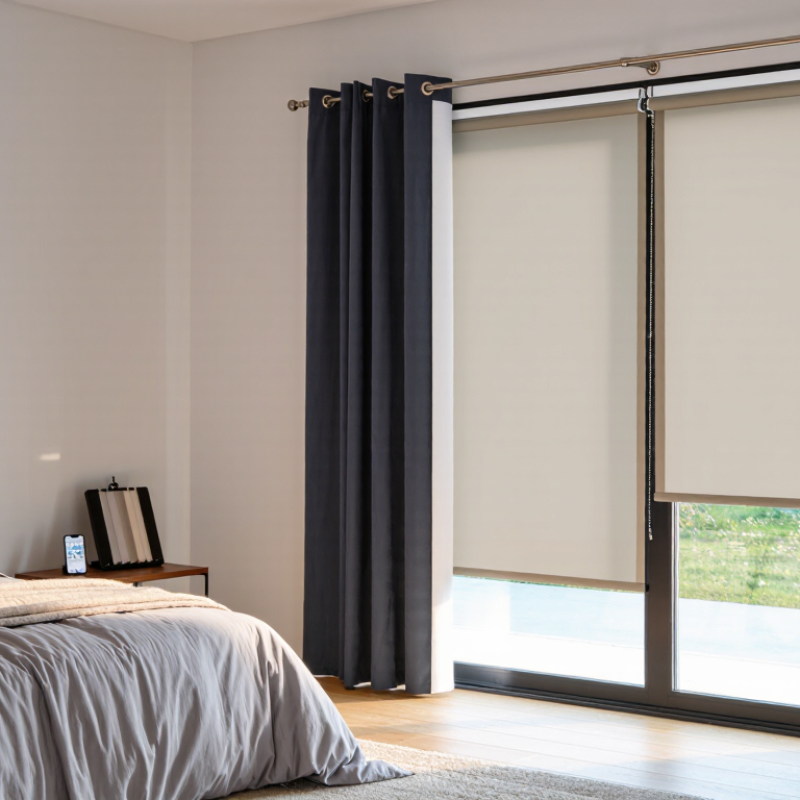
Define your goal before comparing fabrics. Do you need total darkness, cooler rooms, better sleep, or privacy? These needs are different. The U.S. Department of Energy reports that windows can cause 25–30% of residential heating and cooling energy use. Therefore, choose curtains with a dense lining and close-fitting installation, not merely a dark-colored fabric. Blackout performance also depends on side gaps, the top opening, and the distance from the glass.
Study the room carefully. A bedroom facing east may need stronger morning light control. A west-facing living room may need heat reduction in late afternoon. Measure the glass, frame, sill, and wall space twice. I once measured only the window width and missed the handle clearance. That small error affected the curtain’s movement. For humid rooms, check moisture resistance and allow ventilation. For children’s rooms, select a safe operating design without accessible loose cords.
Tips: Hang the rod wider than the frame. Extend it above the window. Overlap the panels at the center. Test darkness at noon with indoor lights off. Check the fabric’s stated blackout rating, but treat ratings carefully. There is no perfect room solution. The WELL Building Standard recommends controlling unwanted light for healthier indoor environments, while the U.S. Department of Energy’s Energy Saver guidance emphasizes proper fit and installation for window coverings. A beautiful curtain can still fail if light leaks around it.
How to Choose Blackout Curtains in 2026?
Blackout curtains begin with the fabric, not the color. Tightly woven polyester is affordable, durable, and usually easy to wash. Triple-weave fabric blocks more light without feeling extremely heavy. Foam-backed fabric can create a darker room, but its coating may crack after repeated folding. Natural fabrics feel attractive, yet they often need a dense lining for reliable darkness. Touch the sample near a bright window. A thin glow is a warning.
The lining changes performance significantly. Thermal linings reduce heat transfer, while blackout linings add a denser barrier behind the face fabric. Some curtains use multiple layers, improving privacy and reducing streetlight glare. However, extra layers can make the panel stiff and difficult to open. I once chose a very heavy curtain for a bedroom. It blocked light well, but the rail struggled. That mistake changed my measuring habits.
Light-blocking levels deserve careful checking. Dimout curtains soften daylight but may still allow visible shadows. Blackout curtains should block most incoming light, while room-darkening options offer a middle level. Labels are not always measured identically, so request a fabric swatch when possible. Hold it against a window at noon. Check the top, sides, and bottom of the installation area. Tiny gaps can brighten a room more than the fabric itself. Extend the rod beyond the frame, and choose panels wide enough to create generous overlap. A darker lining does not automatically mean better performance. Density, fit, seams, and installation all matter.
The chart compares typical visible-light reduction for common curtain constructions. Unlined decorative fabrics provide privacy but limited darkness, while dimout and coated blackout fabrics block progressively more light. A blackout lining or layered window treatment generally delivers the highest performance.
Values are representative midpoints of commonly reported performance ranges: unlined decorative fabric 10–40%, dimout fabric 75–90%, three-pass coated blackout fabric 95–99%, blackout fabric with blackout lining 99–99.9%, and layered curtain plus blackout shade 99.9% or more. Actual results vary with color, seams, side gaps, installation, and window fit.
Accurate measurement matters more than a fashionable fabric. The U.S. Department of Energy estimates that windows cause 25–30% of residential heating and cooling energy use. Properly fitted blackout curtains can reduce unwanted sunlight and drafts near the glass. They cannot replace efficient windows, though. I once measured only the visible pane and bought curtains that left bright gaps. That mistake was obvious at sunrise.
Measure width first. For an inside mount, measure the window recess at three points. Use the narrowest width. Measure height from the top inside edge to the sill. For an outside mount, measure the frame width, then add 15–20 centimetres on each side. Add 10–15 centimetres above the frame when possible. This helps block light leaking around the top. Curtain width should usually equal 1.5–2 times the track or rod width. A 160-centimetre window may need 240–320 centimetres of total curtain fabric. Check the product’s finished dimensions, not just its package label.
Tips: Use a steel tape measure. Record width before height. Measure twice. Check radiator, handle, and sill clearance. Floor-length panels should stop about one centimetre above the floor. If the room needs near-total darkness, choose overlapping panels and a wraparound rod. Blackout claims still vary, so inspect the lining, edge coverage, and return policy. Small gaps remain easy to overlook.
How to Choose Blackout Curtains in 2026?
Choosing blackout curtains involves more than selecting a dark fabric. The mounting style strongly affects real performance. Ceiling tracks can block light above tall windows, while outside mounts cover gaps around the frame. Inside mounts look cleaner but may allow bright edges. Measure the window, frame, and nearby wall before ordering. I once underestimated the side gap, and morning light exposed the mistake.
Insulation depends on fabric density, lining, and how closely the curtain meets the wall. A thermal lining can reduce drafts near cold glass, but it will not replace proper window sealing. For privacy, check the fabric under indoor lighting at night. Some curtains appear opaque during the day but reveal silhouettes when lamps are on. Noise control is more limited. Heavy, tightly woven curtains can soften echoes and reduce high-frequency street sounds, but they rarely stop traffic completely.
Tips: Use a wraparound rod or ceiling track for better edge coverage. Choose curtains that reach the floor without dragging. Add magnetic or Velcro-style side seals if light leaks persist. Hold a fabric sample near your window before buying. Small gaps matter. Also, consider daily use. Very heavy panels may insulate well but feel inconvenient on a frequently opened window. My practical preference is balanced performance, not maximum thickness. A curtain that stays closed comfortably often works better than an impressive panel left unused.
| Mounting Style | Recommended Curtain Construction | Light Control | Insulation Potential | Privacy | Noise Control | Best Use and Important Considerations |
|---|---|---|---|---|---|---|
| Standard outside-mount rod | Blackout-lined panels extending beyond the window on all sides | High Usually very effective when the side and top gaps are minimized |
Medium Improves thermal resistance, especially with a dense lining |
High Good coverage when panels overlap at the center |
Low–Medium May reduce reflected indoor sound but does not soundproof a room |
Flexible and widely compatible. Mount the rod several inches above and beyond the frame when wall space permits. |
| Wraparound rod | Heavy blackout or thermal curtains with side returns | Very high Reduces light leakage from the sides compared with a straight rod |
Medium–High Side returns can reduce drafts around the window edges |
Very high Provides strong visual coverage from angled viewpoints |
Medium More fabric coverage can absorb some room reflections |
Well suited to bedrooms and street-facing windows. Check that the rod can support the curtain weight. |
| Ceiling-mounted track | Full-height, pleated, ripple-fold, or pinch-pleat blackout curtains | Very high Floor-to-ceiling coverage limits light at the top and sides |
High Large fabric coverage helps reduce radiant heat transfer |
Very high Creates a continuous privacy barrier across the opening |
Medium More fabric area can help absorb mid- and high-frequency reflections |
Best for wide windows, sliding doors, and room dividers. Requires secure ceiling or structural support. |
| Double-rod system | Blackout curtain on the rear rod plus a sheer or decorative layer on the front rod | High The blackout layer determines nighttime light control |
Medium–High The air space between layers adds a modest insulating effect |
High Sheers provide daytime privacy while allowing filtered daylight |
Medium Two fabric layers can provide more absorption than one thin layer |
Useful for rooms needing flexible day and night settings. Allow extra projection from the wall for both rods. |
| Inside-mount rod or tension rod | Blackout panel fitted within the window recess | Medium Light commonly enters through the side, top, and bottom gaps |
Low–Medium Does not cover the wall area around the frame |
Medium Privacy depends strongly on the depth and shape of the recess |
Low Limited fabric area provides little acoustic benefit |
Suitable where drilling is restricted or wall space is limited. Not the best choice for maximum blackout performance. |
| Magnetic or hook-and-loop side-sealed installation | Blackout panel with edge seals attached to the window frame or surrounding wall | Very high Edge sealing can substantially reduce visible light gaps |
Medium–High Works best when the panel fits closely without compressing the fabric |
High Provides close coverage across the glazing area |
Low–Medium Sealing gaps helps slightly, but the window remains the main sound path |
Useful for shift workers, nurseries, and highly light-sensitive rooms. The attachment method must be compatible with the frame finish. |
Selection note: Blackout performance depends on fabric opacity, lining, curtain width, overlap, and gaps around the window. Thermal curtains can reduce heat transfer, but they do not replace proper window sealing or glazing. Curtains provide limited noise reduction and should not be treated as soundproofing.
How to Choose Blackout Curtains in 2026?
Color affects comfort, not only appearance. Dark fabrics block visible light well, but they can absorb more solar heat. Medium-colored curtains with white plastic backing can reduce summer heat gain by up to 33%, according to the U.S. Department of Energy’s Energy Saver guidance. A practical choice is a dark woven face with a reflective backing. Test a fabric beside the window at noon. I would not trust showroom lighting completely.
Care details matter in daily use. Look for removable liners, machine-washable panels, low-shrink materials, and clear cleaning instructions. Dust collects along hems and pleats. Wash gently, then air-dry to protect the blackout coating. The wrong detergent may damage it. DOE guidance also reports that tightly fitted cellular shades can reduce window heat loss by up to 40%. Curtains alone may disappoint in drafty rooms, so measure the frame and overlap the sides.
Tips: For smart curtains, choose scheduled opening, light sensors, manual controls, and battery status alerts. Check whether the system works during internet outages. Parks Associates’ 2024 smart-home research highlights reliability and interoperability as continuing consumer concerns. Choose quiet motors for bedrooms. Keep a simple pull option, too. Technology occasionally fails at the worst time. Test automation for one week before installing it everywhere.
We now offer custom-made commercial vehicle tarps, along with the ability to design your own curtains, noise panels, and strip doors—tailored to your exact needs!
At Singer Safety, we specialize in manufacturing high-performance tarps engineered to safely secure and protect your vehicle loads during transport.