Choosing the right Cotton Muslin Fabric starts with understanding what you need it to do. A light, airy weave may suit summer clothing, curtains, or gentle swaddling, while a denser option can work better for reusable bags, quilting, or practice garments. Hold the fabric up to a window. Notice how much light passes through, and check whether the weave looks even. Softness matters, but it is only one part of the decision. A very soft finish can feel lovely in a shop, then change after washing.
Before buying, compare fabric weight, fiber content, width, and care instructions. Cotton muslin can shrink, so wash a small sample as you plan to wash the finished item. Measure it before and after. Check the color in natural light, too; warm indoor bulbs can make white fabric look cream. For baby-related projects, look for clear product details and follow relevant care guidance. Do not assume every muslin is suitable for every use. It is easy to focus on price or a familiar label and miss a practical detail. I have found that a simple test swatch can answer questions a product photo cannot. Still, one sample may not represent every part of a large bolt. The best choice balances feel, durability, transparency, and care needs—not just appearance. Small differences matter. This guide will help you compare those details and choose with fewer surprises.
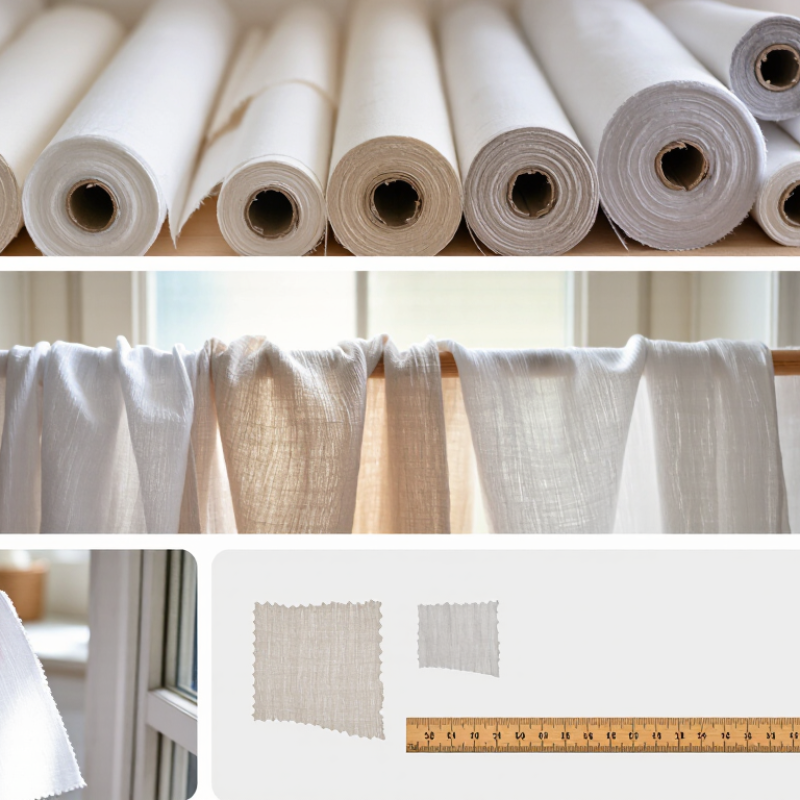
Cotton muslin is a lightweight fabric made with a simple, usually plain weave. Its threads form a soft, breathable cloth that feels slightly textured between your fingers. Some muslin is loosely woven and airy; tighter versions feel smoother and offer more coverage. The word “muslin” does not guarantee one exact weight or finish, so check the fabric details before buying. Hold a sample toward a window. You may spot small gaps in an open weave.
Tips: Feel the fabric in daylight. Wash a small swatch as you plan to wash the finished item. Cotton can shrink, and the change may surprise you.
Muslin’s low weight makes it useful for summer clothing, lightweight curtains, and sewing practice. It drapes gently, though very loose muslin may wrinkle easily or show outlines underneath. Those traits are not flaws in every project, but they can disappoint if you expect crisp structure. For a garment, compare the fabric’s weight and opacity with your pattern needs. For a test piece, muslin is forgiving and easy to cut. Still, it can stretch or shift under the needle. Pin carefully, and avoid assuming every cotton muslin behaves the same way. A small sample tells you more than a product description alone.
Cotton muslin is not one uniform fabric. Its weight and weave affect drape, airflow, opacity, and durability. Lightweight muslin, often around 60–100 gsm, feels airy and gathers easily. It suits swaddling layers, soft curtains, and practice garments. Hold a sample up to a window: if the outline looks too clear, it may not provide the coverage you need. Very open weaves can also snag more readily.
For reusable napkins, shirts, or lightweight bedding, a medium-weight muslin may feel steadier in the hand. A closer weave usually offers more coverage, while a looser weave allows more airflow. Check the fabric’s stated weight, but treat it as a guide; finishing and weave can change how two similar-weight fabrics behave. Wash a small swatch before cutting. Cotton may shrink, and the texture can soften or wrinkle differently than expected. This is easy to overlook. I’d compare the washed sample with the unwashed one before choosing; the weight chart is a starting point, not a promise. A fabric that feels perfect on the bolt may hang differently after washing.
How to Choose the Best Cotton Muslin Fabric
Evaluating Fiber Quality, Texture, and Fabric Construction
Start with the fiber, not the softness displayed on a sample card. USDA Agricultural Marketing Service classing uses high-volume instrument testing to assess cotton length, strength, micronaire, color, and other traits. These measurements help explain why two plain-weave muslins can feel and perform differently. For home sewing, ask for fiber details when available, then inspect the cloth in daylight. Look for uneven slubs, weak spots, and loose fibers along the cut edge. A little texture is normal. Excessive fuzz may signal lower durability, though it is not proof by itself. Feel it dry.
Texture depends on yarn fineness, twist, and finishing, not simply fiber type. Rub a small swatch between your fingers; crisp muslin should feel breathable without turning scratchy or papery. Textile Exchange’s Materials Market Report 2024 estimates cotton made up about 20 percent of global fiber production in 2023. That scale makes cotton common, but it does not guarantee a well-made fabric. Check whether the weave is balanced: hold the swatch to light and look for gaps, then tug gently across both directions. If the yarns shift easily, seams may distort after washing. I still find weight easy to misjudge by touch alone. Compare swatches after laundering, and note shrinkage, puckering, and whether the surface stays even.
Compare fabric weight as one practical indicator of muslin’s feel and construction.
The ranges shown are indicative examples, not standardized grades: muslin weight varies by weave and manufacturer. Lower-GSM fabric is generally lighter and more open; higher-GSM fabric is generally denser and heavier. Also check fiber quality, softness, weave consistency, and care instructions—GSM alone does not determine quality.
How to Choose the Best Cotton Muslin Fabric
Shrinkage, colorfastness, and feel can change how muslin performs after sewing. Ask whether the fabric is prewashed, but verify with a sample when possible. Cut a square, measure it, wash and dry it as you plan to care for the finished item, then measure again. A few centimeters can matter for a fitted cover or a carefully sized garment. Muslin may soften after washing, too, so judge its texture both before and after.
Color needs a practical test. Rub a damp white cloth across a small hidden area; visible dye transfer is a warning. Then wash a sample with similar colors and check for fading or bleeding. Inspect the weave against a window: uneven spots may be harmless, but loose threads can snag during cutting. Compare fabric under the lighting where you will use it, since pale shades can look warmer indoors. A swatch helps, but it cannot reproduce every laundry habit. That limitation is easy to overlook.
Tips: Keep a labeled test square with its wash details. Check the care instructions, and avoid assuming every muslin behaves alike.
Use this guide to compare fabric samples before ordering. Results can vary with weave, finishing, dyeing, and care; test the actual fabric lot and follow its care instructions.
| Practical Check | How to Test or Measure | What to Look For | Why It Matters |
|---|---|---|---|
| Shrinkage | Measure a marked square in both directions, wash and dry a sample as the finished item will be cared for, then measure it again. Calculate: (before measurement − after measurement) ÷ before measurement × 100. | Record lengthwise and widthwise change separately. Set a buyer-specific limit; a target of no more than 3% in either direction can be used as a screening benchmark for dimensionally stable projects, not as a universal standard. | Cotton can change size during laundering. Prewashing before cutting helps reduce surprises in finished dimensions. |
| Colorfastness to washing | Wash a sample separately using the intended detergent, water temperature, and care method. For formal testing, use a recognized method such as ISO 105-C06 or AATCC 61. | Check for visible fading, color transfer to other items, or dye staining on an accompanying white test fabric. For laboratory reports, confirm the test method and rating scale. | Useful for dyed or printed muslin, especially when it will be washed frequently or used alongside light-colored materials. |
| Colorfastness to rubbing | Rub the dry fabric, then a damp sample, against clean white cloth using consistent pressure. A laboratory can assess rubbing fastness with ISO 105-X12. | Look for color transferred onto the white cloth, particularly from dark or saturated shades. Ask for separate dry and wet results where relevant. | Helps identify whether color may rub off during handling, sewing, or use. |
| Fabric weight and feel | Ask for the fabric mass in grams per square metre (g/m²), if available, and compare samples by touch and intended use. | Choose based on the needed balance of lightness, drape, and coverage; muslin is made in a range of weights, so the name alone does not specify thickness. | Weight affects drape, opacity, warmth, and how easily the fabric handles during sewing. |
| Opacity and coverage | Hold the fabric over a printed page or against a contrasting background in the lighting where it will be used. | Check whether text or shapes show through. Assess the fabric after washing if its appearance after laundering is important. | Lightweight, open constructions may be more transparent and may need a lining or multiple layers. |
| Weave consistency | Inspect several areas of the sample, including the center and edges, under even light. Look for skipped threads, slubs, holes, and uneven spacing. | Decide whether minor irregularities are acceptable for the project; compare consistency across multiple samples from the same lot. | Weave variation can affect appearance, seam quality, and the reliability of cutting and sewing. |
| Width and usable area | Measure the usable fabric width, excluding selvages if they are unsuitable for the project. Confirm the supplier’s stated width and tolerance. | Check that the usable width supports the planned pattern layout after allowing for shrinkage and trimming. | Usable width influences cutting efficiency and the quantity required. |
| Seam and handling performance | Sew a short sample seam using the planned needle, stitch length, and seam allowance. Gently pull across the seam and inspect the fabric. | Look for puckering, seam slippage, fraying, or needle damage. Test the actual sewing setup rather than relying on fabric appearance alone. | A small sewing trial can reveal handling problems before a larger project is cut. |
| Care requirements | Review the care label or written care instructions, then test a sample using the expected washing and drying routine. | Confirm that the permitted water temperature, drying method, and ironing needs fit the intended use. | Care requirements affect shrinkage, color retention, and long-term appearance. |
Cotton muslin is valued for its light, breathable feel, but softness alone does not tell you whether a fabric will suit your project. Hold it against your skin and check how it drapes. A looser weave often feels airy, while a denser one may offer more coverage. Softness matters. For warm-weather clothing or a light blanket, airflow may be more important than a crisp, smooth finish.
Durability depends on the weave, fabric weight, and how the item will be used. Look closely at the surface: uneven gaps or loose threads can hint that frequent handling may wear it faster. If you are sewing something washable, test a small piece first. Muslin can shrink, and the amount varies by fabric and finishing. I once judged a cloth by its neat edges, then noticed how thin it looked after washing. That was a useful reminder, though one sample cannot predict every batch.
Care needs deserve a place in your choice. Check the care label, and wash a test swatch before cutting if possible. A gentle cycle and mild detergent are sensible starting points; high heat may increase shrinkage or stress the fibers. Air-drying can help preserve the fabric’s feel, while low heat may be more practical when time is short. The best choice is not always the softest one. It is the muslin whose comfort, strength, and upkeep fit your real routine.
We now offer custom-made commercial vehicle tarps, along with the ability to design your own curtains, noise panels, and strip doors—tailored to your exact needs!
At Singer Safety, we specialize in manufacturing high-performance tarps engineered to safely secure and protect your vehicle loads during transport.