How to Choose the Best Slim Fit Pique Polo Supplier
Choosing a supplier for a Slim Fit Pique Polo is not just a price comparison. The fabric can look crisp on a hanger, then twist after washing or feel stiff against the skin. Small details matter: pique weight, cotton blend, collar recovery, button spacing, and clean stitching around the armhole. Ask for a physical sample, not only studio photos. Check its measurements against your size chart, and wash it as customers would. Fit is personal. A slim silhouette should feel shaped, not restrictive.
A reliable supplier should explain fabric options, minimum order quantities, sample charges, production lead times, and how defects are handled. Request recent references or examples of comparable orders, then confirm that the quoted specifications appear in the purchase documents. Look closely at color consistency across sizes and whether the placket stays flat. These checks help, but they do not remove every risk. No checklist catches everything. Communication during sampling can reveal more than a polished catalog: do answers arrive clearly, and are changes recorded? This guide outlines practical ways to compare suppliers, verify claims, and balance cost with durability. It also considers where buyers may need to compromise, since a lower price can mean fewer fabric choices or longer waits. The goal is not a perfect supplier on paper. It is a partner whose quality, capacity, and terms match the product you intend to sell.
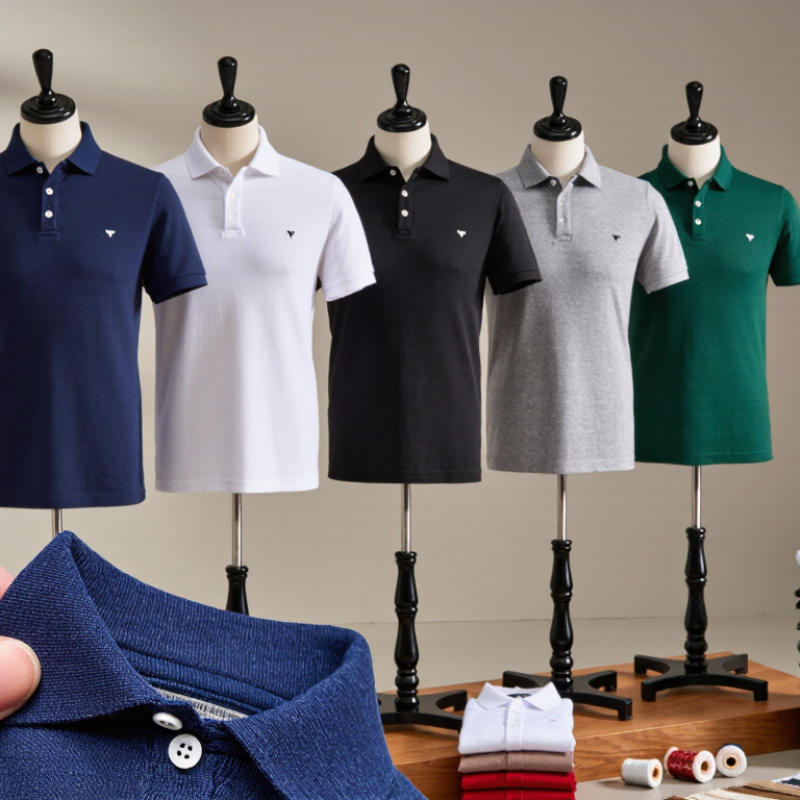
Define Fabric Targets: 180–220 g/m² Piqué and Fiber Composition
For a slim fit pique polo, set a fabric target before comparing suppliers: 180–220 g/m² is a useful working range. The lower end feels lighter and may suit warm conditions, while the upper end usually provides more body. Not always. Knit structure and finishing can change how the same weight feels against the skin.
Ask suppliers to state the fiber composition and fabric weight on the same specification sheet. A cotton-rich pique can feel breathable and familiar, while polyester may help the fabric dry faster and hold its shape. A small amount of elastane can add stretch, but it may also change recovery and hand feel. Check the actual percentage, not just phrases such as “stretch pique.” Confirm whether the stated weight applies before or after finishing, and agree on a consistent measurement method.
Request a swatch and a finished polo sample. Feel the collar, placket, and underarm area; these details can reveal stiffness or excess bulk that a fabric card misses. Weighing one sample is not enough, though. Ask for results from several production lots and clarify acceptable variation around your target. A 200 g/m² fabric can still feel wrong in a close fit. That is worth admitting: weight narrows the choice, but it cannot replace wear testing.
Screen Supplier Controls: ISO 9001 and 4-Point Fabric Inspection
When choosing a slim fit pique polo supplier, look beyond a polished sample. Ask how fabric quality is controlled before cutting begins. Pique knit can show slubs, holes, uneven texture, or color variation across a roll. These flaws may be easy to miss in a small swatch. Paperwork matters.
Check whether the supplier maintains an ISO 9001 quality management system, and request current certification details. ISO 9001 indicates documented quality processes; it does not guarantee flawless fabric. Ask for inspection records from recent production lots, not just a certificate. A useful report identifies the fabric lot, inspection date, defects found, and corrective action taken.
A four-point fabric inspection scores visible defects according to their size and severity. Scoring rules and acceptable limits can vary, so get the supplier’s written standard. Confirm whether results are calculated per 100 square yards or another unit. Also ask inspectors to record fabric width, weight, shade consistency, and roll-to-roll variation. A clean report can still miss problems if the sample was not representative. I would compare inspection records with a physical roll or cutting sample when possible. That extra check takes time, but it can reveal issues before they reach finished polos.
Test Fit and Durability: ≤3% Shrinkage and ISO 105-C06 Grade 4
A slim-fit pique polo should keep its shape after washing, not just look sharp on a sample hanger. Set a maximum dimensional change of 3% and ask the supplier to test finished garments, not only fabric swatches. Request the wash temperature, drying method, sample count, and before-and-after measurements. A collar that curls or a hem that twists can make a passing average feel irrelevant.
For color, specify ISO 105-C06 grade 4 or higher, then review the test conditions and grading record. The method assesses colorfastness to domestic and commercial laundering; grade 4 indicates only a slight change on the grey scale. Ask for results on the actual shade, especially dark navy or black, where fading shows quickly. Textile Exchange’s Materials Market Report 2024 estimates global fiber production reached 124 million tonnes in 2023, underscoring the scale of material sourcing—and why consistent checks matter. Still, a certificate alone is not proof of a comfortable fit.
Wash a size run, then measure chest width, body length, and sleeve opening again. A lab sheet can miss a sleeve that twists on a real person. Check that, too. If results sit close to either limit, request a repeat test before approving bulk production.
Check Product Safety and Defects: OEKO-TEX STANDARD 100 and AQL 2.5
When evaluating a slim fit pique polo supplier, ask for current OEKO-TEX STANDARD 100 documentation for the specific fabric or finished product. Check the certificate number, validity, and product class with the issuing organization. A certificate is useful, but it does not prove every color, trim, or production batch is covered. Confirm that the tested scope matches the polo you plan to order.
Look closely at what the supplier means by AQL 2.5. It is a sampling plan for deciding whether a lot passes inspection, not a promise that every garment is defect-free. Ask for the inspection method, sample size, and defect categories. For slim fit polos, check collar shape, placket alignment, button attachment, and side seams. Lay several shirts flat and compare measurements; small differences can change how the body fits.
Request an inspection report from a recent production run, with clear photos and recorded measurements. Minor puckering may be acceptable under one agreed standard, while a broken stitch or stained panel may not be. Define these limits before production. Details matter. Suppliers may also miss flaws in dark fabric under poor lighting, so ask how inspectors control their workspace. No checklist catches everything, and I would still review pre-shipment samples before approving a large order.
Compare Quotes and Delivery: MOQ, Lead Time, and Landed Cost
A slim fit pique polo quote is only comparable when the specifications match. Confirm fabric weight, cotton or blended composition, collar construction, buttons, and size range before judging the unit price. Then ask each supplier for its minimum order quantity (MOQ), sample cost, production lead time, and shipping estimate. A smaller MOQ can help limit unsold stock, but it may raise the cost per shirt. Ask whether the MOQ applies per color, style, or total order. Small detail. It changes the calculation.
Compare landed cost, not just the factory quote. Include freight, insurance, packaging, inspection, and any applicable import charges in your estimate. UNCTAD’s Review of Maritime Transport 2024 reported that Suez Canal transits fell sharply during early-2024 disruptions, underscoring how shipping delays can affect delivery plans. Request separate production and transit timelines, plus a realistic dispatch window. McKinsey’s State of Fashion 2024 also describes ongoing volatility in sourcing and operating costs; treat any fixed delivery promise cautiously. A useful comparison sheet lists price breaks at several quantities, payment milestones, sample approval dates, and the quote’s validity period. Leave room for uncertainty. I would still check whether a supplier’s unusually short lead time includes fabric procurement, since that step is easy to overlook.

 '
