Kojic Acid Dipalmitate In Cosmetics is valued for a practical reason: it gives formulators another way to incorporate a kojic-acid derivative into leave-on products. Its oil-soluble character can suit creams and emulsions containing an oil phase. But the ingredient name alone does not predict a product’s performance. The finished formula, concentration, packaging, and directions all matter.
The commercial context is substantial. Cosmetics Europe’s 2024 market report estimated European cosmetics and personal-care retail sales at €96 billion in 2023. That figure covers the wider industry, not this ingredient specifically. It shows why formulators keep exploring functional ingredients for targeted skincare. The number is useful context, not proof of efficacy.
The chemistry deserves careful reading. Kojic acid dipalmitate is an ester derivative, and its formulation behavior differs from that of kojic acid. Claims about stability or visible results should be tied to reliable product-specific evidence, rather than assumed from the ingredient name. Skin response varies. So does the formula.
Cosmetic chemist Dr. Michelle Wong is a relevant independent science communicator for readers assessing skincare claims. However, no verifiable, topic-specific quotation from her was supplied for this introduction, so attributing a direct quote would risk misrepresentation. That gap matters. A careful article should distinguish ingredient function, laboratory findings, and consumer outcomes, while citing traceable sources for each.
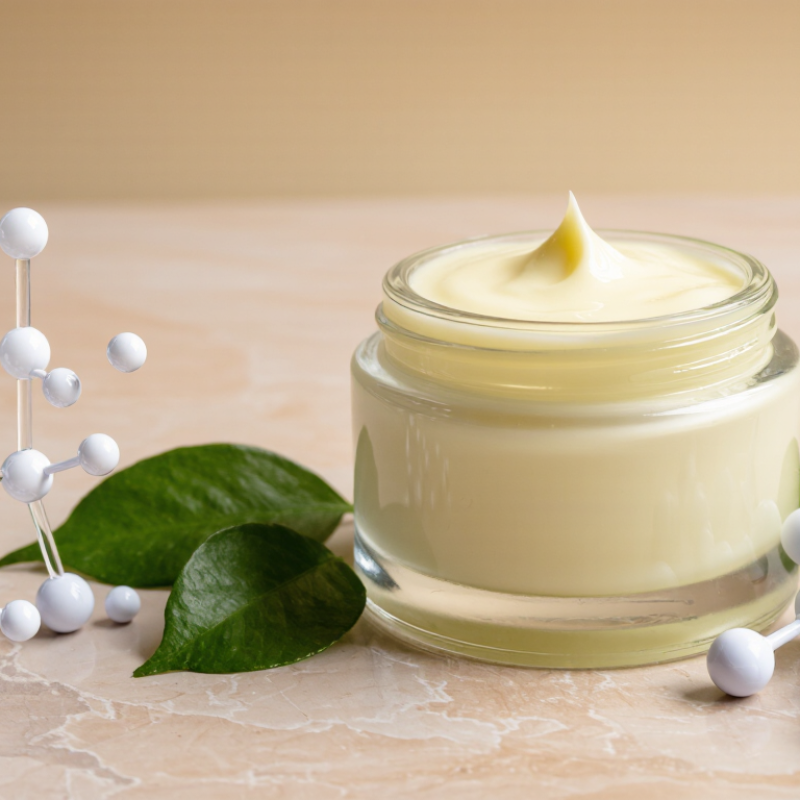
Kojic acid dipalmitate (KAD) is an oil-soluble derivative of kojic acid, formed by attaching two palmitate groups. PubChem lists its molecular formula as C38H66O6 and its molecular mass as about 618.9 g/mol. Those fatty-acid groups change how the ingredient behaves: formulators can incorporate it into oil-rich creams and emulsions more readily than water-soluble kojic acid. Not identical, though. KAD is a distinct ingredient, not simply kojic acid in another form.
Cosmetic formulators use KAD in products intended to improve the appearance of uneven skin tone. Its performance depends on the formula, stability, concentration, and delivery to the skin; its presence alone does not establish a product’s effectiveness. In its 2022 Opinion SCCS/1637/21, the European Commission’s Scientific Committee on Consumer Safety considered kojic acid safe at concentrations up to 1% in face and hand products. That figure applies to kojic acid, not automatically to KAD. This distinction matters. Public safety data specific to KAD are less extensive, so finished-product testing and careful claims remain important. Better oil compatibility is useful, but it does not prove superior results.
Kojic acid dipalmitate is an oil-soluble derivative of kojic acid. Its fatty-acid groups help it blend into the oil phase of creams and lotions. In an emulsion, formulators can disperse it alongside oils and emulsifiers, then combine that phase with water. Mixing matters. Poor dispersion may leave uneven deposits or reduce consistency from one part of a batch to another.
On skin, the ingredient is used to help improve the look of uneven tone. It is commonly described as interfering with tyrosinase, an enzyme involved in melanin production, but the real-world effect depends on the finished formula. There is a practical wrinkle: laboratory activity does not guarantee a visible result in every product or for every user. Concentration, stability, skin contact, and regular use can all influence performance.
A formulator may check whether the ingredient stays evenly distributed during storage and whether the texture remains smooth. Patch testing can also help identify irritation. Subtle changes take time. Claims should stay measured, because cosmetic performance varies.
Kojic acid dipalmitate is an oil-soluble form of kojic acid used in cosmetic formulas. Its main appeal is helping improve the look of uneven skin tone and visible dark spots. Kojic acid is associated with reducing tyrosinase activity, an enzyme involved in melanin production. The dipalmitate form is designed to be more stable in products, though that does not guarantee stronger results on skin.
Changes, if they occur, are usually gradual. Not overnight. A small patch of discoloration may soften over time, but results depend on the formula, how regularly it is used, and individual skin. Evidence for this derivative is less extensive than for some familiar brightening ingredients, so expectations should stay modest. That distinction matters.
Some people may experience redness, dryness, or stinging, especially when combining it with other active ingredients. Patch testing can help reveal sensitivity before applying it more widely. Daily sunscreen also matters: ultraviolet exposure can deepen discoloration and undermine a brightening routine. If irritation persists, stop use and seek advice from a qualified skin-care professional.
Kojic acid dipalmitate is a modified form of kojic acid. The added palmitate groups make it oil-soluble, which can help formulators blend it into creams and lotions containing oils. Kojic acid itself is more water-soluble and can be less stable in some formulas. Exposure to air, light, or heat may contribute to discoloration over time. Stability matters. A product that holds its quality is easier to formulate consistently.
The derivative is often chosen when a formula needs an oil-compatible brightening ingredient or improved shelf stability. That does not mean it works better on skin. Its effects depend on the finished formula, and on how much active kojic acid becomes available in the skin. Evidence directly comparing the two forms is limited, so claims of superior performance deserve a careful look. A smooth cream is no proof of greater effectiveness.
Some formulators also prefer it because it may be better tolerated by certain users, but sensitivity varies. Patch testing on a small area is sensible, especially for reactive skin. And remember, even a stable ingredient can irritate. Small details—such as concentration, packaging, and daily sun exposure—can change the experience. That part is easy to overlook.
Why Is Kojic Acid Dipalmitate Used in Cosmetics?
What Safety and Formulation Factors Matter?
Kojic acid dipalmitate is an oil-soluble derivative used in some cosmetic formulas targeting the appearance of uneven skin tone. Its modified structure can offer better stability than kojic acid in certain formulations, but performance depends on the whole product. The ingredient alone does not guarantee visible results.
Formulators need to check solubility, processing temperature, and compatibility with oils and emulsifiers. Poor handling may lead to crystals, uneven distribution, or a gritty feel. Test a small batch through cooling and storage cycles; a formula that looks smooth on day one may change later. That detail is easy to miss.
Safety depends on concentration, product type, and individual sensitivity. Follow supplier guidance and applicable cosmetic requirements, and assess the finished product rather than relying on ingredient reputation. Irritation or allergic reactions are possible, especially on sensitive or already irritated skin. A patch test can help identify a reaction, though it cannot predict every outcome. Keep use away from the eyes, and stop if persistent redness or discomfort develops. Sun protection remains important for managing the appearance of uneven tone; this ingredient is not a sunscreen.
| Factor | What Is Known | Why It Matters in a Cosmetic Formula |
|---|---|---|
| Ingredient identity | Kojic acid dipalmitate is an ester derivative of kojic acid, formed by attaching palmitic-acid groups. Its INCI name is Kojic Dipalmitate. | It is a distinct ingredient from kojic acid; data or regulatory limits for kojic acid should not automatically be treated as applying to the dipalmitate derivative. |
| Cosmetic purpose | It is used in some products intended to improve the appearance of uneven skin tone. Kojic-acid-related ingredients are associated with interference in melanin formation pathways. | Cosmetic claims should be limited to appearance-related benefits and supported by evidence for the finished product. It is not a sunscreen or a treatment for a diagnosed skin condition. |
| Oil affinity | The palmitate groups make the ingredient more lipophilic than kojic acid, so it is generally suited to oil-containing systems rather than direct dissolution in water. | Formulators need to select a suitable oil phase, dispersion approach, and emulsion structure. Poor incorporation can cause visible particles or uneven distribution. |
| Stability considerations | Kojic dipalmitate is commonly selected as a more oil-compatible and comparatively stable kojic-acid derivative. Stability still depends on the complete formula and storage conditions. | Assess appearance, colour, odour, and ingredient distribution during stability testing. Do not assume the derivative is immune to heat, light, oxidation, or incompatibility. |
| Emulsion design | In a cream or lotion, the ingredient is typically handled as part of the oil phase or by another validated incorporation method appropriate to the supplier’s specifications. | Check processing temperature, cooling conditions, emulsifier compatibility, and the risk of crystallization or separation in the finished product. |
| pH and solubility | Because it is oil-soluble, a simple water-phase pH value does not describe its solubility. The pH of the overall product may still affect other ingredients and product performance. | Evaluate the full formula rather than relying on pH alone. Follow ingredient-specific technical documentation for incorporation and compatibility. |
| Concentration | There is no single concentration that is appropriate for every product type or jurisdiction. Use levels should be selected using ingredient specifications, safety assessment, and applicable local rules. | A qualified safety assessor should review the intended use, exposure, user population, and finished-product concentration. Avoid treating supplier examples as universal safety limits. |
| Skin tolerance | As with other cosmetic ingredients, individual reactions are possible. Tolerance depends on the ingredient level and the complete formula, including other active ingredients. | Assess irritation and sensitization potential for the finished product. Clear directions should advise users to stop use if persistent irritation occurs. |
| Quality and testing | Ingredient identity, purity, and performance should be supported by appropriate supplier documentation and quality controls. | Finished-product testing should address stability, physical uniformity, packaging compatibility, and microbiological quality where relevant to the product type. |
| Regulatory review | Cosmetic ingredient requirements and permitted claims vary by market and may change. The regulatory status of kojic acid should not be assumed to determine that of kojic dipalmitate. | Verify current local ingredient rules, labeling requirements, and claim restrictions before marketing. Claims implying treatment or prevention of disease may change a product’s regulatory classification. |
We now offer custom-made commercial vehicle tarps, along with the ability to design your own curtains, noise panels, and strip doors—tailored to your exact needs!
At Singer Safety, we specialize in manufacturing high-performance tarps engineered to safely secure and protect your vehicle loads during transport.