Choosing a reliable China Chandeliers Supplier requires more than comparing catalog prices. Global buyers need verified experience, stable quality, clear communication, and dependable export support. A professional supplier should understand hospitality projects, residential developments, retail spaces, and custom lighting requirements. They should also explain materials, finishes, electrical specifications, packaging methods, and production timelines in practical terms.
Look closely at the details. Ask for factory photographs, sample reports, product drawings, and recent project references. A trustworthy manufacturer can describe how crystal, glass, metal, and brass components are inspected. They should provide consistent answers about testing, warranties, spare parts, and installation guidance. Good suppliers also understand different market requirements and work carefully with certified electrical components. Documentation matters.
Small details matter.
An experienced China Chandeliers Supplier may offer custom sizes, color finishes, mounting systems, and logo packaging. Yet customization can increase costs, testing needs, and lead times. Buyers should request a written quotation with every specification clearly listed. Confirm carton dimensions, loading quantities, shipping terms, and replacement procedures before placing an order. Factory visits or third-party inspections can provide additional confidence when project value is high. However, no supplier is perfect. Even a well-managed factory can face material delays, design misunderstandings, or production changes. The key is whether the supplier responds honestly and corrects problems quickly. This guide examines the practical standards that separate dependable chandelier manufacturers from attractive but risky options. It also considers communication habits, quality control, design capability, and long-term cooperation. Real performance matters more than polished promises.
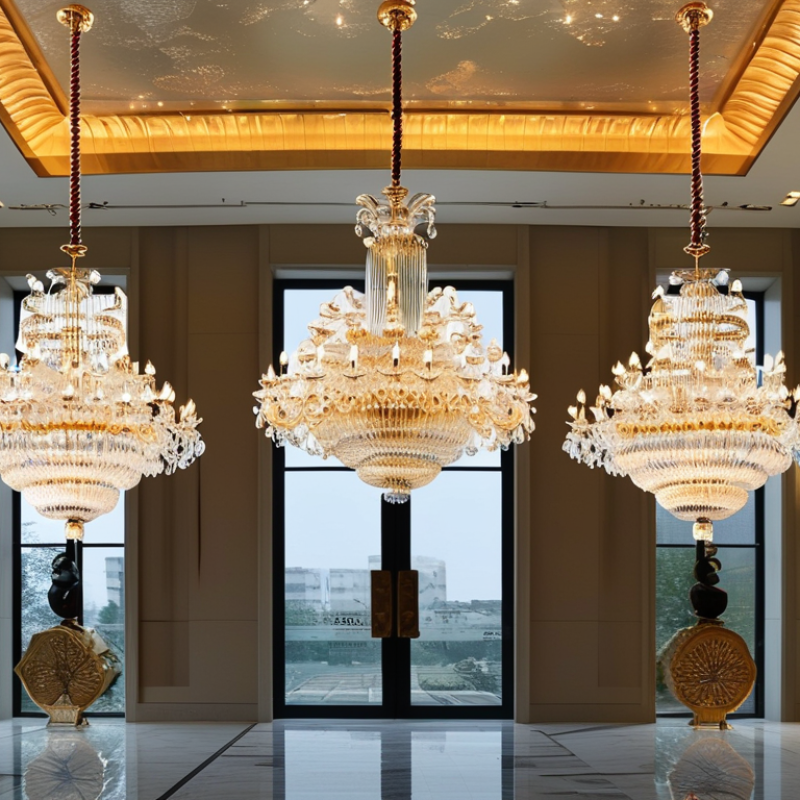
China’s chandelier supply chain is moving beyond decorative brightness. Buyers now request LED systems exceeding 100 lm/W at the fixture level. The U.S. Department of Energy’s 2023 Solid-State Lighting R&D Opportunities report records leading LED packages above 200 lm/W in laboratory conditions. That number is not a chandelier result. Crystal shades, drivers, wiring, and thermal losses reduce real output.
A practical sample should be tested as a complete luminaire. Ask for an LM-79 report, photometric files, color-temperature data, and driver efficiency. At 100 lm/W, a 60-watt chandelier should deliver about 6,000 lumens before installation losses. Dimming can change this result. So can a warm 2,700K setting. Small drivers may also create visible flicker.
ENERGY STAR lamp specifications commonly require roughly 80–95 lm/W, depending on lamp category. This gives buyers a useful baseline, not a final target. Suppliers should disclose CRI, power factor, lumen maintenance, and operating temperature. A polished showroom sample can hide heat problems.
I have found that repeated testing matters more than one impressive report. The supply chain is improving, but “over 100 lm/W” still needs careful definition.
Supplier qualification should begin with evidence, not attractive catalog images. A supplier offering a 30–60-day lead time should explain each production stage clearly. Ask for a capacity sheet covering casting, polishing, wiring, assembly, and final inspection. Industry reports from Grand View Research show continued growth in the global lighting market, increasing pressure on suppliers to deliver flexible designs quickly. However, speed without documented quality control can create costly rework.
MOQ deserves equal attention. A 20-piece trial order may support market testing, while custom finishes often require higher quantities. Request written MOQ rules for each component, not only for the complete chandelier. OEM capability should include CAD drawings, lighting simulations, packaging tests, and sample approval records. The International Trade Centre recommends using trade documentation and supplier verification when evaluating cross-border partners. In practice, buyers should compare certificates, factory photos, production videos, and recent inspection reports. Some factories present strong samples but outsource critical processes. That is a risk worth questioning.
Tips: Request one paid prototype before mass production. Confirm whether the 30–60-day lead time starts after deposit, drawing approval, or sample confirmation. Inspect a finished unit for socket alignment, crystal security, cable length, and carton protection. Keep one approved sample as the reference standard. A supplier may promise everything. The paperwork should prove it.
For global buyers, chandelier quality begins with documented compliance, not a polished product photo. A reliable supplier should provide current CE and RoHS records for applicable European projects. CE supports market conformity, while RoHS controls restricted substances in electrical components. These documents should match the exact model, driver, materials, and production version.
North American projects may require UL or ETL certification, depending on local approval requirements. Ask for certificate numbers, test reports, and clear product markings. Check whether the report covers the complete chandelier, including wiring, sockets, controls, and suspension parts. A supplier with practical experience can explain installation limits instead of sending generic files. Small details matter.
CCT selection also affects the final space. Warm 2,700 K light can soften hotel rooms and dining areas. Neutral 4,000 K often suits retail or reception areas. Cooler 6,500 K light may support bright, task-focused environments. Confirm the stated CCT with a sample, because labels can vary between batches. This is easy to overlook.
Dimming performance, driver compatibility, and measured color consistency deserve written confirmation.
In my experience, documentation is useful, but physical inspection reveals weaknesses faster. Even a careful supplier may miss a connector, finish variation, or incomplete translation. Buyers should review samples, traceability records, and packaging before approving mass production.
For global chandelier buyers, quality begins with measurable light, not polished product photos. A CRI of at least 80 supports more natural color recognition in hotels, dining rooms, and residential interiors. CIE 13.3 defines the traditional color-rendering method, although CRI alone cannot describe every modern LED color experience.
The U.S. Department of Energy’s solid-state lighting reports identify thermal management as a major factor in LED performance. This makes a claimed 50,000-hour life meaningful only when temperature, drive current, and testing conditions are documented. IES LM-80 measures lumen maintenance, while IES TM-21 helps project long-term performance. A supplier should provide both records when available. Marketing language is not evidence.
Factory inspection should include an integrating-sphere test, driver verification, wiring checks, and sample aging records. Inspectors can compare measured CRI, wattage, color temperature, and initial lumens against approved samples.
I have found that small details matter: loose terminals, crowded drivers, and poor heat paths can appear after installation.
One weakness remains. A 50,000-hour projection is not a promise of flawless operation. It depends on installation and operating conditions. Reliable Chinese chandelier manufacturers should explain those limits clearly, accept independent inspection, and preserve traceable production records.
International chandelier purchasing needs more than a factory quotation. Incoterms 2020 contains 11 trade rules, according to the International Chamber of Commerce. Buyers should confirm whether the offer uses FCA, FOB, CIF, DAP, or DDP. Each term changes freight control, insurance responsibility, customs handling, and delivery risk. DDP may appear convenient, but import requirements can differ between countries. Ask for named ports, shipment milestones, and written responsibility for damage claims.
Maritime transport carries over 80% of global merchandise trade, reports UNCTAD’s Review of Maritime Transport 2023. That makes packaging a commercial issue, not a cosmetic detail. A reliable export package should separate crystals, protect the metal frame, and secure every hanging component. Use impact-resistant inner foam, moisture protection, edge guards, and a rigid outer carton or wooden crate. ISTA testing practices commonly examine drops, vibration, and compression. A perfect-looking carton can still hide internal damage. Photographs before sealing and after opening create useful evidence.
Warranty terms should state coverage, duration, inspection deadlines, and exclusions. Buyers should request wiring diagrams, installation instructions, and a tested spare-parts list. Useful items include crystals, screws, drivers, sockets, chains, ceiling plates, and connectors. Parts should have clear codes, dimensions, and compatibility notes. Some suppliers promise long warranties but provide slow answers. That is a weakness worth recording. No checklist catches every problem, so a small trial order may be wiser than a full container.
We now offer custom-made commercial vehicle tarps, along with the ability to design your own curtains, noise panels, and strip doors—tailored to your exact needs!
At Singer Safety, we specialize in manufacturing high-performance tarps engineered to safely secure and protect your vehicle loads during transport.