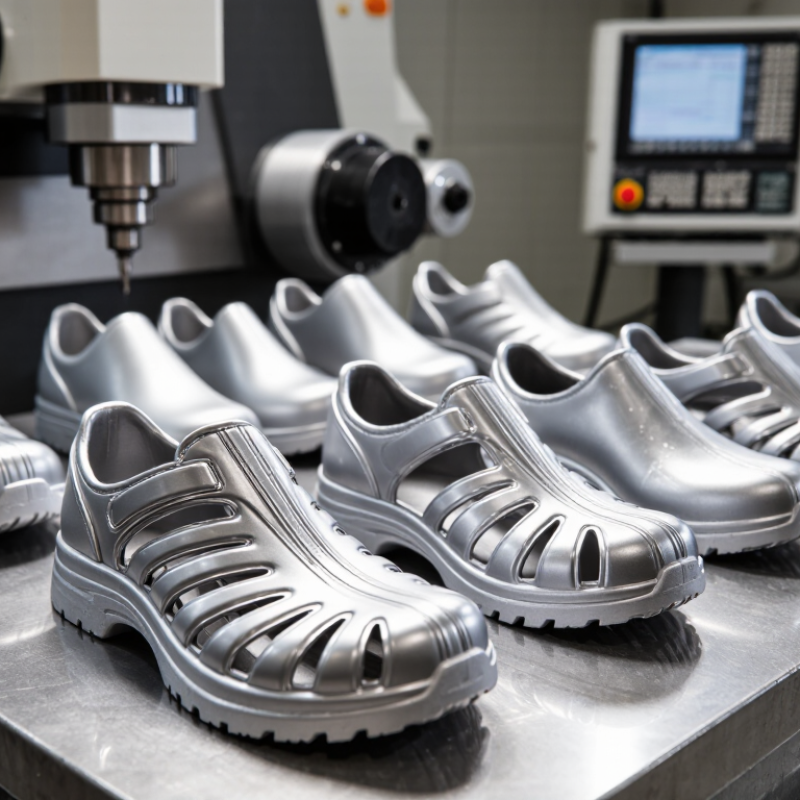
Top EVA Shoe Mould Manufacturers for Global Buyers

Choosing the right EVA Shoe Mould manufacturer can shape product quality, production speed, and long-term business stability. For global buyers, the decision involves more than comparing factory prices. It requires careful attention to material knowledge, mould precision, tooling capacity, communication, and delivery control.

A dependable manufacturer should understand EVA density, expansion behavior, cooling requirements, and the pressure needed for consistent moulding. Small errors can leave uneven soles, weak edges, or visible surface marks. They should also provide clear drawings, sample approvals, dimensional reports, and practical maintenance guidance. These details matter.

This guide introduces leading EVA Shoe Mould manufacturers serving international buyers. It considers manufacturing experience, engineering capability, quality systems, customization support, and export reliability. Factory audits, production samples, and customer references can reveal more than polished websites. Ask direct questions. Request evidence.

Some suppliers may offer impressive machinery but limited experience with complex footwear designs. Others may communicate well yet struggle with tight tolerances or urgent replacement parts. No ranking is perfect. Buyer requirements differ, and a manufacturer suitable for sports sandals may not fit high-volume safety footwear.

The following overview helps buyers compare suppliers with greater confidence. It focuses on practical signals, including CNC processing, trial mould performance, inspection routines, packaging quality, and after-sales response. These points support a more balanced purchasing decision, especially when the supplier is overseas. Careful verification remains essential. A promising quotation is only the beginning.

Top EVA Shoe Mould Manufacturers for Global Buyers

EVA Shoe Moulds: Types, Materials, and Manufacturing Processes

EVA shoe moulds come in several forms, including open-sole, closed-sole, compression, and injection moulds. Each type suits different footwear structures and production volumes. Compression moulds work well for lightweight sandals and casual soles. Injection moulds support faster cycles and more consistent dimensions. Fit comes first. A mould must match the shoe last, outsole profile, foam density, and required cushioning level.

Mould materials influence service life and surface quality. Aluminum offers fast heat transfer and easier machining. Steel provides stronger wear resistance for large production runs. Some manufacturers use treated aluminum surfaces to reduce sticking and improve release. The process usually includes CAD modeling, CNC machining, venting, trial molding, and dimensional inspection. Tiny vents matter. Poor vent placement can leave air marks, incomplete filling, or uneven textures on the EVA sole.

Global buyers should request material certificates, trial samples, cavity tolerances, and maintenance guidance. Experienced manufacturers also check shrinkage before finalizing the cavity size. That step prevents costly fitting problems later. Still, no mould design is perfect for every EVA compound. A formula may behave differently under humidity, temperature, or changing foam pressure. This is where technical communication becomes essential. I would not judge a supplier by polished samples alone. Inspect cooling channels, parting lines, ejector marks, and repeatability across several trial shots. A small compromise in texture may be acceptable, but unstable dimensions usually create larger production losses.

How EVA Shoe Mould Manufacturers Design and Produce Moulds

EVA shoe mould production begins with the footwear developer’s actual requirements, not a generic drawing. Manufacturers review outsole geometry, foam density, shrinkage rate, and expected production volume. They then convert the 3D model into a mould structure with vents, parting lines, cooling paths, and safe release angles.

Experienced engineers check whether thin ribs can fill evenly. They also inspect logo depth, tread sharpness, and cavity balance. A prototype or trial cavity can reveal problems before full tooling begins. This saves material and reduces later machining changes. Still, no digital model predicts every factory condition. Foam behavior may shift with temperature, pressure, or aging equipment. That is where practical judgment matters.

During machining, technicians select aluminium or steel according to cycle demands and maintenance plans. CNC cutting creates the main shape, while electrical discharge machining refines difficult details. Each cavity should be measured against approved data. Trial shots help verify dimensions, weight, surface texture, and demoulding performance. Records should include revision numbers, inspection results, and corrective actions. Useful proof is specific. Reliable manufacturers explain tolerances clearly and describe realistic mould performance. Buyers should request material certificates, inspection reports, and trial records. A low price can hide weak venting or unstable cavity alignment.

Top EVA Shoe Mould Manufacturers for Global Buyers

How EVA Shoe Mould Manufacturers Design and Produce Moulds

This chart presents a practical planning benchmark for a standard EVA shoe mould project. The workflow commonly includes CAD development, prototype review, CNC or EDM machining, venting and surface finishing, trial molding with adjustments, and final inspection. Actual lead times vary according to mould complexity, cavity count, surface requirements, and buyer approval speed.

Key Quality Standards for EVA Shoe Mould Manufacturing

Top EVA Shoe Mould Manufacturers for Global Buyers

Reliable EVA shoe mould manufacturing begins with dimensional accuracy. Critical areas, such as the heel seat and toe curve, need documented tolerances. A small mismatch can create uneven pressure during walking. Experienced manufacturers inspect cavity depth, alignment, and parting lines before production. They should provide measurement records, not only attractive samples.

Material control matters equally. Mould steel or aluminum must match the expected production volume and heating method. Surface hardness, corrosion resistance, and thermal stability affect service life. Clean venting is essential because trapped air can leave burn marks or incomplete details. During trials, technicians should record injection temperature, cycle time, expansion behavior, and shrinkage. These details make later adjustments more reliable.

The finished EVA sole needs practical testing. Check weight, hardness, rebound, compression recovery, and dimensional stability after repeated cycles. A mould may look precise but still produce unstable footwear. I have seen first samples pass visual inspection and fail after cooling. That result is disappointing, but useful. It shows why approval should include both fresh samples and conditioned samples. Clear batch records, calibration certificates, and corrective-action reports also reveal whether a supplier controls its process. Photos are helpful. Physical data is stronger.

Leading EVA Shoe Mould Manufacturers and Their Global Capabilities

Leading EVA shoe mould manufacturers now compete through engineering depth, not only production volume. The World Footwear Yearbook 2024 reported roughly 23 billion pairs of shoes produced globally in 2023. This scale increases demand for mould suppliers that can support repeated designs, stable dimensions, and regional delivery. Experienced manufacturers use 3D CAD, CNC machining, and trial moulds to refine heel height, flex grooves, and outsole texture before mass production.

Material control matters. EVA density, expansion ratio, and cooling conditions can change the final size by millimetres. Reliable factories record batch data and inspect critical points with digital gauges. Many also operate ISO 9001-based quality systems, although certification alone does not prove consistent workmanship. Grand View Research has identified continued growth in the ethylene-vinyl acetate market, supported by footwear and lightweight consumer products. That trend encourages suppliers to invest in faster prototyping and automated finishing.

Global capability includes more than exporting moulds. Strong partners provide technical drawings, sample approval, packaging protection, and clear replacement procedures. Some maintain service teams across Asia, Europe, and the Americas, reducing communication delays during tooling changes. Still, no manufacturer is flawless. A fast quotation may hide limited testing. Buyers should request cavity records, sample measurements, material specifications, and realistic lead times. Small details matter: a scratched cavity or uneven vent can create visible marks across thousands of pairs. Recognized testing practices and documented inspections make supplier claims easier to verify.

Top EVA Shoe Mould Manufacturers for Global Buyers - Leading EVA Shoe Mould Manufacturers and Their Global Capabilities

Capability Area Typical Industry Data Global Buyer Value Recommended Verification
Mould Manufacturing Methods CNC machining, EDM processing, wire cutting, polishing and trial fitting are commonly combined for EVA footwear mould production. Supports accurate cavities, clean parting lines and repeatable mould assembly. Request process photographs, machining records and a sample mould inspection report.
Compatible EVA Processes Moulds may be designed for compression moulding, injection moulding or a combination of production methods, depending on the footwear construction. Helps buyers match mould design with equipment, foam density and production requirements. Confirm machine type, mould base dimensions, steam or heating requirements and approved process parameters.
Material Options Common mould materials include aluminium alloys for lightweight tooling and steel options for higher wear resistance or longer production cycles. Allows a balance between tooling cost, heat transfer, weight and expected service life. Ask for the material grade, hardness information, treatment details and material certificate where applicable.
Design Input Compatibility Professional suppliers generally work from 2D drawings, 3D CAD files, physical samples, lasts or reverse-engineered references. Reduces communication barriers when buyers use different footwear development workflows. Confirm accepted file formats, revision control, data confidentiality and sample approval procedures.
Prototype and Sampling A normal development sequence includes design review, preliminary tooling, first trial, dimensional correction and final approval. Enables fit, appearance, shrinkage and demoulding issues to be resolved before mass production. Request a written sample approval workflow and a defined number of included modification rounds.
Dimensional Control Inspection commonly covers cavity dimensions, mould alignment, flash control, texture consistency and critical footwear reference points. Improves size consistency and reduces defects during repeated EVA production. Check whether the supplier uses calibrated gauges, 3D scanning or coordinate measuring equipment.
Surface Texture Capability Available finishes can include polished, matte, leather-like, patterned, logo-textured and other custom cavity surfaces. Supports product differentiation without relying only on colour or material changes. Request texture samples and confirm how surface wear, cleaning and repair are handled.
Tooling Lead-Time Planning Lead time varies with mould complexity, size range, cavity quantity, surface treatment, trial requirements and design revisions. Provides a more realistic production schedule than using a single standard delivery promise. Obtain a milestone schedule covering design confirmation, machining, first trial, corrections and final shipment.
Size-Set Development Manufacturers commonly produce multiple sizes from an approved last, with size grading based on the buyer's technical specification. Supports consistent fit across regional and international size systems. Confirm the grading table, size range, width options and approval requirements for each size.
Quality Documentation Commercial tooling projects may include inspection reports, material records, trial samples, dimensional data and corrective-action records. Improves traceability and makes supplier performance easier to audit. Include document requirements in the purchase order and define acceptance criteria before production starts.
Export Readiness Export-capable suppliers normally provide commercial invoices, packing lists, shipping marks and transport-ready protective packaging. Reduces customs, handling and transit risks for international deliveries. Confirm Incoterms, export documents, crate or carton specifications and responsibility for freight damage.
After-Sales Tooling Support Support may include mould cleaning guidance, minor repairs, replacement components, cavity corrections and future size additions. Extends tooling usability and simplifies future product updates. Clarify warranty coverage, response time, repair charges and ownership of tooling data.

Note: The figures and capability descriptions above represent common EVA footwear mould industry practices and should be confirmed against each supplier's current technical proposal.

How Global Buyers Can Evaluate and Select a Reliable Manufacturer

Selecting a reliable EVA shoe mould manufacturer requires more than comparing quotations. Global buyers should inspect mould samples, machining quality, and production records. Check cavity dimensions with measured data, not verbal assurances. Ask how the supplier controls aluminium hardness, surface finishing, and cooling performance. Small defects can create uneven soles, flashing, or repeated adjustments during mass production.

Request a trial mould and evaluate several test pairs. Measure weight, density, rebound, compression set, and dimensional consistency. The factory should explain its EVA processing knowledge clearly.

It should also provide drawings, inspection reports, maintenance guidance, and realistic delivery schedules. A capable manufacturer can discuss mould life, repair procedures, and tooling changes without avoiding difficult questions. Short answers are warning signs.

Factory audits can reveal useful details. Look at machining areas, calibration labels, sample storage, and final inspection points. Confirm who owns the tooling and how revisions are approved. Transparent communication matters when time zones and language create delays. A polished workshop is not enough. Production evidence matters more. I would also compare three suppliers, although this can slow the project. That delay may prevent a costly mistake. No evaluation is perfect; even a detailed audit cannot predict every production problem. Reliable suppliers, however, document risks and respond with specific corrective actions.

Article Source:

'