What Is Plastic Raw Material and How Is It Used?
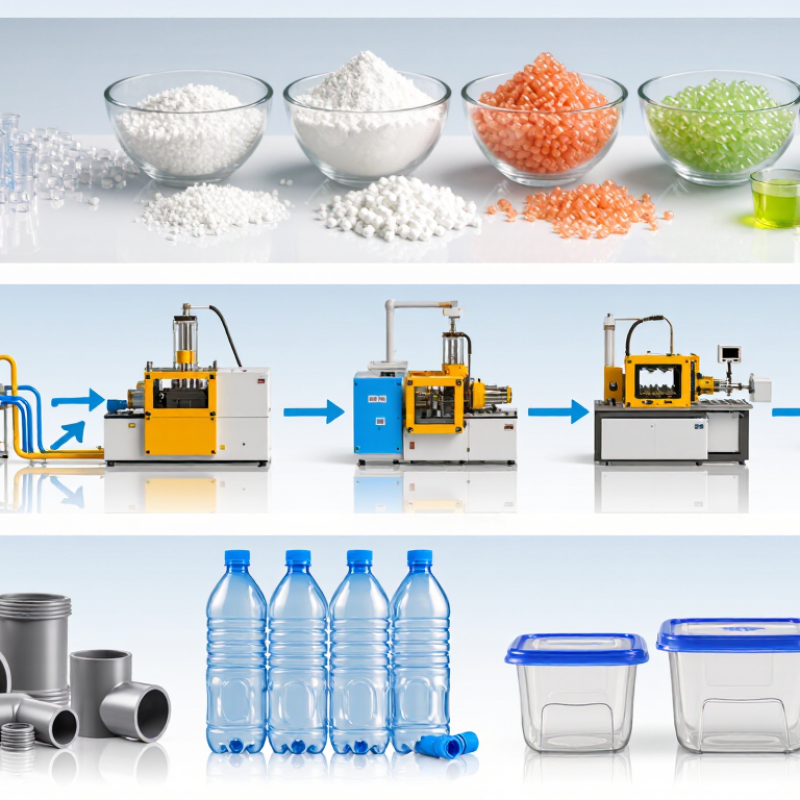
Plastic Raw Material is the starting point for many familiar products, from water pipes to food containers and appliance housings. It usually arrives at a factory as small pellets or granules, though powders and liquid resins are also used. These materials contain polymers, and some grades include additives that affect color, flexibility, strength, or resistance to heat. The exact recipe matters. A clear pellet can become a rigid bottle, a flexible film, or a molded component, depending on its composition and processing. Small pellets. Big differences.
A useful principle, paraphrasing the evidence-led approach of plastics expert Dr. Chris DeArmitt, is: “Judge a material by its performance and life-cycle evidence, not by assumptions.” This is a paraphrase, not a verbatim quotation. It points to an important question: what does the product need to do, and what happens after use? Manufacturers commonly shape plastic through processes such as extrusion, injection molding, and blow molding. Each method uses specific material grades, temperatures, and equipment settings. A mismatch can cause weak parts, uneven surfaces, or unnecessary scrap. Details matter here.
This guide explains what Plastic Raw material means, how producers select it, and how it becomes useful products. It also considers trade-offs, including durability, energy use, and end-of-life options. Not every plastic suits every job, and recycling depends on the material and local systems. The terminology can feel less tidy than product labels suggest. That is worth remembering.
What Is Plastic Raw Material? Resins, Monomers, and Additives
Plastic raw material is the feedstock used to make plastic products. It usually reaches factories as resin pellets, powders, or liquids. Resins are polymers: long molecular chains that give materials properties such as flexibility, stiffness, or heat resistance. Monomers are the smaller molecules linked to form those chains. Ethylene, for example, can form polyethylene. The names sound similar, but they describe different stages.
Additives adjust how a resin performs during processing or use. Stabilizers can slow heat-related damage; pigments provide color, while plasticizers can increase flexibility. A clear packaging film and a rigid pipe may use different resin grades and additive blends. Small amounts matter. Too much of an additive can affect performance, so manufacturers test formulations rather than relying on ingredient lists alone.
Raw materials may come from fossil-based feedstocks or, in some cases, renewable sources. The OECD’s 2022 Global Plastics Outlook estimates that global plastics production reached 460 million tonnes in 2019. It also reports that only 9% of plastic waste was ultimately recycled that year. Those figures describe a broad system, not the footprint of any single resin. Still, they show why material choice, product design, and end-of-life planning deserve attention together. A resin pellet looks simple; its chemistry and supply chain are not.
Which Feedstocks Make Plastics? Fossil-Based Sources Supplied 90.6% in 2022
Plastic raw material is the substance used to make polymers, the long molecules that form plastic products. In 2022, fossil-based sources supplied 90.6% of plastic feedstocks, according to the figure in this article’s subtitle. Oil and natural gas are common starting materials. They are processed into smaller chemical building blocks, then linked into polymers.
At a plant, pellets may be melted and shaped into thin packaging film, sturdy pipes, or the casing around an electrical cable. The same basic feedstock can lead to very different products. Small changes in processing and formulation affect flexibility, strength, and heat resistance. That detail matters.
The 90.6% figure gives a useful snapshot, but it does not tell the whole story. It can hide differences between materials, regions, and manufacturing routes. It also does not mean every plastic item contains the same amount of fossil-derived material. Recycled plastics can reduce demand for new feedstock, though their supply and quality vary. A statistic like this is clear, but its boundaries deserve a closer look.
How Is Resin Produced? Global Plastics Output Reached 400.3 Mt in 2022
How Is Resin Produced? Global Plastics Output Reached 400.3 Mt in 2022
Plastic raw material usually begins as a resin: small polymer pellets made from chemical feedstocks. In production, feedstocks are processed into building-block molecules, then linked into long polymer chains. The resulting resin is cooled, cut into pellets, and shipped for molding or extrusion. Think of clear pellets flowing into a heated machine, then emerging as a pipe, film, or container. The exact process varies by polymer and intended use.
Plastics Europe’s Plastics – the Fast Facts 2023 report puts global plastics production at 400.3 million tonnes in 2022. It estimates that 90.6% was fossil-based, 8.9% came from post-consumer recycled material, and 0.5% was bio-based. These figures describe global production, not just packaging. A large share becomes components for buildings, vehicles, electronics, and everyday goods.
The headline number is useful, but incomplete. It does not show how long products remain in use, or how much material is later collected and recycled. Pellets can look almost identical while having different origins and properties. That difference matters. Resin choice affects strength, heat resistance, weight, and processing needs. A familiar example is a flexible film versus a rigid food container: both are plastics, but their formulations and manufacturing conditions can differ substantially. Even industry-wide statistics cannot capture every local material flow.
What Is Plastic Raw Material and How Is It Used? — How Is Resin Produced? Global Plastics Output Reached 400.3 Mt in 2022
Plastic resin is a polymer material made by chemically linking smaller molecules called monomers. The table summarizes major resin types, their reported shares of global plastics production in 2022, typical production routes, and common uses.
| Resin type | Share of 2022 global output | Estimated output (Mt) | How the resin is produced | Common uses |
| Polypropylene (PP) | 19.2% | 76.9 | Propylene monomers are linked through coordination polymerization. | Packaging, household goods, automotive components, fibers, and nonwoven fabrics. |
| Low-density and linear low-density polyethylene (LDPE/LLDPE) | 14.4% | 57.6 | LDPE is commonly made by high-pressure radical polymerization; LLDPE is generally made by low-pressure polymerization of ethylene with alpha-olefin comonomers. | Films, bags, flexible packaging, cable insulation, and liners. |
| Polyvinyl chloride (PVC) | 12.9% | 51.6 | Vinyl chloride monomers are polymerized, commonly using suspension or emulsion processes. | Pipes, profiles, flooring, cable insulation, and selected medical products. |
| High-density polyethylene (HDPE) | 12.1% | 48.4 | Ethylene is polymerized at relatively low pressure, typically using a coordination catalyst. | Bottles, containers, pipes, crates, and household products. |
| Polyethylene terephthalate (PET) | 6.2% | 24.8 | Ethylene glycol is reacted with terephthalic acid, followed by polycondensation to build long polymer chains. | Beverage and food containers, packaging films, and polyester fibers. |
| Polyurethane (PUR) | 5.5% | 22.0 | Polyols react with diisocyanates or polyisocyanates; formulation determines whether the material is a foam, coating, elastomer, or other product. | Insulation and cushioning foams, coatings, adhesives, and elastomeric parts. |
| Polystyrene (PS) | 5.3% | 21.2 | Styrene monomers are polymerized, commonly by radical polymerization; foamed grades are produced by expanding the polymer with a blowing agent. | Protective and food packaging, insulation, and consumer products. |
| Other plastics | 24.4% | 97.7 | A diverse group made through different polymerization or polycondensation processes, depending on the polymer. | Includes engineering plastics and other resins used in electronics, construction, transport, healthcare, and specialized packaging. |
| Total global plastics production | 100.0% | 400.3 | Reported worldwide plastics production in 2022. |
Source: Plastics – the Fast Facts 2023. Category output estimates are calculated by applying the reported 2022 category shares to the reported total of 400.3 million tonnes; figures are rounded to one decimal place, so rounded category values may not add exactly to the total.
Where Are Plastic Resins Used? Packaging Led European Demand at 39.1% in 2022
Plastic resins are the raw materials melted and shaped into products such as films, bottles, trays, and protective inserts. In Europe, packaging accounted for 39.1% of plastic resin demand in 2022, making it the leading application category. That share reflects packaging’s presence in food, household, and industrial supply chains, where materials must protect goods during storage and transport.
A thin film can keep moisture away from dry food, while a sturdy container can prevent leaks on a delivery route. Different resin types offer different combinations of flexibility, clarity, strength, and heat resistance. The right choice depends on the product and how it will be handled. Small details matter.
The demand figure describes a broad market category, not a measure of how much packaging is recycled or reused. That distinction is easy to miss. Packaging also creates practical challenges: mixed materials, food residue, and lightweight films can make collection and sorting harder. Designers can reduce unnecessary layers and favor formats that fit local recycling systems, but outcomes vary by region. Better packaging is not always the lightest option; protection, material use, and end-of-life handling need to be considered together.
How Is Plastic Waste Managed? OECD Found 9% Was Recycled Globally in 2019
Plastic waste is often discussed as if recycling were a simple loop: collect, melt, and make something new. In practice, sorting and cleaning matter. A food-stained tub, a thin film, and a rigid bottle may need different processes, and some materials cannot be recycled efficiently with existing systems.
The OECD estimated that only 9% of plastic waste worldwide was recycled in 2019. That figure reflects recycling after processing losses, not just material placed in collection bins. The gap matters. A package can enter a recycling stream and still be rejected because it is mixed, contaminated, or uneconomical to process. Waste may instead be landfilled, burned for energy, or poorly managed, with outcomes varying by local infrastructure. Clear collection rules help, but they cannot solve every design or market problem.
The number is sobering. It also has limits: global estimates combine places with very different reporting methods and facilities. A neighborhood sorting line offers a more tangible picture—workers removing unsuitable items while machines separate materials by shape and type. Small errors can reduce the usable output. Better product design and reliable collection can help, though neither guarantees a closed loop. Recycling deserves investment, but treating it as the whole answer risks overlooking waste prevention and reuse.
What Happened to Global Plastic Waste in 2019?
The OECD estimated that 9% of global plastic waste was recycled in 2019. The rest was incinerated, landfilled, or mismanaged.

 '
