Top 10 4x6 Direct Thermal Labels for Shipping?
Choosing 4x6 Direct Thermal Labels seems simple until a roll jams halfway through a busy shipping run. A label may look right on the product page, yet fail to feed cleanly through your printer. Adhesive, roll direction, core size, and printer compatibility all matter. So does the surface receiving the label: a corrugated box behaves differently from a smooth mailer.
Quality-management expert Philip Crosby wrote, “Quality is free. It’s not a gift, but it’s free.” That principle fits shipping labels: a small consistency check can prevent wasted stock and unreadable barcodes. Still, no label works perfectly for every warehouse. Heat, sunlight, moisture, and rough handling can affect direct thermal print, and a label that performs well indoors may fade during longer storage. Worth checking.
This guide compares ten 4x6 Direct Thermal Labels for shipping, with practical details in view: print clarity, adhesive grip, roll count, and compatibility with common thermal printers. We’ll look beyond star ratings, since reviews can hide differences in printer setup and package conditions. A low-cost roll may be a smart buy, or a frustrating one; the details decide. The goal is not to declare one universal winner, but to help you match a label to your printer, parcels, and daily shipping volume. Check the specifications before ordering, and test a small quantity when you can. That extra step is easy to skip. It can also save a whole afternoon.
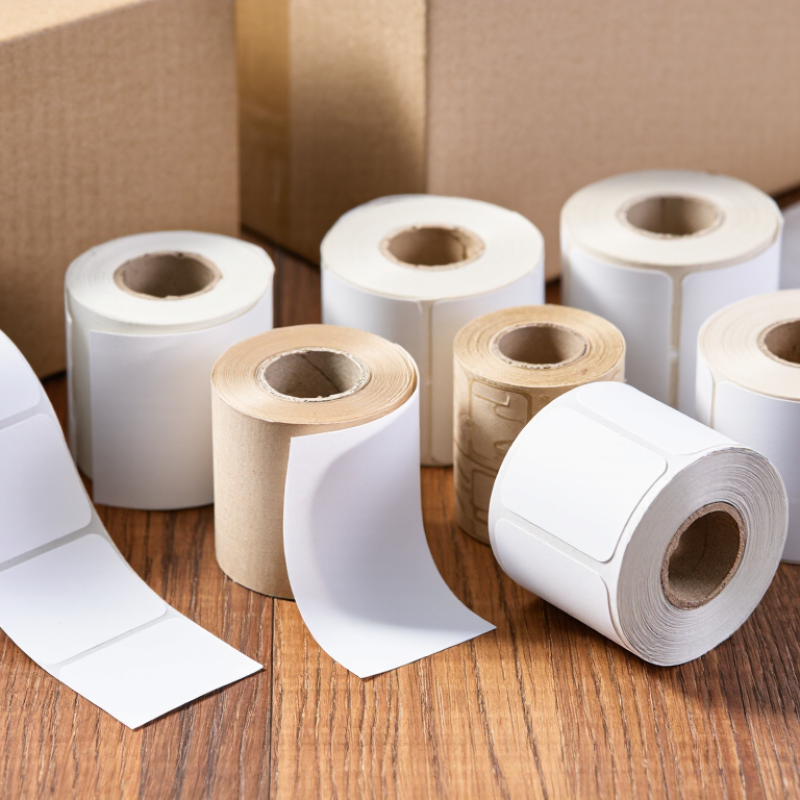
What 4x6 Direct Thermal Shipping Labels Are and How They Work
A 4x6 direct thermal shipping label measures four inches by six inches and suits many parcel workflows. Its surface carries a heat-sensitive coating. A printer’s heated printhead darkens selected areas to form text and barcodes. No ribbon. No ink. The result is a clean, fast label, though print quality depends on compatible stock and printer settings. Pitney Bowes’ 2023 Parcel Shipping Index estimated 21.7 billion U.S. parcel shipments that year, about 1% fewer than in 2022. That scale helps explain why small printing delays can matter in busy dispatch areas.
For a typical label, the sender’s address, destination, tracking code, and carrier routing details appear within the 4x6-inch area. The printer creates the image directly on the label, so operators avoid changing ink or toner. Still, “direct” does not mean indestructible. Heat, sunlight, friction, and prolonged storage can fade or darken the coating. Keep rolls sealed and away from hot windows; check barcode readability before applying labels. The U.S. Census Bureau’s Quarterly Retail E-Commerce Sales report put online sales at 16.1% of total U.S. retail sales in fourth-quarter 2024. More parcels mean more labels, but the right media depends on handling conditions. A label that looks sharp at the packing table may not stay readable after a warm delivery van ride. That detail deserves testing.
Key Factors for Evaluating 4x6 Shipping Labels
Key Factors for Evaluating 4x6 Shipping Labels
A 4x6 label must fit the carrier’s barcode, address, and routing data without cropping. Check the printable area, not just the sheet’s outside dimensions. Quiet zones around barcodes matter. ISO/IEC 15416 provides a method for grading printed linear barcodes, including contrast and edge definition. A crisp test print should remain readable after ordinary handling, not merely look sharp on the roll.
Adhesive performance depends on the carton, surface dust, and storage conditions. Apply a sample to corrugated cardboard, then press and inspect the corners after a short hold. A label that lifts can snag in automated handling. Small details matter.
The 2024 Pitney Bowes Parcel Shipping Index reports 21.7 billion U.S. parcels in 2023, underscoring how often labels pass through sorting and delivery systems.
Also confirm that the roll core, outside diameter, and thermal coating suit the printer. Direct thermal labels need no ribbon, but heat, sunlight, and friction can darken or fade the image. One weak point: a quick desk test cannot reproduce every warehouse condition.
Ten 4x6 Direct Thermal Labels Compared by Use Case
Top 10 4x6 Direct Thermal Labels for Shipping?
Ten 4x6 Direct Thermal Labels Compared by Use Case
The right label depends on the parcel, printer, and route. Standard paper labels suit everyday cartons. Economy stock can work for short trips and dry conditions. Premium smooth stock helps when crisp barcodes matter. High-tack adhesive is useful on rough cardboard, while removable adhesive suits temporary labeling. Freezer-rated stock handles cold storage better. Moisture-resistant options help with damp handling, but they are not waterproof by default. Perforated labels make hand tearing easier. Fanfold packs suit busy packing stations with limited printer space. Roll labels can keep smaller work areas tidy.
Tips: Check your printer’s media specifications before ordering. Test a few labels on your actual cartons. Press firmly, then inspect the edges. A label that lifts at one corner can snag or become hard to scan.
I would match stock to the weakest part of the journey, not just the packing bench. A clean indoor parcel may need only standard paper; a chilled shipment calls for more careful testing. Direct thermal labels can fade with heat, sunlight, or long storage, so avoid assuming every option lasts equally well. That detail is easy to overlook. Also consider label spacing and core size; a compatible label can still feed poorly if the format is wrong.
Printer Compatibility and Label Application Best Practices
Top 10 4x6 Direct Thermal Labels for Shipping?
Printer compatibility starts with more than the 4 x 6-inch size. A standard shipping label measures 101.6 by 152.4 mm, but printers also differ in supported media width, roll-core size, roll diameter, and sensing method. Confirm the printer supports direct thermal printing; this stock does not use a ribbon. Check whether it detects gaps or black marks, too. A label can fit the holder and still feed crookedly.
Application matters just as much. Apply labels to clean, dry cartons, then press across the full surface, especially near corners. Dust, textured cardboard, cold surfaces, and curved packages can weaken adhesion.
MHI’s 2024 Annual Industry Report found that 55% of respondents planned to invest over $1 million in supply-chain innovation within two years.
As shipping operations adopt more technology, small media mismatches can still create avoidable relabeling and delays. Spec sheets help, but carton coatings vary; a short real-world test is wiser than assuming every adhesive behaves alike.
Tips: Match the core and roll direction to the printer. Print a test label, scan it, and rub the edges gently. Leave the barcode flat and unobstructed. Check adhesion after the package reaches its actual shipping temperature.
Storage, Durability, and Common Shipping Label Problems
Direct thermal labels are sensitive to their surroundings, even before they reach a parcel. Store 4x6 rolls flat or upright in their packaging, away from sunlight, heaters, and damp areas. A warm shelf beside a printer may seem convenient, but heat can darken the label surface before printing. Keep rolls clean and dry, and avoid stacking heavy boxes on them. Pressure can deform the edges and cause feeding problems. Small details matter.
Durability depends on the label stock, the package surface, and the journey. Direct thermal printing can fade with prolonged heat, sunlight, or rubbing, so it may not suit every long-storage shipment. Apply labels to a clean, dry, flat area; dusty cardboard and curved corners can weaken adhesion. Press the whole label down, especially its edges. I still find this easy to overlook. It happens. Wrinkles, pale print, and peeling corners can make barcodes difficult to scan. Check printer darkness and alignment, then print a sample before a large batch. If a label smears or feeds unevenly, inspect the roll for moisture, bent edges, or debris around the printer path. A quick check saves reprinting, though it cannot fix unsuitable label stock.

 '
