What Are the Top 10 Sound Dampening Panels?
Choosing the right sound dampening panels is rarely as simple as comparing colors, thicknesses, or attractive product photos. A panel that improves speech clarity in a home office may perform poorly against deep bass from a subwoofer. Room size, wall construction, panel density, air gaps, and installation height all influence the result. Even small details matter, such as placing panels at first-reflection points beside a desk or behind a listening position.
Rod Gervais, author of Soundproofing, states, “The best soundproofing is mass, air space, and decoupling.” This principle deserves attention because sound absorption and sound isolation are different goals. Most acoustic panels reduce reflections inside a room. They do not automatically stop traffic noise, footsteps, or music from passing through a wall. That misunderstanding can lead to wasted money.
This guide examines the top 10 sound dampening panels through practical and technical criteria. We consider absorption performance, thickness, fire ratings, material quality, installation flexibility, appearance, and value. Where available, laboratory data such as the Noise Reduction Coefficient can provide useful comparisons. Still, one rating cannot describe every real room.
No panel is magic.
Personal testing also matters. A treated room can sound clearer, yet overly dead if too much surface area is covered. Some recommendations may seem obvious, while others deserve reconsideration. The best choice depends on the room’s purpose, the unwanted sound, and the listener’s expectations. We will separate genuine acoustic benefits from marketing language, while acknowledging that this evaluation cannot replace a professional site measurement.
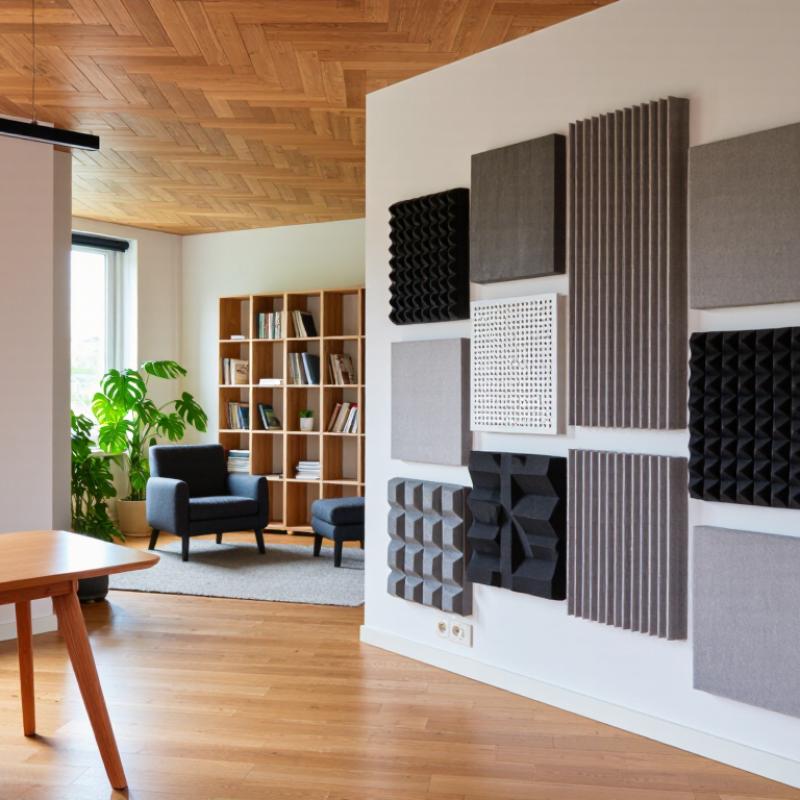
Sound Dampening Panels Explained: NRC Ratings, Thickness, and Absorption Coefficients
Sound dampening panels reduce reflections inside a room; they do not block every sound from passing through walls. For choosing among the top 10 options, start with the room’s actual problem. A sharp echo in a tiled office calls for a different treatment than muddy speech in a small podcast room. NRC, or Noise Reduction Coefficient, is a useful comparison figure. It averages absorption at several midrange frequencies, usually on a scale from 0 to 1. Higher is generally better for reflected speech. But one number can hide weak performance at low bass frequencies. Read the test details when available.
Thickness and placement matter, too. A thin, lightweight panel may tame handclaps and bright vocal reflections, while thicker absorbers often work lower in frequency. An air gap behind a panel can improve absorption, especially when space allows. Check the published absorption coefficients by frequency, rather than relying on a single NRC value. A panel rated well at 500–2,000 Hz may still leave a kick drum’s low thump largely untouched. Measure the room, listen from the seat you use, and add treatment gradually. Small changes can be revealing. I would not assume that covering every wall is an upgrade; an overly dead room can feel oddly lifeless, and the best amount is not always obvious.
Top 10 Sound Dampening Panels: NRC Ratings and Absorption
Typical laboratory-range values are shown for common panel constructions. NRC is the average sound absorption coefficient at 250, 500, 1000, and 2000 Hz; the 500 Hz coefficient indicates low-mid frequency performance. Actual results vary with thickness, mounting method, air gaps, and test conditions.
How to read the chart: Higher NRC values generally indicate stronger overall absorption. Increasing thickness and adding an air gap usually improves absorption, especially at lower frequencies.
How Acoustic Panels Reduce Reverberation Across 125–4,000 Hz Frequency Bands
What Are the Top 10 Sound Dampening Panels?
The top ten panel types include PET fiber, fiberglass, mineral wool, fabric-wrapped, perforated wood, microperforated, foam, ceiling clouds, hanging baffles, and hybrid absorbers. Their performance depends on thickness, density, spacing, and installation. ASTM C423 test reports measure sound absorption across octave bands, while ISO 354 defines reverberation-chamber testing methods. These standards provide more reliable comparisons than marketing claims.
At 125 Hz, thin panels usually absorb little energy. Low-frequency waves need thicker cores or air gaps behind the panel. At 250 Hz, absorption improves, especially with 50–100 millimetre panels. From 500 to 2,000 Hz, most porous panels can reduce reflected speech energy effectively. Higher frequencies, including 4,000 Hz, are often controlled by thinner surfaces, fabric, and ceiling treatments. The National Research Council’s classroom acoustics research links shorter reverberation times with better speech intelligibility. ANSI/ASA S12.60 commonly targets reverberation times near 0.6–0.7 seconds in classrooms.
Room geometry still matters.
A panel’s laboratory rating may not match field performance. The widely used NRC value averages absorption at 250, 500, 1,000, and 2,000 Hz, so it does not fully describe 125 or 4,000 Hz behavior. A practical assessment should combine test data, microphone measurements, and listening checks. One weakness remains: many installations treat walls only, while ceilings and corners continue reflecting sound. The ranking is useful, but not absolute.
Top 10 Sound Dampening Panels Compared by NRC, Density, Materials, and Coverage
What Are the Top 10 Sound Dampening Panels?
Top 10 Sound Dampening Panels Compared by NRC, Density, Materials, and Coverage
A useful comparison starts with NRC, which estimates how much sound a panel absorbs across tested frequencies. Higher is not automatically better for every room. Fiberglass and mineral wool panels often offer strong absorption at moderate thickness, while polyester fiber panels are lighter and easier to handle. Foam panels can reduce reflections, but thin foam usually does little for deep bass. Fabric-wrapped panels, wood-slat panels, perforated wood, recycled cotton, cork, felt, and composite panels round out ten common choices. Their performance varies by construction, not just material.
Check density and thickness together. A dense, thick panel may absorb more lower-frequency sound, but placement and air gaps also matter. Coverage is just as practical: four large panels can treat more wall area than many small tiles. Compare each product’s tested NRC, dimensions, thickness, mounting method, and recommended coverage. Be cautious when a listing gives only a broad performance claim without test details.
Tips:
Treat the first reflection points beside speakers and the wall behind a listening position. A handclap can reveal a sharp room echo, though it is not a measurement. Start with a few panels, listen again, and adjust. I once expected thin foam to fix a boomy corner; it barely changed it. Low-frequency problems may need thicker treatment, and results can disappoint when the room itself is the main issue.
Panel Placement Standards: Ceiling Clouds, Wall Spacing, and the 20–30% Rule
A good panel plan begins with listening, not counting panels. Stand between the speakers and mark the first reflection points on the side walls. Add panels there, leaving a small air gap where practical; spacing can improve low-frequency absorption compared with mounting panels flush. On a bare wall, a 1–2 inch gap is a useful starting point, not a universal prescription.
The 20–30% rule is a planning heuristic, not a building-code requirement. It refers to treating roughly one-fifth to one-third of a room’s wall and ceiling area, then checking the result by ear or measurement. ASTM C423 measures sound absorption in a reverberation room and reports the Noise Reduction Coefficient (NRC); it does not prescribe how much coverage every room needs. A small bedroom with hard floors may need more control than a carpeted office. Ceiling clouds can help over a desk or listening position. Suspend them with a safe, even air gap, and keep lights, sprinklers, and ventilation unobstructed. Placement matters.
Tips: Start with two wall panels at reflection points and one cloud above the main listening area. Record a short voice test before and after. If the room sounds unnaturally dull, you may have treated too much—or placed panels poorly. I would revisit the layout before buying more.
Selecting the Best Panel for Studios, Offices, Home Theaters, and Industrial Spaces
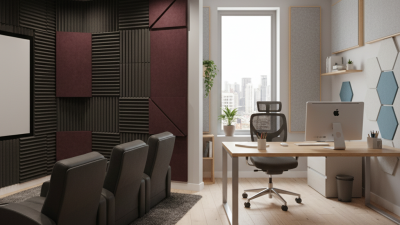
The top 10 sound dampening panels suit different rooms, but no single panel works everywhere. For a recording studio, choose thick porous panels to reduce flutter echo around microphones. In offices, fabric-covered panels can soften conversation without making rooms feel lifeless. Home theaters benefit from a mix of wall panels and bass traps, especially near corners. Industrial spaces may need durable, easy-to-clean panels rated for their environment. Check installation requirements and fire-safety documentation before choosing.
Tips: Clap near the room’s center and listen for a sharp ring. That quick test reveals echo, not soundproofing. Panels absorb reflections inside a room; they usually do not block noise passing through walls. A small sample can help you judge color and texture, though it may not show the full acoustic effect.
Measure the space and identify the main problem before comparing panel materials. A noisy meeting room needs different treatment from a theater with boomy bass. Place panels near reflection points, then listen again from the usual seat. Results can be uneven. Fine-tuning often takes a little patience.


 '
