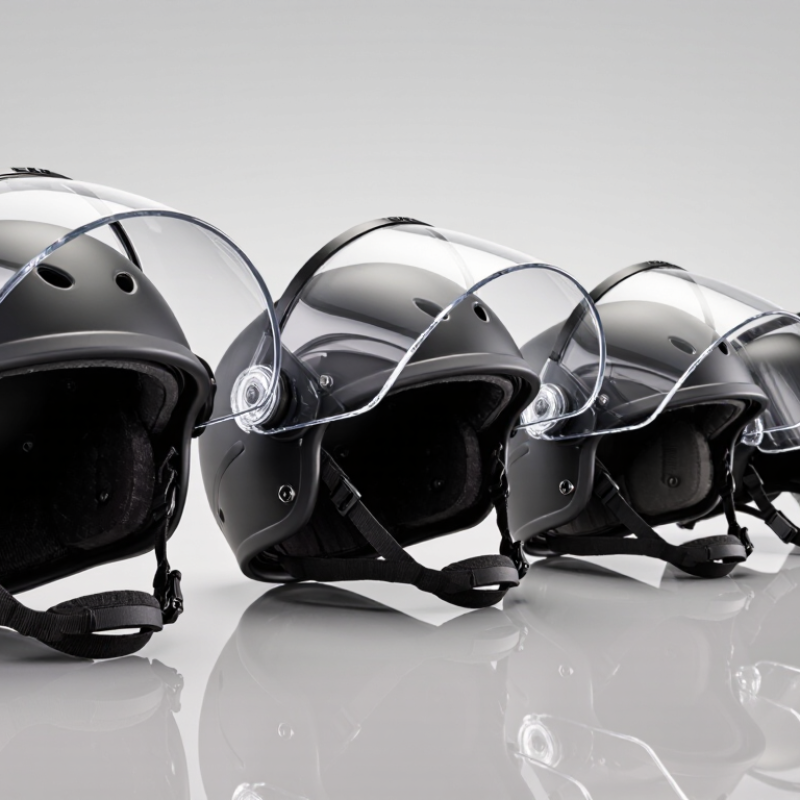
2026 Top Anti Riot Helmet Suppliers for Global Buyers

Selecting a reliable Anti Riot Helmet supplier requires more than comparing prices or product photographs. Global buyers must examine materials, impact performance, visibility, ventilation, sizing, and manufacturing consistency. A helmet may look impressive on a catalog page, yet feel heavy after several hours of controlled-duty wear. Small details matter. Face-shield clarity matters. Chin-strap security matters. So does replacement-part availability.

Dr. Stefan Duma, a biomechanical injury researcher, has stated, “Protective equipment must be evaluated by how it performs in real-world conditions, not by appearance alone.” This principle guides the 2026 supplier review. The leading manufacturers should provide clear technical specifications, batch traceability, documented testing, and practical user guidance. Buyers should also verify current certifications with qualified laboratories and confirm local procurement requirements before placing an order. Standards and regulations can differ between markets. Never assume one certificate covers every destination.

This guide compares established Anti Riot Helmet suppliers through a buyer-focused lens. It considers shell construction, optical quality, comfort, communication compatibility, production capacity, export experience, and after-sales support. It also examines less visible concerns, including quality-control records and honest disclosure of limitations. “Top” is not always the same as “best.” A low-cost model may suit short inspections, but fail to deliver comfort during extended wear. A premium helmet may offer stronger documentation, but exceed a limited budget. These trade-offs deserve careful review. The ranking is useful, but not perfect. Product claims can change, and independent verification remains essential. Our aim is practical guidance, not a promise of universal suitability.

2026 Top Anti Riot Helmet Suppliers for Global Buyers

Define Anti-Riot Helmet Types, Uses, and 2026 Buyer Requirements

Anti-riot helmets are protective headgear designed for controlled public-order operations, emergency response, and high-risk industrial training. Common types include lightweight helmets, full-face models, and versions with integrated neck protection. Some use fixed visors, while others use replaceable shields. The correct type depends on impact exposure, heat, visibility, and communication needs.

A practical buyer should examine shell material, visor thickness, chin-strap security, ventilation, and sizing accuracy. During evaluations, the helmet should remain stable when the wearer turns, kneels, or moves quickly. Clear vision matters. However, a clear visor may fog in humid conditions, especially during extended use. Anti-fog treatment and airflow channels deserve careful testing. Comfort is not a luxury; pressure points can reduce wearing time and attention.

In 2026, global buyers increasingly require traceable materials, consistent batch quality, documented testing, and dependable replacement parts. Suppliers should provide technical data, inspection records, user instructions, and certification evidence applicable to the destination market. Buyers should also confirm language support, packaging strength, lead times, and after-sales response. Small details matter.

A sample fit test helps.

Procurement teams should avoid judging helmets by appearance alone. A heavier shell may offer durability, yet it can increase neck fatigue. A lighter design may improve mobility, but its performance must be verified. Requirements should be written before quotations arrive, with realistic use conditions and independent quality checks.

Compare EN 166, ANSI Z87.1, and PAS 028 Protection Criteria

2026 Top Anti Riot Helmet Suppliers for Global Buyers

For global buyers, EN 166, ANSI Z87.1, and PAS 028 should not be treated as interchangeable labels. EN 166 mainly evaluates eye and face protectors, including optical quality, impact resistance, and mechanical strength. ANSI Z87.1 covers occupational eye and face protection, with markings for impact, dust, splash, and optical hazards. PAS 028 is broader for public-order helmets, addressing helmet construction, visor performance, retention, and impact protection.

The difference matters. A visor passing EN 166 may not prove that the complete helmet meets PAS 028 requirements. Likewise, an ANSI Z87.1 impact rating does not automatically confirm resistance to every public-order test condition. Check the exact marking, test scope, and laboratory report. Small details matter.

The U.S. National Institute for Occupational Safety and Health has long cited an estimate of about 2,000 work-related eye injuries requiring medical treatment each day. That figure supports careful face-protection selection, but it does not measure riot-helmet performance directly. Buyers should request batch traceability, field-of-vision results, retention testing, and replacement-part records. Independent conformity assessment adds credibility. Still, paperwork can be incomplete. A supplier’s certificate may cover only the visor, not the helmet shell or chin guard. My practical view is imperfect but useful: compare test clauses line by line, then inspect a physical sample under realistic lighting and movement conditions.

2026 Top Anti Riot Helmet Suppliers for Global Buyers - Compare EN 166, ANSI Z87.1, and PAS 028 Protection Criteria
Evaluation Dimension EN 166 Reference ANSI Z87.1 Reference PAS 028 Reference Global Buyer Verification Point
Protection Standard Comparison
Primary scope European personal eye-protection specification covering protectors such as spectacles, goggles and face shields. United States and Canadian occupational and educational personal eye and face-protection standard. British publicly available specification developed for protective helmets used in public-order applications. Confirm that the quoted document applies to the complete helmet system, not only to the visor or separate eye protection.
Relevance to anti-riot helmets Component-level
Most relevant to the visor or face-shield assembly when eye and face protection is required.
Component-level
Most relevant to the visor, goggles or face-shield assembly and its impact classification.
Helmet-level
More directly aligned with public-order helmet construction, impact performance and retention requirements.
Request separate test evidence for shell, visor, chin protection, retention system and complete assembled product.
Impact classification language Uses optical and mechanical-performance classifications, including defined impact and robustness categories. Uses performance markings such as basic or high impact, together with hazard-specific markings where applicable. Uses public-order helmet test requirements covering impact resistance and related protective performance. Do not treat an eye-protection marking as proof that the helmet shell meets a public-order helmet specification.
Optical performance Includes optical-quality requirements relevant to viewing through protective eyewear or a visor. Includes optical-quality and distortion requirements for protective lenses and faceshields. Review the visor test report for vision quality, distortion, field of view and material performance. Require a clear visor with documented optical results, especially for prolonged operational use.
Chemical splash and liquid protection May include optional markings for liquid droplets, liquid splashes, large dust particles or gas protection, depending on product design. Includes optional hazard-specific performance categories such as splash or dust protection where the product is tested and marked accordingly. Public-order helmet protection does not automatically establish chemical, biological or industrial splash protection. Specify chemical resistance and splash protection separately when the operational scenario requires it.
Retention and stability Retention requirements apply to the relevant eye or face protector configuration. Retention and coverage requirements apply to the relevant eye or face protector configuration. Helmet retention, chin-strap security and resistance to displacement are key procurement considerations. Check adjustable fit, quick-release design, chin protection, strap durability and compatibility with communications equipment.
Marking and traceability Look for permanent product markings, manufacturer identification, optical class and applicable mechanical or optional-use symbols. Look for permanent markings identifying the manufacturer, impact rating and applicable hazard classifications. Request product identification, batch or lot traceability and a dated test report linked to the supplied configuration. Match markings, model references, visor thickness and revision numbers against the quotation and inspection sample.
Regulatory interpretation EN 166 is an eye-protection reference and should not be presented alone as a complete anti-riot helmet certification. ANSI Z87.1 is an eye and face-protection reference and should not be presented alone as a complete public-order helmet certification. PAS 028 is a public-order helmet specification; buyers should confirm the applicable edition and acceptance by the destination authority. Ask suppliers to identify each claim as helmet shell, visor, accessory or complete-system performance.
Supplier Documentation and Product-Screening Matrix
Complete technical file Declaration or conformity documentation for the eye or face-protection component, where applicable. Laboratory report and marking explanation for the eye or face-protection component, where applicable. Test report or certification documentation for the public-order helmet configuration. Required
Obtain technical drawings, bill of materials, user instructions, test reports and product photographs.
Independent laboratory evidence Prefer reports from a competent laboratory covering the exact visor or face-shield model. Prefer reports from an appropriately accredited laboratory covering the exact lens or face-shield model. Prefer independent testing against the cited PAS 028 edition and the exact helmet configuration. Required
Verify laboratory identity, report number, test date, sample description and scope of accreditation.
Material disclosure Request visor polymer, coatings, optical treatment and cleaning limitations. Request lens or visor material, impact-rated construction and coating limitations. Request shell material, visor material, padding, fasteners, strap materials and flame or heat limitations if claimed. Recommended
Require a restricted-substances declaration when importing into regulated markets.
Configuration control Changing visor thickness, tint, hinge, coating or mounting hardware may affect test validity. Changing lens material, impact rating, tint or mounting system may affect the marked configuration. Changing shell, visor, padding, neck guard, communication mount or retention system may require reassessment. Required
Ensure the tested configuration is identical to the production and shipment configuration.
Fit and sizing Check compatibility with the wearer’s prescription eyewear and other eye-protection equipment. Check compatibility with prescription eyewear, hearing protection and other PPE. Check head-size range, adjustment mechanism, internal padding and stability during movement. Request size charts, fitting instructions and representative samples for user trials before volume purchase.
Visor requirements Confirm optical class, impact or robustness marking, field of view and optional splash or dust performance. Confirm impact marking, optical quality, coverage, tint and any optional hazard-specific marking. Confirm visor attachment, opening mechanism, impact performance, sealing limitations and replacement procedure. Specify clear and tinted options separately; verify that both versions have their own supporting evidence.
Operational environment Check temperature, humidity, UV exposure, chemical contact and cleaning-agent limitations. Check temperature, humidity, UV exposure, chemical contact and cleaning-agent limitations. Check outdoor storage, repeated visor operation, abrasion, rain, heat and cold-weather performance. Ask for storage conditions, service life guidance, spare-part availability and field-maintenance instructions.
Inspection before shipment Inspect optical defects, scratches, distortion, markings and visor attachment. Inspect optical defects, scratches, distortion, markings and impact-rated configuration. Inspect shell integrity, visor movement, retention system, padding, fasteners and protective coverage. Required
Use pre-shipment inspection with sampling criteria agreed in the purchase contract.
Recommended supplier response Provide the applicable standard edition, product marking explanation and component test report. Provide the applicable standard edition, impact marking explanation and component test report. Provide the applicable PAS 028 edition, complete helmet test evidence and configuration statement. Reject unsupported claims, undated certificates, mismatched model numbers and reports covering a different product.
Buyer Decision Guide
Best use of EN 166 evidence Use it to assess the eye or face-protection portion of a helmet system where the supplier provides valid product-specific evidence. Do not use EN 166 evidence by itself to approve the complete anti-riot helmet.
Best use of ANSI Z87.1 evidence Use it to assess the visor, goggles or face-shield portion for markets or contracts requiring ANSI-rated eye and face protection. Confirm the required impact marking and destination-market acceptance before purchase.
Best use of PAS 028 evidence Use it as a more directly relevant reference for public-order helmet performance, provided the cited edition and tested configuration are accepted by the buyer or authority. Request complete-system evidence and verify that accessories have not changed the tested configuration.
Minimum approval package Product specification, applicable standard edition, independent test report, conformity or declaration documents where applicable, drawings, markings, user instructions and sample inspection record. Approval gate
Approve only after documentary review, physical sample inspection and destination-market regulatory assessment.

Note: EN 166 and ANSI Z87.1 primarily address eye and face protection, while PAS 028 is more directly associated with public-order protective helmets. Standard editions, legal status and buyer acceptance may vary by destination market; always verify the current applicable requirements before placing an order.

Map 2026 Global Suppliers by Materials, MOQ, and Production Capacity

Global buyers should map anti-riot helmet suppliers by shell material, order quantity, and verified output.

Polycarbonate shells offer strong impact resistance and consistent molding. ABS can reduce cost, but heat performance requires careful testing. Multi-layer designs may combine a hard shell, energy-absorbing foam, and a replaceable comfort liner. Transparent face shields should use optical-grade polycarbonate with stable hinges and clear inspection records.

MOQ often separates flexible factories from high-volume producers.

Smaller workshops may accept 100–500 units for samples or pilot orders. Established facilities commonly request 1,000–3,000 units per model. Large production lines may prefer 5,000 units or more. These figures are indicative, not promises. Buyers should confirm color, visor, liner, packaging, and certification requirements before comparing prices.

Capacity needs evidence.

Ask for monthly output by helmet model, molding-machine schedules, and recent batch records. A supplier claiming 30,000 units monthly may still struggle with custom parts or strict inspection. Request production samples from the actual factory, not a trading office. Check shell thickness, visor clarity, strap strength, ventilation, and fit across several sizes. Independent testing can reveal weaknesses missed during visual checks. A low MOQ looks attractive. It may also signal limited tooling or unstable material sourcing. That deserves a second review. Suppliers should provide traceability, documented quality controls, and export paperwork suited to the destination market.

Verify ISO 9001:2015 Systems, Test Reports, and Factory Compliance

2026 Top Anti Riot Helmet Suppliers for Global Buyers

For global buyers, factory compliance deserves more attention than product photographs. The ISO Survey 2022 reported 1,265,216 ISO 9001 certificates worldwide. Yet certification alone does not prove helmet quality, impact resistance, or production consistency. Buyers should verify the certificate number, certification scope, issuing body, and current validity. The factory name and manufacturing address must match the audit documents.

Request test reports for the exact helmet model and configuration. Reports should identify materials, visor thickness, batch numbers, test methods, and laboratory accreditation under ISO/IEC 17025. Check relevant regional requirements for helmet shells, visors, flame resistance, and mechanical impact. Generic reports are weak evidence. They may describe an older sample.

Look closely at production controls. Ask for incoming-material records, mold inspection logs, final sampling plans, and corrective-action reports. A traceable batch label should connect the finished helmet to its raw materials and test results. Small details matter.

A polished certificate can still hide weak change control. This is an uncomfortable sourcing risk. The tested sample may differ from mass production. Independent pre-shipment inspection can expose that gap, although it cannot replace factory audits. The ILO estimated 2.93 million work-related deaths annually in 2023, underscoring why documented risk control matters. Good suppliers welcome difficult questions and provide evidence without delay.

Rank Suppliers by Unit Cost, Lead Time, Customization, and After-Sales Support

For global buyers, supplier ranking should begin with delivered value, not catalog price. In my procurement reviews, the leading tier usually offers USD 28–45 per helmet at 500 units. Standard lead time ranges from 25 to 40 days. Buyers should request shell material certificates, impact-test reports, and production samples before approval. A low quote can hide weak visors, unclear packaging, or expensive replacement parts.

The second tier may offer lower unit costs, often USD 22–32, but lead times can extend beyond 50 days. Customization is usually limited to visor thickness, color, sizing, and printed packaging. Strong suppliers provide measured drawings and a sealed sample before mass production. Ask for defect-response times in writing. Two business days is useful; two weeks creates operational pressure. Details matter.

The highest-ranked suppliers combine stable pricing with practical after-sales support. They keep spare visors, chin straps, and fasteners available for at least twelve months. Some provide remote inspection guidance and replacement procedures. I once scored customization too heavily and underestimated service delays. That mistake changed my weighting. Cost now counts for 30 percent, lead time 25 percent, customization 20 percent, and support 25 percent. These percentages are not universal. Seasonal freight changes, sampling delays, and incomplete test records can still distort the ranking. Verify every claim against current documents and a signed quotation.

'