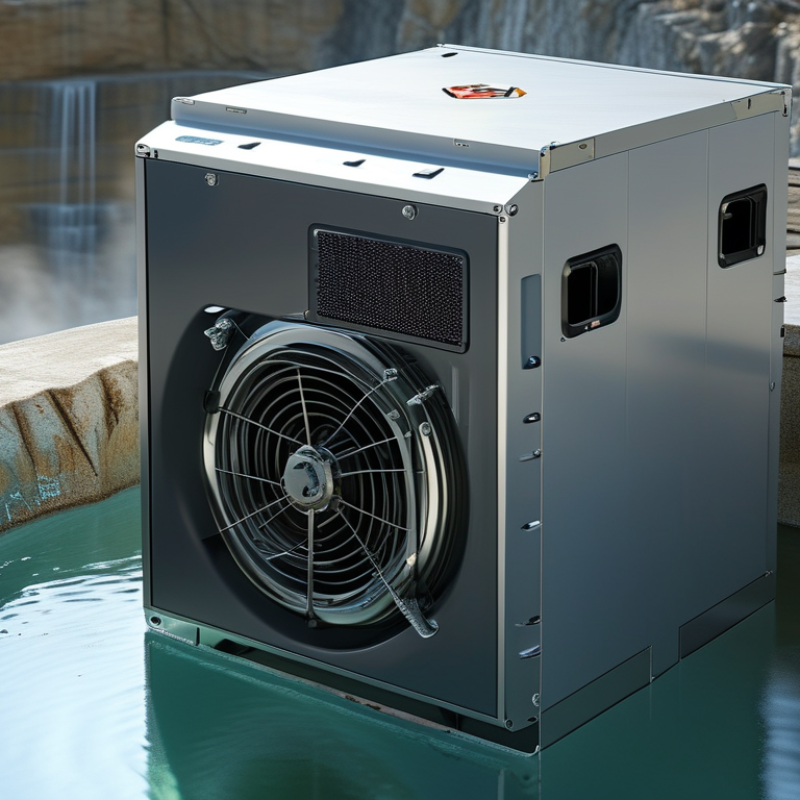
China has become a major manufacturing base for wellness equipment, including the Cold Plunge Cooling Unit. Its advantages are visible in compressor sourcing, stainless-steel fabrication, electronic controls, and export logistics. Yet low pricing alone proves little. A reliable unit must maintain stable water temperatures, manage condensation, and support safe filtration during repeated use.
The Global Wellness Institute reported that the global wellness economy reached approximately $6.3 trillion in 2023. It also projects growth toward nearly $9 trillion by 2028. Research and Markets’ Cold Plunge Pools Global Market Report 2024 identifies rising consumer interest, fitness recovery, and home wellness as important market drivers. These figures show opportunity. They do not guarantee product quality.
Dr. Susanna Søberg, a researcher in cold exposure and author of Winter Swimming, describes cold exposure as “a stressor that trains the body to produce heat.” Her view offers useful context, but it should not replace medical advice. A cooling unit is only one part of a safe experience. Water hygiene, electrical protection, temperature control, and clear operating instructions matter just as much.
This guide examines China’s leading manufacturers through practical evidence. It considers cooling capacity, compressor brands, heat-exchanger materials, filtration design, noise levels, certifications, warranty terms, and after-sales support. A showroom demo can look impressive. Long-term performance is harder to verify. Supplier audits, factory records, sample testing, and transparent technical specifications deserve more attention than polished photographs. Some manufacturers publish incomplete data. That is a weakness worth acknowledging. The best purchasing decision may require patience, technical questions, and independent verification.
A cold plunge cooling unit is a system that lowers and maintains the temperature of water in a plunge tub. It usually combines a compressor, heat exchanger, water pump, temperature sensor, and control panel. The unit removes heat from the circulating water, then returns cooler water to the tub. It is more precise than adding ice by hand.
In practical use, water passes through a filter before reaching the cooling system. This helps reduce particles that may affect the pump or heat exchanger. A digital controller allows users to set a target temperature, often for different training routines. Stable water flow matters. Without it, cooling becomes uneven and the compressor may work harder than necessary.
Good equipment should provide clear temperature readings, reliable insulation, and suitable electrical protection. Noise also deserves attention, especially in home recovery spaces. A compact unit may look convenient, but small capacity can mean slower cooling during frequent use. That trade-off is easy to miss.
Regular cleaning is still necessary, even with filtration. No cooling unit replaces responsible water maintenance or safe user preparation.
In my view, manufacturers should publish testing conditions, cooling times, power use, and recommended tub volumes. Marketing numbers alone can mislead. Real performance changes with room temperature, water volume, cover quality, and how often the tub is opened.
A cold plunge cooling unit works like a compact refrigeration system. A circulation pump draws warm water from the tub and sends it through a filter. The water then passes across a heat exchanger, where its heat transfers into a refrigerant circuit. The cooled water returns to the plunge tub through an outlet.
The refrigerant absorbs heat inside the evaporator. A compressor raises its pressure and temperature. Then, the condenser releases that heat through air or water. A fan may run during this stage, so the unit can produce a steady mechanical hum. Temperature sensors monitor the water continuously and adjust compressor activity near the selected setting.
Small details affect real performance. Thick insulation slows heat gain, while a tight cover protects the water from warm air. A larger tub usually needs more cooling capacity and longer operating time. During equipment checks, I would examine water flow, filter access, sensor accuracy, and electrical protection. These details reveal practical engineering quality better than appearance alone.
The system is not perfectly efficient. Hot weather, frequent use, and poor circulation can raise energy consumption. A slightly oversized unit may cool faster, but it can cost more and cycle differently. Manufacturers should state cooling capacity, recommended water volume, operating temperature, maintenance intervals, and service requirements clearly. Some specifications still seem vague, and buyers should question them.
A cold plunge cooling unit removes heat from the water through a refrigeration cycle: the evaporator absorbs heat, the compressor raises refrigerant pressure, the condenser releases heat, and the expansion valve lowers refrigerant pressure. The chart shows the theoretical heat that must be removed to cool 1,000 liters of water from 20°C to common target temperatures.
Calculation basis: Q = m × c × ΔT, using 1,000 kg of water and a specific heat capacity of approximately 4.186 kJ/kg·°C. Actual cooling time depends on chiller capacity, water circulation, ambient temperature, insulation, cover usage, and heat entering the tub.
Chinese cold plunge cooling units usually fall into three practical categories.
Integrated units combine the chiller, circulation pump, filter, and control panel in one cabinet. They suit homes, studios, and small recovery rooms with limited floor space. Installation is usually simpler, but airflow around the cabinet must remain clear. A crowded corner can reduce cooling performance.
Split cooling systems place the chiller away from the plunge tub.
Flexible water lines connect the two sections. This design works well in gyms, hotels, and commercial recovery facilities where noise and heat need better control. Technicians should check pipe length, insulation, drainage, and electrical protection before commissioning. Small details matter.
Air-cooled models release heat through a fan and radiator.
They are easier to install because they do not require a separate cooling-water circuit. Water-cooled models use another water source to remove heat, often providing steadier operation in hot indoor spaces. However, they need more plumbing and regular water-quality checks.
Some units add cartridge filtration, ozone treatment, or ultraviolet sanitation. These features support hygiene, but they do not replace cleaning and water testing. That point is often underestimated.
Cooling capacity also varies widely.
A compact unit may serve one tub, while larger systems support multiple vessels. Buyers should compare actual water volume, target temperature, ambient temperature, and recovery time.
Published figures can look impressive. Real conditions may be less generous.
Evaluating China-based cold plunge cooling unit manufacturers requires more than comparing online prices. Ask for a factory profile, production photos, and a live video inspection. Check whether the facility controls welding, electrical assembly, leak testing, and final inspection internally. A polished showroom means little if the testing area looks improvised.
Request a working sample before placing a larger order. Measure water temperature, cooling time, flow rate, noise, and power consumption under similar conditions. Inspect the tank connections and insulation closely. Stainless steel quality matters, especially in humid environments. Ask whether the unit uses 304 or 316 stainless steel, and request material records where appropriate. Test the controller repeatedly; small display errors can become costly service problems. Independent laboratory reports can support claims, but verify their dates and test scope.
Reliable manufacturers explain compressor selection, refrigerant details, electrical protection, and maintenance intervals clearly. They should provide wiring diagrams, spare-part lists, user manuals, and a realistic warranty process. Ask for production references from comparable projects, not only generic testimonials. Communication is also evidence: delayed answers may signal weak engineering support. Still, no evaluation is perfect. A factory may pass an audit and later struggle with changing specifications. Keep written requirements, approve a pre-production sample, and define inspection points before shipment. Small oversights often appear after installation.
| Evaluation Dimension | Weight | Practical Benchmark for a Cooling Unit | Why It Matters | Documents or Tests to Request | Priority |
|---|---|---|---|---|---|
| Cooling Temperature Range | 15% | The unit should state a measurable operating range, such as approximately 3–15°C, with the minimum temperature clearly defined at a specified ambient temperature and water volume. | A low displayed setpoint does not prove that the water can reach or maintain that temperature under real operating conditions. | Performance test report showing ambient temperature, water volume, starting temperature, final temperature, test duration, and measurement method. | High |
| Cooling Capacity | 12% | Cooling capacity should be reported in watts or BTU/h under defined conditions. The specification should identify whether the rating applies to a complete unit or only to the compressor. | Cooling capacity determines pull-down speed and temperature stability. Capacity figures without test conditions are difficult to compare. | Factory test data, rated cooling-capacity curve, compressor specification, and test conditions for water temperature and ambient temperature. | High |
| Pull-Down Time | 10% | Require a documented time-to-temperature result for a defined water volume, for example, the time required to cool a stated volume from 20°C to 10°C. | End users experience cooling speed rather than theoretical compressor capacity. | Repeatable test video or report with calibrated temperature readings and the same water volume used for each comparison. | High |
| Temperature Control Accuracy | 8% | The controller should specify temperature display resolution and control tolerance. A practical target is stable control within approximately ±1°C, subject to system design. | Stable water temperature improves user safety, comfort, and repeatability of cold-water sessions. | Controller specifications, sensor calibration procedure, alarm settings, and a stability test conducted over several hours. | High |
| Filtration and Water Circulation | 10% | The system should provide continuous or scheduled circulation, a replaceable filter, clearly stated flow rate, and an accessible filter-maintenance procedure. | Effective circulation helps distribute temperature evenly and supports water-quality management. | Pump flow-rate data, filter specification, plumbing diagram, filter replacement instructions, and leak-test records. | High |
| Sanitation Compatibility | 7% | The manufacturer should state whether the unit is compatible with the customer’s planned sanitation method, such as ozone or approved water-treatment chemicals. | Some chemicals and treatment methods can damage seals, metals, tubing, or sensors if compatibility is not confirmed. | Material-compatibility statement, chemical-use limits, maintenance instructions, and recommended water-treatment concentrations. | High |
| Electrical Safety | 12% | The unit should be supplied for the destination voltage and frequency, with correct grounding, over-current protection, residual-current protection requirements, and a clearly identified power rating. | Cold-plunge equipment combines water and electricity, so installation and electrical protection are critical risk controls. | Electrical schematic, rated input data, insulation and leakage-current test records, grounding test, and destination-market compliance documents. | High |
| Refrigerant and Environmental Compliance | 7% | The refrigerant type and charge must be disclosed. If a flammable refrigerant is used, the design, labeling, ventilation, service procedure, and installation requirements must address the applicable safety rules. | Refrigerant selection affects service safety, regulatory compliance, operating efficiency, and shipment requirements. | Refrigerant declaration, safety data sheet, charge quantity, nameplate photograph, transport classification, and applicable conformity documents. | High |
| Ingress Protection and Outdoor Use | 6% | The manufacturer should specify whether the enclosure is suitable for indoor, sheltered outdoor, or exposed outdoor use. Any stated IP rating must apply to the complete installed enclosure. | Water splash, condensation, rain, and improper placement can cause electrical or corrosion failures. | IP-test report where applicable, installation manual, drainage design, condensation-control details, and outdoor-use limitations. | High |
| Materials and Corrosion Resistance | 5% | All wetted materials should be identified, including tubing, heat-exchanger surfaces, seals, fittings, and filter housing. Materials must be suitable for treated water and the intended environment. | Material incompatibility can result in corrosion, leaks, discoloration, or contamination. | Bill of materials, material declarations, corrosion-resistance information, seal specifications, and sample inspection. | Medium |
| Noise and Vibration | 4% | Noise should be measured at a defined distance and operating condition. Ask for a stated decibel value rather than an unqualified claim such as “silent.” | Noise and vibration directly affect residential, hospitality, and fitness-facility usability. | Noise-test method, measurement distance, operating mode, vibration-control design, and a sample unit demonstration. | Medium |
| Reliability and Factory Testing | 6% | The production process should include leak testing, electrical safety testing, functional testing, temperature testing, and serial-number traceability for each finished unit. | Documented quality control reduces the risk of field failures and inconsistent production batches. | Quality-control plan, inspection checklist, calibration certificates, failure-rate records, corrective-action procedure, and factory audit results. | High |
| Customization and Engineering Capability | 3% | The supplier should be able to document control-panel, voltage, plumbing, enclosure, packaging, and private-label changes without compromising safety or serviceability. | Customization affects certification, tooling, spare parts, production consistency, and total project cost. | Engineering drawings, change-control process, prototype approval procedure, tooling quotation, and sample revision history. | Medium |
| Minimum Order Quantity and Lead Time | 3% | Obtain written quantities and timelines for samples, pilot orders, standard production, customized production, and replacement parts. | Lead time and order constraints affect inventory planning, cash flow, and market-launch schedules. | Formal quotation, production schedule, capacity statement, packaging specification, and written assumptions for component availability. | Medium |
| Warranty and After-Sales Support | 5% | The warranty should define coverage period, compressor coverage, excluded parts, response time, spare-parts availability, and responsibility for labor and shipping. | Cooling units require ongoing maintenance, and unclear warranty terms can create significant ownership costs. | Warranty document, spare-parts list, troubleshooting guide, service-contact process, replacement-part pricing, and escalation procedure. | High |
| Total Evaluation Score | 100% | Score each dimension from 0 to 5, multiply by the stated weight, and compare suppliers using the same evidence requirements and operating conditions. | A weighted, evidence-based method is more reliable than comparing catalog price or advertised minimum temperature alone. | Use verified documents, sample testing, factory-audit findings, and signed commercial terms before approving a production supplier. | Required |
Selecting China’s top cold plunge cooling unit manufacturers requires more than comparing cooling capacity and price. Safety begins with refrigerant choice, electrical protection, water isolation, and stable temperature control. ISO 5149 provides safety principles for refrigerating systems, while IEC 60335-2-40 offers relevant guidance for electrical heat-pump and air-conditioning equipment. Applicability must be confirmed for each product.
Factory audits should examine pressure testing, insulation, grounding, leakage protection, and final water-flow tests. A unit should survive repeated start-stop cycles, not only one showroom demonstration. The International Energy Agency reports that global space-cooling energy demand could more than triple by 2050. This makes efficiency increasingly important, even for smaller wellness equipment. Look for tested power consumption, compressor operating limits, and performance data at different ambient temperatures.
Export compliance needs equal attention. The United States Environmental Protection Agency states that its AIM Act targets an 85% HFC reduction by 2036. The European Union’s updated F-gas framework also tightens controls on high-global-warming-potential refrigerants. Exporters should provide refrigerant declarations, safety data, EMC evidence, electrical reports, and traceable serial numbers. CE-related documentation may be necessary for European shipments, but a printed mark alone proves little. I would question certificates without matching model numbers and test records. Some suppliers still treat packaging as an afterthought; damaged connectors and unclear wiring labels can create expensive problems at installation. According to the UNEP Ozone Secretariat, Kigali Amendment measures could avoid up to 0.4°C of warming by 2100, making refrigerant selection both a compliance and engineering decision.
We now offer custom-made commercial vehicle tarps, along with the ability to design your own curtains, noise panels, and strip doors—tailored to your exact needs!
At Singer Safety, we specialize in manufacturing high-performance tarps engineered to safely secure and protect your vehicle loads during transport.