Top Mass Loaded Vinyl Suppliers for Global Buyers

Global buyers are paying closer attention to acoustic materials as buildings become denser, noisier, and more performance-driven. The Global Market Insights 2024 acoustic insulation market report identifies construction growth, renovation, and noise-control requirements as major demand factors. Grand View Research also links soundproofing material demand with commercial, industrial, and residential development. These trends place mass loaded vinyl under greater scrutiny.

It is a flexible barrier, not a complete soundproofing system. Its effectiveness depends on surface density, installation quality, sealing, and the surrounding wall or floor assembly. A thin sheet with poor joints may deliver disappointing results. That detail is easy to miss.

This guide examines top mass loaded vinyl suppliers for international buyers. It considers product consistency, technical documentation, customization, packaging, lead times, and export experience. Reliable suppliers should provide density data, thickness tolerance, safety documentation, and test results from recognized methods, such as ASTM E90 or ISO 10140. These standards help buyers compare airborne sound transmission performance more fairly.

The U.S. Department of Energy’s Building Technologies Office emphasizes that material selection must work with the entire building assembly. That principle matters when comparing suppliers. A low quoted price may hide higher installation costs, uncertain specifications, or weak after-sales support. Sometimes, the cheapest roll is the most expensive decision.

This overview is practical, but it is not perfect. Market reports often group several acoustic products together, while supplier claims may use different testing conditions. Buyers should verify every technical figure, request current samples, and assess performance under real project requirements before placing large orders.
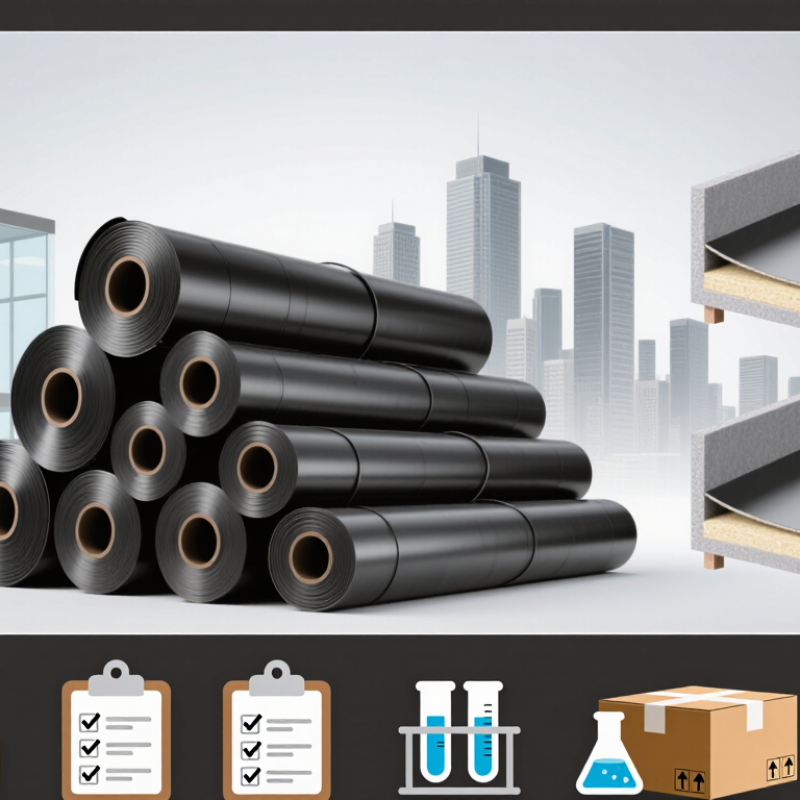
Top Mass Loaded Vinyl Suppliers for Global Buyers

Mass Loaded Vinyl Basics: 1–2 lb/ft² Density and Sound-Barrier Ratings

Mass loaded vinyl is a flexible sound barrier measured by surface mass, not ordinary material density. Common grades weigh 1 or 2 lb/ft², equal to approximately 4.9 or 9.8 kg/m². The heavier grade offers greater resistance to airborne sound transmission. ASTM E90 laboratory testing evaluates transmission loss across frequency bands, while ASTM E413 converts test results into a single-number Sound Transmission Class rating.

A useful engineering rule comes from the mass law: doubling surface mass can improve transmission loss by roughly 6 decibels under controlled conditions. Real assemblies perform differently. Seams, fasteners, air gaps, and rigid bridges can reduce performance sharply. ISO 10140 testing also shows why buyers should request frequency-by-frequency results, rather than trusting one impressive rating. Low-frequency barriers need careful design.

Installation experience matters. A 2 lb/ft² sheet may feel substantial, but poor overlap can leave a visible acoustic leak. Seal joints continuously, stagger layers, and avoid compressing the barrier against unintended rigid paths. A product’s laboratory rating is not the wall or vehicle panel’s final rating. That distinction is often missed. Procurement teams should request ASTM E90 or ISO 10140 reports, thickness data, temperature limits, and installation guidance. I would also question unusually high claims without third-party test evidence; marketing language can outrun field performance.

Global Supplier Comparison: ASTM E90, ISO 10140, and STC Test Data

Global buyers comparing mass loaded vinyl suppliers should read test reports, not product pages alone. ASTM E90 measures airborne sound transmission through a complete test specimen. ISO 10140 uses a comparable laboratory approach, but reporting formats and rating calculations can differ. STC is a single-number rating derived from selected frequency bands. It does not describe every sound problem.

A useful supplier file includes thickness, mass per area, temperature, mounting method, and full frequency data. Common 1 lb/ft² vinyl weighs about 4.88 kg/m². A 2 lb/ft² layer weighs about 9.76 kg/m². That difference matters during installation. It also affects doors, ceilings, and fixing systems. Look for reports showing ASTM E90 results and ISO 10140 results on clearly identified assemblies. A high STC value for a wall cannot be transferred directly to loose vinyl.

Procurement teams should compare laboratory data with field needs. A laboratory report may show strong loss at mid frequencies, while traffic noise remains audible below the tested rating range. Check ASTM E413 or ISO 717-1 references when reviewing STC or weighted ratings. Ask whether seams, penetrations, and fasteners were included. Small gaps can weaken performance.

Data can still be imperfect. Different laboratories may use different assemblies. That makes direct ranking difficult. The safest comparison links the tested construction to the project detail, not just the material name. Suppliers with traceable reports, declared tolerances, and repeatable test conditions deserve closer review.

Top Mass Loaded Vinyl Suppliers for Global Buyers

Global Supplier Comparison: ASTM E90, ISO 10140, and STC Test Data

This chart compares the commonly reported one-third-octave frequency scope used for airborne sound transmission testing. ASTM E90 and ISO 10140 commonly cover approximately 100–5,000 Hz, while the STC rating range uses 125–4,000 Hz.

STC is a single-number rating calculated from measured transmission-loss data; it is not a direct material property. Actual mass loaded vinyl performance depends on areal density, mounting method, panel construction, laboratory setup, and the applicable standard edition.

Material and Compliance Standards: PVC, Mineral Fillers, REACH, and RoHS

Top Mass Loaded Vinyl Suppliers for Global Buyers

Material and Compliance Standards: PVC, Mineral Fillers, REACH, and RoHS

A reliable mass loaded vinyl supplier should explain the PVC formulation, not only quote weight and thickness. PVC provides the flexible matrix, while mineral fillers add density and improve sound-blocking performance. Calcium carbonate is common, but filler quality affects flexibility, surface finish, and long-term stability. Ask for a technical data sheet showing density, thickness tolerance, tensile strength, and temperature range. Small differences matter during installation.

Check the reinforcement and surface treatment as well. Some products use scrim, fabric, or a laminated facing for easier handling. These layers can change fire behavior and recycling considerations. Request recent batch records, safety data sheets, and production samples. A sample roll should feel consistent, without brittle edges, oily surfaces, or uneven thickness.

Compliance needs careful interpretation. REACH documentation should address substances of concern and provide current supplier declarations or test evidence. RoHS controls restricted substances mainly in electrical and electronic equipment, so its relevance depends on the final application and destination market. Do not treat a logo or one-page statement as complete proof. Ask which laboratory tested the material, when testing occurred, and which limits were applied. Paperwork can look perfect. Real traceability is harder. Even experienced buyers may overlook adhesives, pigments, or backing layers. Review the complete product, not just the PVC core.

Top Mass Loaded Vinyl Suppliers for Global Buyers - Material and Compliance Standards: PVC, Mineral Fillers, REACH, and RoHS

Evaluation Dimension Buyer-Side Requirement Typical MLV Benchmark Evidence to Request from Supplier Compliance or Quality Note
Base Polymer Flexible, durable polymer matrix suitable for continuous sheet production PVC-based formulation is widely used for flexible mass loaded vinyl Technical data sheet, polymer declaration, formulation control statement Confirm whether the formulation contains restricted plasticizers or intentionally added substances of concern
Mineral Filler High-density filler to increase mass per unit area without excessive thickness Common fillers include calcium carbonate, barium sulfate, or other approved mineral systems Filler type, purity statement, safety data sheet, and lot-level material declaration Mineral composition affects density, flexibility, processing behavior, and acoustic performance
Nominal Thickness Select thickness according to installation space, weight, and required acoustic performance Common commercial ranges are approximately 1.0–6.0 mm Dimensional specification, tolerance range, and inspection report Thickness alone does not determine transmission-loss performance; installation and system construction are also critical
Surface Density Use surface mass as the primary comparison metric for barrier products Typical product ranges are approximately 2–10 kg/m², depending on thickness and formulation Measured mass per unit area, test method, sample size, and tolerance A higher surface density generally improves airborne sound isolation when the product is correctly installed
Density Maintain stable density across production lots Many flexible MLV constructions fall broadly within 1,500–2,000 kg/m³; actual values depend on formulation Density test report, production tolerance, and sampling plan Do not compare density without also comparing thickness, surface density, flexibility, and test conditions
Flexibility and Elongation Material should conform to curved surfaces without cracking or delaminating Performance varies by grade; supplier should provide agreed tensile and elongation values Tensile strength, elongation, bend, and low-temperature flexibility results Test temperature and specimen preparation should be stated because PVC flexibility changes with temperature
Dimensional Stability Control shrinkage, curling, and width variation during storage and installation Supplier-specific limit; acceptance criteria should be defined in the purchase specification Heat-aging, shrinkage, flatness, and roll-storage test results Packaging, storage temperature, and roll diameter can influence product condition
Acoustic Performance Require independently tested transmission-loss or sound-reduction data for the intended assembly Results depend on surface density, mounting method, air gaps, substrates, and frequency range Laboratory report identifying specimen construction, frequency bands, and test standard A material-only claim should not be treated as equivalent to a tested wall, floor, ceiling, or enclosure assembly
REACH Confirm obligations for substances supplied into the European Economic Area Supplier declaration addressing REACH substances of very high concern and applicable restrictions Recent third-party screening report, SVHC declaration, and substance information REACH requirements can change; verify the current Candidate List and product-specific obligations before shipment
RoHS Determine whether the product is used in electrical or electronic equipment covered by RoHS Supplier should address restricted substances including lead, mercury, cadmium, hexavalent chromium, PBB, PBDE, and applicable phthalates RoHS test report or material declaration with method, date, and sample identification RoHS applicability depends on the final product and use case; a generic declaration may not be sufficient
Plasticizer Control Control restricted phthalates and other regulated additives Use documented, controlled plasticizer systems compatible with the intended market Full material declaration and targeted phthalate analysis where required Specify whether testing covers homogeneous layers, coatings, adhesives, and backing materials
Fire and Smoke Requirements Match the product to the fire classification required by the destination market and end application Performance is formulation- and assembly-dependent; no universal rating applies to all MLV products Valid fire-test report for the exact construction, thickness, backing, and installation orientation Do not transfer a rating from one product configuration to another without written test applicability
Odor and VOC Control Set limits for odor, emissions, and indoor-use suitability where applicable Performance varies with PVC resin, plasticizer, filler, stabilizer, adhesive, and curing history VOC or emissions test report, odor evaluation, and complete construction details Evaluate the complete installed system rather than the barrier sheet alone
Format and Packaging Match roll width, roll length, core size, pallet configuration, and handling equipment Custom widths and roll lengths are commonly available subject to production capability and minimum order quantity Packing specification, gross and net weight, pallet dimensions, and loading plan High surface density can materially affect freight cost, manual handling, and pallet capacity
Traceability and Quality System Require repeatable production and traceability from raw materials to finished rolls Lot or batch identification with retained samples and documented corrective-action process Quality manual, inspection plan, certificate of analysis, lot records, and audit evidence Define inspection frequency, acceptable tolerances, nonconformance handling, and change-notification rules in the supply agreement

Buyer note: The benchmark ranges above are general market references, not a substitute for a product-specific technical data sheet, laboratory report, regulatory assessment, or destination-market review.

Buyer Cost Analysis: MOQ, Lead Times, 4.9–9.8 kg/m² Product Weight

Top Mass Loaded Vinyl Suppliers for Global Buyers

Buyer Cost Analysis: MOQ, Lead Times, and 4.9–9.8 kg/m² Product Weight

For global buyers, mass loaded vinyl pricing starts with more than the quoted roll price. Product weight strongly affects freight, handling, and installation labor. A 4.9 kg/m² sheet may suit lighter acoustic barriers, while 9.8 kg/m² material offers higher surface density and stronger sound isolation potential. Weight matters.

Minimum order quantities often range from trial rolls to full container volumes. Ask whether the MOQ applies to standard stock, custom thickness, or private packaging. A low MOQ can reduce inventory risk, but its unit cost may be higher. That trade-off deserves a written comparison.

Lead times also require careful checking. Stock products may ship within several working days. Custom compounds, sizes, or adhesive backing can require three to six weeks. Confirm production time, inspection time, export documents, and transit separately. One “30-day lead time” may exclude shipping. That gap matters.

A reliable supplier should provide declared weight, thickness tolerance, roll dimensions, packing details, and test documentation. Buyers should request a sample before approving large orders. Measure the actual roll weight and inspect edge quality. Small differences become expensive across a container.

Freight quotes should use packed weight, not only net product weight. For example, 9.8 kg/m² material may occupy manageable volume but create a heavy shipment. Check pallet limits and unloading equipment at the destination. I have seen budgets fail because handling costs were ignored. The calculation is simple, but not always complete.

Supplier Evaluation Matrix: Capacity, ISO 9001, Certifications, and Export Reach

Top Mass Loaded Vinyl Suppliers for Global Buyers

A reliable supplier evaluation matrix should begin with production capacity, not attractive product photos. Ask for monthly output, standard roll sizes, thickness tolerance, and lead times during peak orders. Mass loaded vinyl often requires consistent density and clean edges for acoustic barrier installation. Request recent inspection records and a small sample before approving large quantities. In my experience, a supplier may claim high capacity but struggle with packaging or delivery discipline. That gap matters.

ISO 9001 indicates a documented quality management system, but it does not guarantee every roll performs equally. Review the certificate scope, issuing body, validity, and quality-control procedures. Check test reports for weight, thickness, tensile strength, and sound transmission performance. Certifications should match the destination market and remain verifiable. Export reach also deserves evidence: customs documents, shipping experience, pallet specifications, and clear Incoterms. A supplier serving several regions may still lack dependable support in your country.

Tips: Score each supplier from one to five for capacity, ISO 9001 control, certifications, and export reach. Keep evidence beside every score. Ask how they handle rejected rolls, moisture damage, and urgent replacements. Do not rely only on a polished audit file. Factory visits, video inspections, and reference checks reveal practical weaknesses. My own evaluations have missed small packaging issues before, so the matrix should be reviewed after the first shipment. Perfect scoring is unrealistic. Consistent improvement is more useful.

'