What Are the Top Sound Proofing Materials?
Noise rarely enters a room through one obvious route. A conversation may leak around a hollow-core door, while footsteps travel through ceiling joists and wall framing. Choosing sound proofing materials starts with identifying the noise and the surfaces it crosses. Foam panels can reduce echo inside a room, but they usually do little to stop voices passing through a thin wall. That distinction matters.
This guide compares common options, including mineral wool, acoustic sealant, resilient channels, mass-loaded vinyl, and layered drywall. Each works differently. Some absorb sound within a cavity; others add mass, limit vibration, or close small air gaps. A door sweep may help with hallway noise, while a rug can soften sharp footstep sounds. No single product solves every problem. Installation details count, too. Even a narrow gap around an outlet or window can undermine a carefully built assembly.
The right choice depends on the room, the noise source, the available space, and the budget. Product ratings offer useful clues, but real results also depend on construction and workmanship. It is tempting to expect a quick fix. Often, there isn’t one. A layered approach is usually more dependable, though it may still leave some low-frequency noise audible. The sections ahead explain what leading materials can—and cannot—do, so you can compare them with realistic expectations.
How Soundproofing Materials Reduce Noise
What Are the Top Sound Proofing Materials?
How Soundproofing Materials Reduce Noise
Soundproofing works by limiting sound paths, not by making a room perfectly silent. Sound takes every gap. A narrow opening beneath a door can let voices travel through, even when the walls are thick. Acoustic sealant around trim and a tight door sweep can help close those paths.
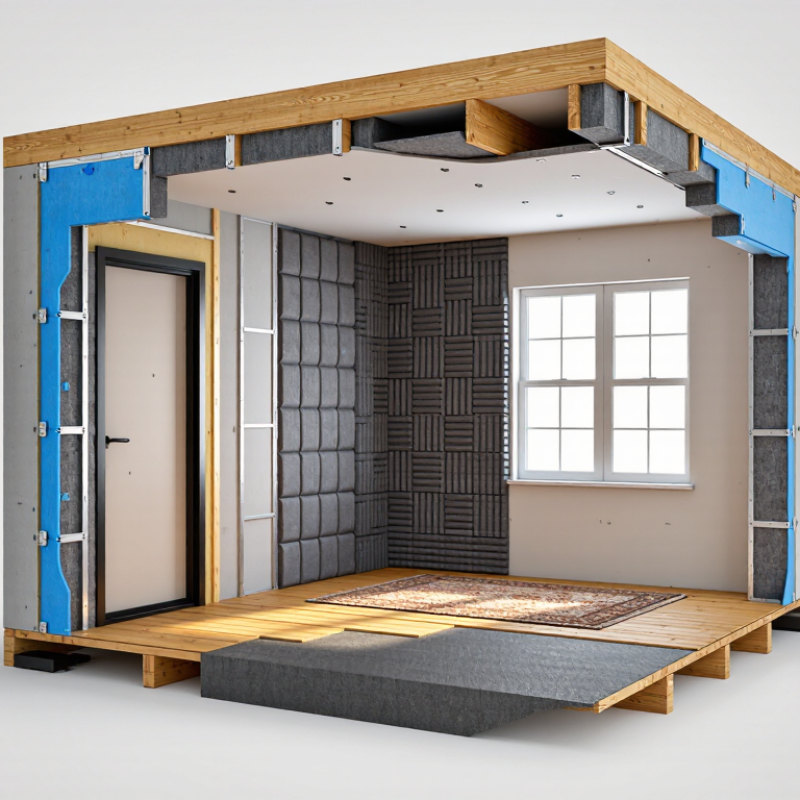
Different materials tackle different problems. Dense drywall adds mass, which can reduce airborne noise passing through a wall. Mineral wool inside a wall cavity absorbs sound energy, while resilient channels can reduce vibration moving between wall layers. They work best as parts of a well-sealed assembly. That matters. Soft foam panels may reduce echoes from a bare room, but they usually do little to stop a neighbor’s television from entering through a wall.
In a typical bedroom, footsteps may travel through the floor structure rather than through the air. Adding a rug can soften sounds inside the room, but it may not solve that structural transmission. It is easy to overestimate one material’s power. The actual result depends on gaps, construction, and how sound reaches the room. A careful inspection can reveal more than buying thicker panels.
The Main Types of Soundproofing Materials
Soundproofing materials control noise in different ways. Mass-loaded barriers and extra gypsum board add weight, making walls harder to vibrate. Mineral wool or fiberglass batts absorb sound inside cavities, but they do not block noise well on their own. Resilient channels and isolation clips separate drywall from framing, reducing the vibration path. Acoustic sealant closes small gaps around outlets, trim, and pipes. Tiny gaps matter.
The Gypsum Association’s GA-600-2021 design manual reports tested wall assemblies with Sound Transmission Class ratings that vary by construction: basic stud walls often rate in the low 30s, while assemblies with cavity insulation, added board layers, or resilient channels can reach the 40s and higher. These are whole-wall results, not ratings for a single material. ASTM E90 measures airborne sound transmission in a laboratory, while ASTM E413 is used to calculate STC ratings. Real rooms may perform differently because of flanking paths, such as sound traveling through ceilings or shared ducts. I would treat catalog numbers as a starting point, not a promise. A soft wall panel can reduce echo, yet do little to stop a neighbor’s television.
How Top Materials Compare in Noise Control
Sound control depends on whether a material absorbs reflections or blocks sound passing through a wall. Mineral wool and fiberglass batts absorb sound inside cavities, reducing the hollow, ringing quality of a room. They are useful between wall studs, but they do little alone against loud voices or traffic. That distinction matters. Dense layers, such as extra drywall, add mass and can limit sound transmission, especially when seams are sealed carefully. Mass-loaded vinyl offers a thinner barrier, though its performance depends on the complete wall assembly, not the sheet by itself.
Acoustic panels soften echoes in a room, but they are not a substitute for sound isolation. A panel above a desk may make speech clearer; it will not reliably stop a neighbor’s television. Not magic. For stronger results, combine cavity insulation, airtight edges, and separated wall layers where practical. Small gaps around outlets or doors can undermine an otherwise solid installation. I still find material comparisons easy to misjudge: thickness and price alone reveal little. A useful check is to identify the noise path, then compare tested ratings for complete assemblies. Real rooms also vary, so results may differ with construction and installation quality.
What Are the Top Sound Proofing Materials?
Approximate Noise Reduction Coefficient (NRC) ranges for common materials. Higher NRC indicates greater absorption of reflected sound; it does not measure how well a material blocks sound transmission.
Values are indicative ranges, not guarantees: NRC varies by product, thickness, mounting, and test method. For sound blocking, consider the complete wall or floor assembly, including airtightness and mass.
Choosing Materials for Different Rooms and Noise Sources
Choosing soundproofing materials starts with identifying the noise path. Voices through a shared wall need different treatment from footsteps overhead.
For speech, add mass with an extra layer of dense board, and seal gaps around outlets and trim. Small openings matter.
Soft acoustic panels can reduce echo inside a room, but they rarely stop a neighbor’s voice by themselves.
For impact noise, such as chair legs scraping above a bedroom, a ceiling system with resilient channels and cavity insulation may help. Results depend on how the ceiling connects to the structure.
In a home office, a solid-core door, tight perimeter seals, and a thick rug can reduce sound leaks without major construction. Kitchens and bathrooms need materials that tolerate moisture; porous foam can be a poor fit near sinks or steam.
A common mistake is buying panels before locating the leak. I have seen attractive treatments leave the main problem untouched.
Test one change at a time, and listen from the noisy room as well as the quiet one. Some improvements are subtle. Don’t expect silence.
Key Factors in Installing Soundproofing Materials
Choosing a soundproofing material is only part of the job; installation details often determine how well it performs. Start by identifying the noise: voices may pass through air leaks, while footsteps can travel through the structure. That distinction matters.
Inspect outlets, door edges, window frames, and pipe openings; even a narrow gap can undermine a treated wall. Seal suitable gaps with compatible acoustic sealant, and fit a door sweep where sound leaks beneath the door. Do not block required ventilation.
For a wall cavity, fit mineral wool or fiberglass batts snugly without crushing them. Compressed insulation may perform less effectively.
Resilient channels or isolated framing can help reduce vibration, but screws must not bridge the isolation layer. A dense barrier adds mass, yet seams and perimeter joints need to stay closed.
Follow installation instructions and check fire and moisture requirements, especially near electrical boxes or damp exterior walls. Test a small area first.
Even careful work has limits: sound can travel around a treated wall through doors, ceilings, or shared ducts. That bypass path is easy to miss.





 '
