China Top Tactical Winter Jacket Suppliers Guide
China Top Tactical Winter Jacket Suppliers Guide examines how manufacturers balance insulation, mobility, durability, and responsible production. A Tactical Winter Jacket must perform in freezing rain, strong wind, and repeated movement. Its value cannot be judged by appearance alone.
Industry reports support this practical view. Grand View Research identifies rising demand for functional outdoor apparel, especially products combining weather protection and lightweight construction. MarketsandMarkets also highlights modular design, advanced insulation, and durable fabrics as important trends in tactical clothing. These reports describe market direction, not proof of every supplier’s quality. That distinction matters.
Professor George Havenith, a leading thermal physiology researcher, explains that clothing insulation changes with movement, posture, and activity level. His point is simple. A heavily insulated jacket may feel warm while standing, then restrict movement during active work. Conversely, a thin shell may look efficient but fail in wet, windy conditions. This guide therefore evaluates Chinese suppliers through measurable details: fabric composition, seam construction, insulation weight, breathability data, temperature ratings, sample consistency, and quality-control records.
Real sourcing also includes uncomfortable questions. Can the factory repeat the same size specifications? Does the zipper remain usable with gloves? Are water-repellent claims supported by testing? A supplier’s catalog may answer none of these questions. Buyers should request samples, inspection reports, and clear production tolerances before placing large orders. The strongest supplier is not always the cheapest. It is the one that communicates limits honestly, documents performance, and improves after defects appear.
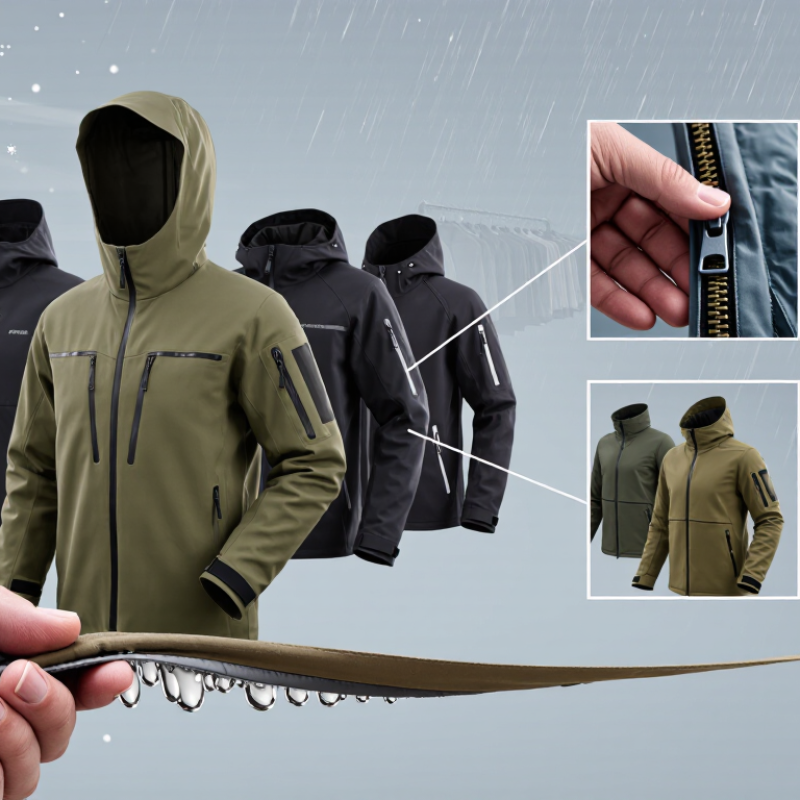
What Defines a High-Quality Tactical Winter Jacket Supplier
China Top Tactical Winter Jacket Suppliers Guide
What Defines a High-Quality Tactical Winter Jacket Supplier
A high-quality supplier understands field conditions, not only factory production. Experienced teams test jackets in cold, wet, and windy environments. They check insulation recovery after compression, fabric abrasion, and seam performance. Small details matter. A hood should turn with the wearer’s head. Zippers should remain usable with gloves. Cuffs must block drafts without restricting movement.
Reliable suppliers provide clear material specifications and repeatable quality records. Ask for fabric weight, insulation type, waterproof ratings, and laboratory reports. A professional factory should explain testing methods without hiding behind vague terms. Sample approval must include measurements, stitching standards, color references, and hardware checks. Production workers should follow documented inspection points, from cutting accuracy to final packing.
Practical experience also reveals weaknesses. No supplier gets every sample right. Sometimes insulation feels warm but limits movement. A stronger shell may create unwanted noise. These compromises require honest discussion. I would examine a pre-production sample, wash it, wear it outdoors, and inspect it again. Supplier reliability appears through response speed, corrective action, and traceable records. Consistent communication matters when weather data, sizing, or delivery conditions change. A dependable partner admits uncertainty and improves the process, rather than promising perfection.
Key Materials and Performance Features for Cold-Weather Use
China Top Tactical Winter Jacket Suppliers Guide: Key Materials and Performance Features for Cold-Weather Use
Reliable winter jackets begin with material choices, not visual bulk. Textile Exchange’s 2024 Materials Market Report states that polyester represented about 57% of global fiber production in 2023. Recycled polyester accounted for roughly 14% of polyester output. For suppliers, tightly woven nylon or polyester shells can improve abrasion resistance, while laminated membranes help reduce wind and moisture penetration. However, water-repellent finishes lose effectiveness after repeated washing. That detail is often overlooked.
Insulation must match the operating environment. Synthetic fill performs more consistently in damp conditions, while down can deliver excellent warmth with lower weight when kept dry. A thicker jacket is not automatically warmer. EN 342 evaluates thermal insulation and air permeability for cold-protective clothing, giving buyers more useful evidence than fill weight alone. Ask suppliers for test conditions, insulation distribution, seam construction, and measured thermal values. Numbers without test methods are weak evidence.
Field details matter. A high collar should cover the neck without restricting movement. Adjustable cuffs reduce cold air entering during tool handling. Reinforced elbows and shoulders support repeated kneeling, climbing, and pack use. The International Organization for Standardization notes that clothing ergonomics can affect thermal comfort during movement. Real users may still find a laboratory-perfect jacket uncomfortable. This is where supplier sampling, wash testing, and wearer feedback become essential.
China Top Tactical Winter Jacket Suppliers Guide: Key Material Performance Benchmarks
The chart shows representative performance benchmarks for common cold-weather jacket shell constructions. Hydrostatic head indicates water resistance, while moisture vapor transmission measures breathability. Actual results depend on fabric weight, membrane design, seam sealing, coatings, and testing conditions.
How to Evaluate China-Based Tactical Jacket Manufacturers
China Top Tactical Winter Jacket Suppliers Guide
How to Evaluate China-Based Tactical Jacket Manufacturers
A reliable evaluation starts with the factory, not the product photos. Ask for a site video, production address, and a clear business license record. Review their experience with insulated jackets, reinforced seams, and weather-resistant fabrics. Visit the facility when possible. Check cutting tables, sewing lines, storage areas, and final inspection stations. A clean floor does not prove quality, but poor organization is a warning sign.
Request a detailed sample before discussing large orders. Test zipper movement, cuff adjustment, hood coverage, and pocket stitching. Place the jacket under light rain, then inspect the lining and seam areas. Ask for fabric weight, insulation type, colorfastness results, and wash-care data. Independent testing adds confidence, especially for warmth and water resistance. Avoid vague claims such as “military quality.” They mean little without measurable specifications.
Production capacity also deserves careful attention. Compare the factory’s sample timeline with its normal schedule. Confirm minimum order quantities, replacement policies, packaging details, and inspection procedures in writing. Communication matters. Can the team explain a failed sample clearly? Can it correct the same problem twice? I once underestimated small measurement changes; they affected sleeve comfort more than expected. That mistake remains useful. No audit is perfect. Keep records, approve a sealed reference sample, and inspect finished goods before shipment.
The Sourcing and Customization Process Step by Step
Sourcing a tactical winter jacket in China should begin with a measurable product brief, not a factory shortlist. Define insulation weight, shell fabric, pocket layout, size range, color tolerance, and target quantity. The 2024 Textile Exchange Materials Market Report states that polyester represented 59% of global fiber production in 2023. This explains its common use in durable shells, but recycled content and abrasion performance still require verification. Ask each supplier for factory capabilities, audit records, test samples, and recent production references.
Send a tech pack with flat sketches, seam construction, zipper specifications, stitch density, and measurement tolerances. Request one development sample, then a revised sample after fit testing. Check sleeve mobility, hood adjustment, cuff sealing, and pocket access while wearing base and mid layers. Test thermal resistance under ISO 11092, water repellency under ISO 4920, and seam strength. Use accredited independent laboratories when possible. Do not trust a showroom sample alone. It may be unusually polished.
Before production, approve a sealed reference sample and written bill of materials. Confirm minimum order quantity, sample charges, payment milestones, lead time, packaging, and inspection criteria. AQL-based inspection can review dimensions, insulation distribution, stitching, hardware, and visible defects. A recurring sourcing mistake is accepting a low quotation without checking rework costs. Ask for a costed revision. Leave time for failed tests. Winter orders are rarely forgiving. Record fiber claims and transaction documents, then review supplier performance after delivery.
Quality Control, Compliance, and Supplier Selection Criteria
Selecting a China-based tactical winter jacket supplier requires more than comparing prices. Product quality begins with measurable specifications. Check fabric weight, water resistance, seam strength, insulation recovery, and zipper performance. Request pre-production samples and compare them with approved materials. Small flaws matter.
A reliable factory should provide batch records, inspection procedures, and corrective-action reports. During an audit, examine cutting accuracy, needle control, seam sealing, and storage conditions. Random inspections should cover measurements, stitching density, loose threads, labeling, and packaging. Test jackets after repeated washing and cold exposure when possible. Laboratory reports should identify test methods, sample numbers, and dates. Records matter too.
Compliance depends on the destination market. Confirm restricted-substance testing, fiber-content labeling, chemical documentation, and flammability requirements before production. A supplier should explain how it controls dyes, coatings, insulation, and metal accessories. Independent verification is stronger than an undocumented factory promise. Ask whether production workers receive safety training and whether subcontracting is disclosed in writing.
Supplier selection also requires practical risk review. Compare lead times, minimum order quantities, sample accuracy, communication speed, and replacement policies. A low quotation may hide weak inspection or unstable materials. Payment terms should match verified milestones. A perfect inspection plan is not realistic, and minor defects can still escape detection. That is why transparent reporting, traceable batches, and repeated supplier reviews remain essential.

 '
'
