Top 10 Welding Coating Solutions for Global Buyers?
In the world of welding, quality matters. Choosing the right Welding Coating can significantly influence the longevity and performance of welded joints. With countless options available, it’s crucial for global buyers to understand the best solutions on the market. Effective welding coating not only protects against corrosion but also enhances the overall integrity of structures.
Many factors influence the choice of welding coatings. These include environmental conditions, material types, and specific industry standards. Each type of coating presents unique advantages. However, buyers may find it challenging to select the most suitable option for their needs. Mistakes in this area can lead to costly repairs and project delays.
This guide aims to highlight the top 10 welding coating solutions available globally. Each solution will be analyzed based on quality, reliability, and performance. By focusing on these aspects, buyers can make informed decisions that reflect best practices. Thus, ensuring their projects maintain exceptional standards is essential.
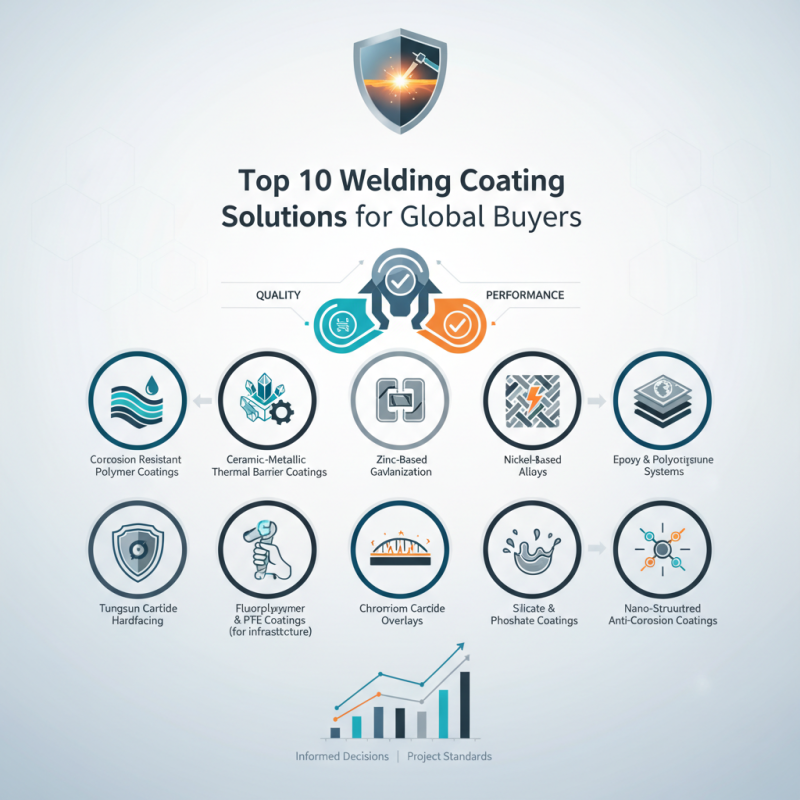
Types of Welding Coatings and Their Applications
Welding coatings play a crucial role in protecting metals from corrosion and wear. Various types of coatings are used in different industries, each with specific applications. For instance, zinc-rich coatings are common in structural applications. They offer excellent corrosion resistance and are often used on steel structures exposed to harsh environments.
Another type is thermal spray coatings, favored in the aerospace and automotive industries. These coatings provide thermal protection and wear resistance. According to the International Journal of Advanced Manufacturing Technology, the market for such coatings is expected to grow by 5.6% annually. This highlights their importance in maintaining the integrity of critical components.
Tips: Ensure the coating process is regulated to avoid defects. Poor application can lead to reduced protection. Always consult with a professional for specific requirements.
Additionally, epoxy coatings are widely used for their high adhesion and resistance to chemicals. These coatings are essential in industries such as oil and gas. They can withstand extreme conditions, but improper surface preparation can result in adhesion failure. Industry reports emphasize the need for rigorous quality control during application.
Choosing the right welding coating involves understanding the specific requirements of the application. Factors like environmental exposure and mechanical stress must be considered. Opting for high-quality materials enhances durability and long-term performance.
Factors to Consider When Choosing Welding Coatings
When selecting welding coatings, several factors come into play. These coatings protect against oxidation, corrosion, and wear. A report from the American Welding Society found that improper coating selection can lead to a 30% increase in repair costs. Buyers must understand the environment their products will face. High humidity or high temperatures can dictate the need for specific coating types.
Composition is crucial as well. Coatings can be composed of metals, polymers, or a combination. Different materials offer varying levels of protection. A study indicated coatings with ceramic components provide better durability. Thickness also matters; thicker coatings generally offer improved resistance but may add weight.
Application method can influence effectiveness too. Some coatings require advanced techniques, such as plasma spraying, while others can be easily applied. The wrong application could lead to failures down the line, which is often overlooked. Voltage settings during welding can also affect coating performance. Thoughtful consideration of these factors leads to better outcomes, underscoring the importance of informed decision-making in purchasing welding coatings.
Top Welding Coating Brands and Their Unique Features
Welding coating solutions are essential for ensuring durability and protection. Many brands on the market excel in this area, each offering unique benefits. These coatings provide resistance against heat, corrosion, and wear. Some are designed for specific applications, making it vital to choose wisely.
One notable feature in welding coatings is their composition. Different formulations can affect performance. Some coatings allow for better penetration, while others might focus on creating a smoother finish. Always consider the environment where the weld will exist. This ensures longevity and reliability of the joint.
Tips: Test small areas first. It helps to understand how a coating performs. Evaluate its adhesion and impact resistance. Regularly review your tools and materials. Over time, techniques may require adjustment for optimal results. Remember, not every solution works for every scenario. Explore various options to find what truly meets your needs.
Global Market Trends for Welding Coating Solutions
The global market for welding coating solutions is evolving. As industries pursuit durability and efficiency, innovation plays a key role. According to a recent report from Research and Markets, the welding coatings market is expected to grow at a CAGR of 6.5% from 2023 to 2030. This growth reflects an increased demand for protective coatings that enhance the performance of welded structures.
One important trend is the shift towards environmentally friendly solutions. Consumers and manufacturers increasingly seek options that reduce harmful emissions. Eco-friendly coatings not only safeguard the environment but also meet regulatory standards. More companies will likely invest in these sustainable materials.
**Tip:** Always assess the performance and environmental impact of welding coatings before making a purchase. Testing different formulations can help identify the best options for specific applications.
Furthermore, the need for high-performance coatings is driving technological advancements. Suppliers must adapt to changing regulations and customer preferences. There’s also a noticeable demand in emerging markets, where construction and manufacturing are on the rise. Companies should be prepared to navigate these dynamics carefully.
**Tip:** Stay informed about market trends and emerging technologies in welding coatings. Continuous learning is essential for maintaining a competitive edge.
Top 10 Welding Coating Solutions - Global Market Trends
Future Innovations in Welding Coating Technologies
Innovations in welding coating technologies are transforming the landscape of the welding industry. Today's advancements focus on enhancing durability, resilience, and environmental sustainability. One emerging trend is the development of eco-friendly coatings. These formulations reduce harmful emissions while improving the performance of welded joints. Manufacturers are actively researching alternatives that meet rigorous standards.
Another promising area is the integration of smart technologies into welding coatings. Self-healing properties can significantly extend the lifespan of welds. These coatings respond to damage by repairing themselves, thereby minimizing maintenance costs. R&D efforts in nanotechnology bring about coatings that provide superior protection against corrosion and wear. This innovation showcases the potential of advanced materials in real-world applications.
Challenges remain in the adoption of these technologies. Some traditional processes may resist change due to cost concerns or lack of awareness. It is essential for industry stakeholders to evaluate the long-term benefits against initial investments. As the market evolves, staying attuned to trends will bolster competitiveness. The future of welding coatings is bright, yet it requires ongoing effort and reflection to address existing hurdles.
Top 10 Welding Coating Solutions for Global Buyers
| Solution | Material Type | Application Method | Temperature Resistance | Key Benefits |
| Coating A | Epoxy | Spray | -20°C to 120°C | Corrosion Resistance |
| Coating B | Polyurethane | Brush | -40°C to 90°C | UV Resistance |
| Coating C | Ceramic | Dip | -50°C to 1500°C | High Durability |
| Coating D | Acrylic | Roller | -10°C to 80°C | Fast Drying |
| Coating E | Silicone | Spray | -50°C to 300°C | Temperature Stability |
| Coating F | Aluminum | Spray | -20°C to 250°C | Reflective Properties |
| Coating G | Zinc | Galvanization | -40°C to 200°C | Rust Prevention |
| Coating H | Bitumen | Spray | -40°C to 90°C | Waterproofing |
| Coating I | Vinyl | Brush | 0°C to 50°C | Aesthetic Finish |
| Coating J | Floropolymer | Spray | -60°C to 260°C | Chemical Resistance |

 '
'
