What Are Bar Height Tables?

Bar Height Tables are taller than standard dining tables, creating a more upright, casual place to eat, work, or gather. Most stand about 40 to 42 inches high, while counter-height tables are usually around 34 to 36 inches. Exact dimensions vary, so check measurements before choosing chairs or stools. A typical bar stool has a seat about 28 to 30 inches high, leaving room for comfortable leg movement. A few inches matter.

The added height can make a small kitchen feel open and give guests a clear view across a room. It can also create practical challenges. Young children may find the seats difficult to climb, and a narrow base can feel unstable on uneven flooring. Before buying, measure the table’s footprint, the available walkway, and the distance between the seat and tabletop. Think about everyday use, too: a table for quick breakfasts may need less surface space than one used for meals or laptop work. These details are easy to overlook. I would not choose a table by appearance alone; comfort depends on the people using it and the room around it. This guide explains common styles, dimensions, seating, and trade-offs, so you can judge whether Bar Height Tables suit your space rather than simply following a trend.
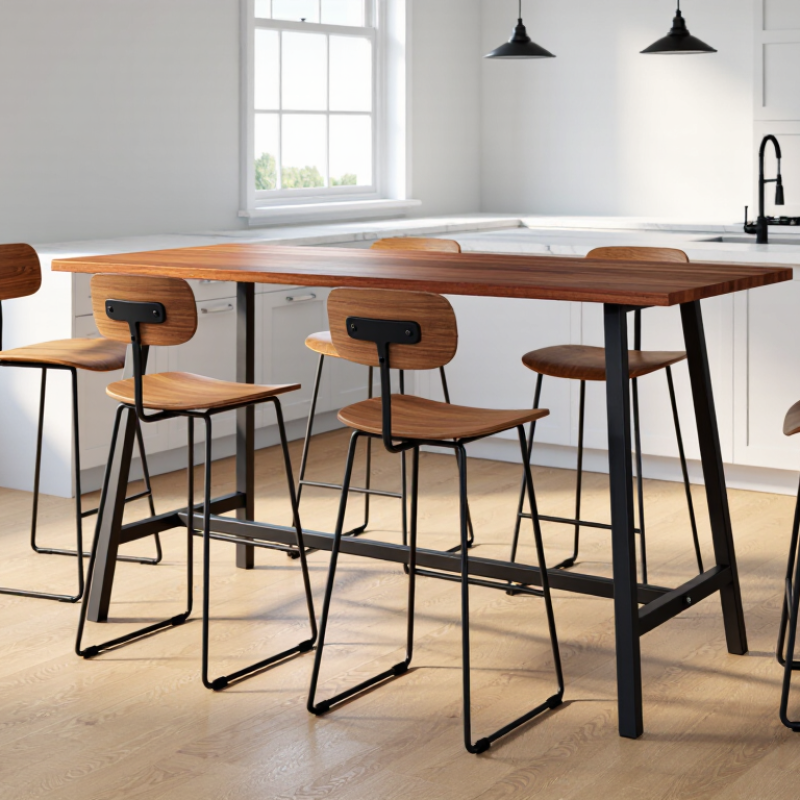
What Are Bar Height Tables?

Definition and Standard Dimensions of Bar Height Tables

What Are Bar Height Tables?

A bar height table is a tall dining or standing table designed for elevated seating. Its surface usually sits around 40 to 42 inches (102 to 107 cm) above the floor. This height pairs with bar stools, not standard dining chairs. The taller profile can suit a kitchen nook, casual dining area, or a compact entertaining space. It changes how a room feels.

Definition and Standard Dimensions of Bar Height Tables

Most bar height tables measure about 40 to 42 inches tall, though manufacturers may vary by an inch or two. Bar stools commonly have seats 28 to 30 inches high, leaving room for knees beneath the tabletop. For comparison, counter height tables are typically 34 to 36 inches tall and need shorter stools. Tabletop dimensions are less standardized. A small square top may measure 24 by 24 inches, while a longer table might be 30 by 48 inches or more. Allow roughly 24 to 30 inches of table edge per person for comfortable seating. Measure your room, including pulled-out stools. The numbers alone can be misleading.

Tips: Check the stool and table heights together before buying. Leave space for feet and a footrest. A tight fit gets uncomfortable fast. If possible, test the setup; comfort can vary from person to person.

How Bar Height Tables Differ from Counter-Height and Dining Tables

A bar-height table usually stands 40–42 inches tall, while a counter-height table is about 34–36 inches. Dining tables are lower, typically 28–30 inches. These ranges match common furniture-planning specifications; the National Kitchen & Bath Association’s kitchen-planning guidance also uses a 36-inch work surface as a standard reference. That gap matters. A dining chair will feel too low at a bar table, and bar stools can leave your knees awkwardly high at a dining table.

The difference changes how a room feels and works. Counter-height tables pair naturally with kitchen counters, so a plate can move from prep space to seat with little lifting. Bar-height tables create a taller perch, often suited to a raised island or a narrow social area. Dining tables encourage longer, seated meals. Measure the seat as well as the tabletop: leave roughly 10–12 inches between the seat and table underside for comfortable legroom. I still find the middle height easiest to misjudge; it looks close, but the wrong stool makes it feel off.

Tips: Before buying, measure from floor to tabletop and check the stool’s seat height. Test knee clearance with shoes on. A few inches change everything.

What Are Bar Height Tables?

Bar-height tables are taller than counter-height and dining tables. This chart compares their typical height ranges using the midpoint of each range.

Typical ranges: Dining tables: 28–30 in; counter-height tables: 34–36 in; bar-height tables: 40–42 in. Actual dimensions can vary by design.

Common Designs, Materials, and Base Types

Bar-height tables usually place the tabletop about 40–42 inches above the floor, leaving room for stools with roughly 28–30-inch seats. Common designs include compact round café tables, square two-person tables, and long communal tops. Round edges suit tight walkways; rectangular tops line up neatly against a wall. Small difference. Big effect.

Materials shape both upkeep and feel. Solid wood brings visible grain but needs protection from spills. Laminate is practical for busy dining areas, while metal tops and frames suit a harder, industrial look. Popular bases include a central pedestal, four legs, and a trestle frame. Pedestals free up knees, but can wobble if the top is wide or the base is light. Four legs feel familiar, though corner braces may restrict seating. Still, the best-looking base is not always the steadiest.

For a useful accessibility reference, the 2010 ADA Standards for Accessible Design, Section 902.3, specify dining and work surfaces 28–34 inches high. That range is not a bar-table specification; it shows why one height cannot suit every diner. Check stool height, footrest position, and knee clearance together. A sample seat beside the actual table can reveal awkward reach or cramped legs. These details are easy to overlook on a product sheet.

Typical Uses in Homes and Commercial Spaces

Bar-height tables usually stand about 40 to 42 inches tall, paired with seats around 28 to 30 inches high. At home, they suit breakfast nooks, kitchen islands, and compact dining corners. Their raised profile can keep a small room feeling open, but it may be awkward for children or anyone who prefers a lower seat. Houzz’s 2024 U.S. Kitchen Trends Study found islands in 76% of upgraded kitchens. That figure signals how common raised, casual dining areas have become, though it does not mean every island needs bar-height seating.

In cafés, restaurants, and hotel lounges, tall tables can support quick meals, informal conversation, or extra seating near a window. They also help operators vary the layout without adding large dining sets. The National Restaurant Association’s 2024 State of the Restaurant Industry report projected U.S. restaurant sales of $1.1 trillion, underscoring the scale of commercial dining. In busy rooms, stability and easy-clean surfaces matter; a wobbly table gets noticed fast. Still, tall seating is not automatically efficient. Guests may find it uncomfortable for longer meals, and staff need clear space to move trays and chairs. Mixing bar-height tables with standard-height seating is often the more thoughtful choice.

Factors to Consider When Choosing a Bar Height Table

What Are Bar Height Tables?

Factors to Consider When Choosing a Bar Height Table

A bar-height table is typically 40–42 inches tall, compared with about 28–30 inches for a standard dining table. Pair it with seating around 28–30 inches high, leaving roughly 10–12 inches between the seat and tabletop. That gap helps knees fit comfortably. Measure the actual chair, not just its listed height; cushions can change the fit.

Consider how people will use the table. For meals or laptops, check that the surface is deep enough for plates, glasses, and elbows. In a compact kitchen, a narrow top saves space but may feel cramped when two people sit side by side. One detail is easy to miss: measure the room with stools pulled out. Clear paths matter.

For commercial settings, ANSI/BIFMA X5.5-2021 covers performance tests for desk and table products, including stability and durability. It is a useful reference when comparing construction, though it does not set one universal bar-table height. Check the seller’s load and care specifications, and look for a stable base that does not wobble on your flooring. Measure twice. A perfect height can still be awkward.

'