What Is a China Contemporary Interior Lighting Wholesaler?
A China Contemporary Interior Lighting Wholesaler connects modern lighting manufacturers with retailers, designers, contractors, and hospitality buyers. The business is more than a warehouse filled with pendant lamps. It involves product sourcing, technical review, customization, packaging, and export coordination. In a working showroom, buyers may compare brushed brass finishes, opal glass shades, beam angles, and dimming systems under different light conditions. Small details matter.
Lighting educator and designer Randall Whitehead is often credited with saying, “Lighting is the jewelry of architecture.” This idea explains the wholesaler’s role clearly. A reliable China Contemporary Interior Lighting Wholesaler must balance visual appeal with electrical safety, material quality, installation practicality, and consistent production. Product drawings, test reports, color samples, and warranty terms should be reviewed before a large order. Experience helps, but experience alone is not enough.
The word “contemporary” can also create confusion. One supplier may present minimalist aluminum fixtures, while another focuses on sculptural glass or smart lighting systems. Some catalogs look impressive but provide limited technical information. That is a warning sign. Buyers should ask direct questions about voltage, certification, driver performance, replacement parts, lead times, and quality inspections. Mistakes still happen, especially when dimensions or finishes are approved too quickly. A thoughtful wholesaler acknowledges this risk and builds checkpoints into the process. This article explores what these wholesalers do, how they operate, and how professional buyers can judge their reliability.
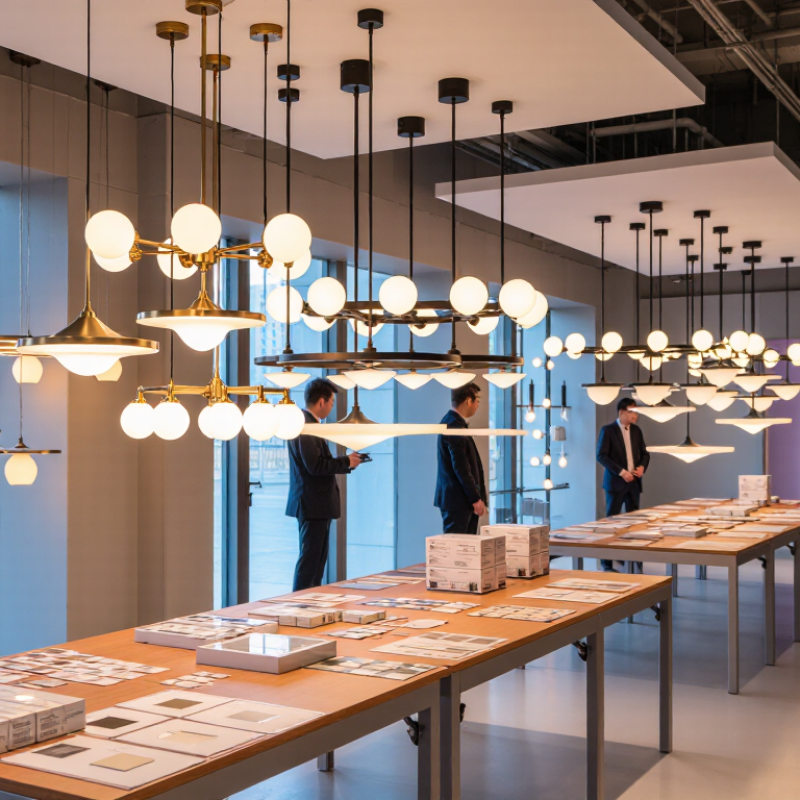
Definition and Scope of a China Contemporary Interior Lighting Wholesaler
What Is a China Contemporary Interior Lighting Wholesaler?
Definition and Scope of a China Contemporary Interior Lighting Wholesaler
A China contemporary interior lighting wholesaler supplies modern fixtures for residential, hospitality, retail, and office projects. It usually sources pendant lights, wall lamps, track systems, ceiling fixtures, and decorative fittings from several manufacturers. The scope is wider than product resale. It may include design matching, sample coordination, private packaging, quality inspection, and export documentation. A reliable wholesaler should provide lumen output, beam angle, color temperature, material details, and safety test records.
The market is changing quickly. The International Energy Agency reported that LEDs represented about 75% of global lighting sales in 2022. This shift increases demand for efficient, dimmable, and connected interior products. A professional wholesaler must understand photometric files, glare control, color consistency, and regional compliance requirements. China’s manufacturing network can support small trial orders and project-based customization. However, the definition is not perfectly clean. Some wholesalers own factories, while others coordinate independent suppliers. Buyers should verify the actual production source. Low prices can hide uneven finishes, weak packaging, or incomplete documents.
Tips: Ask for a recent sample before placing a bulk order. Check the light source, driver, warranty terms, and carton protection. Request an inspection report with product photographs. Compare measured performance, not only catalog claims. The CIE recommends careful attention to color quality and glare, yet these points are often treated as afterthoughts. That is a practical mistake. Good lighting looks attractive, but it must also perform consistently across a real interior.
Key Product Categories and Contemporary Lighting Styles
A China contemporary interior lighting wholesaler connects overseas buyers with coordinated indoor lighting collections. It usually supports bulk orders, customization, packaging, and export documentation. In practical sourcing, buyers often compare beam angle, color temperature, dimming compatibility, and material samples. A low price can hide inconsistent finishes. That remains a common purchasing mistake. The International Energy Agency’s Energy Efficiency 2023 report states that lighting uses about 15% of global electricity. Efficient design is therefore a commercial and environmental concern.
Key categories include pendant lights, ceiling fixtures, wall sconces, table lamps, floor lamps, track systems, and linear profiles. Pendant lights suit dining areas and reception spaces. Wall sconces create softer layers beside beds or corridors. Linear lighting works well above kitchen islands and office counters. Contemporary collections often use clean geometry, matte metal, glass, wood, and recycled-looking textures. Popular styles include minimalist, Nordic-inspired, industrial, soft modern, and sculptural lighting.
The smart lighting market is projected to expand strongly through this decade, according to MarketsandMarkets’ Smart Lighting Market report. However, “smart” should not mean complicated. Buyers should verify control protocols, driver quality, warranty terms, and replacement access. Reports provide useful direction, but they cannot replace sample testing. A product may look elegant online and feel surprisingly fragile in hand. Wholesalers with clear photometric files and stable quality records deserve closer consideration.
How Wholesale Sourcing and Order Fulfillment Work
A China contemporary interior lighting wholesaler connects overseas buyers with qualified lighting manufacturers and coordinated export services. Wholesale sourcing usually starts with a precise product brief. It should state dimensions, materials, color temperature, voltage, finish, target quantity, and destination standards. Clear details reduce quotation errors and unnecessary revisions. Experience matters here.
Reliable suppliers should provide factory information, production photos, test records, and physical samples. Samples expose weaknesses. A metal shade may look smooth online but reveal uneven coating under direct light. Buyers should compare sample quality with the approved specification before confirming a bulk order. Payment terms, minimum order quantities, tooling costs, and replacement policies should also be written clearly. A rushed sample review can hide expensive problems later.
Order fulfillment covers more than manufacturing. The wholesaler normally coordinates production schedules, inspections, protective packaging, carton labels, and shipping documents. Quality checks should examine wiring, switches, surface finishes, mounting parts, and brightness consistency. Fragile glass needs internal cushioning, not only a strong outer carton. Delays still happen. A practical wholesaler reports them early and offers realistic options instead of promising impossible dates. Buyers should review pre-shipment photos and keep written approval records. This process is not flawless, but transparent communication makes small mistakes easier to correct.
Quality, Compliance, Pricing, and Customization Considerations
A China contemporary interior lighting wholesaler connects international buyers with factories producing modern lamps for homes, hotels, offices, and retail spaces. The wholesaler usually manages product selection, factory communication, inspections, packaging, and shipping documents. In practice, buyers should request clear product specifications, recent production photos, and physical samples. Details matter.
Quality begins with materials, assembly, and consistent light performance. Ask about metal thickness, surface treatment, socket durability, LED temperature, and heat control. Test several samples, not only one. A responsible wholesaler should explain inspection steps and provide measurable records. Certificates may be required, but documents alone do not prove reliable manufacturing. Confirm whether products meet the electrical and safety rules of the destination market. Packaging also needs attention, especially for glass shades and delicate finishes.
Pricing should show more than the factory unit cost. Compare tooling, sample fees, packaging, inland transport, shipping, taxes, and possible inspection charges. Customization may include size, color, cable length, light source, mounting method, or packaging design. Clear drawings reduce mistakes. Small changes can affect minimum order quantities and delivery time. Cheaper is not always better. A common weakness in sourcing decisions is trusting attractive quotations too quickly. Buyers should challenge unclear exclusions and request a written production schedule. Even experienced teams can miss a minor detail, such as a plug type or ceiling plate size.
What Is a China Contemporary Interior Lighting Wholesaler?
Quality, compliance, pricing, and customization are the main considerations when evaluating a contemporary interior lighting wholesaler. The chart shows commonly specified correlated color temperature (CCT) options for interior lighting applications.
Quality
Review lumen output, color consistency, CRI, lifetime ratings, thermal management, and sample performance before placing a bulk order.
Compliance
Confirm that the product configuration, driver, and documentation meet the electrical, safety, and energy requirements of the destination market.
Pricing
Compare total landed cost rather than unit price alone, including tooling, packaging, testing, shipping, duties, and minimum order quantities.
Customization
Discuss dimensions, finishes, beam angles, color temperature, dimming protocols, controls, packaging, and private-label requirements.
CCT values are nominal options commonly specified for indoor environments: warmer light is generally used for hospitality and residential settings, while neutral and cooler light is often selected for offices, retail, and task-oriented spaces.

 '
'
