Why Are Animal Specimens Important for Research?
Animal specimens give researchers physical evidence that can be examined again as questions and methods change. A preserved leaf, insect, or vertebrate bone may reveal structure, disease, diet, or adaptation. Under a microscope, fine details become measurable: a damaged wing vein, a parasite, or the growth rings inside a bone. These observations can support comparisons across species and time. Small labels matter. Collection dates, locations, and preparation methods help researchers understand what a specimen can—and cannot—show.
The phrase “Aniaml Specimen” also reminds us that clear naming matters; accepted identifications should be checked and recorded. Responsible research depends on reliable provenance, careful preservation, and ethical collection or acquisition. Existing museum and university collections can sometimes answer new questions without collecting additional material. Their records may also contain gaps. Older specimens might lack precise locations, or their labels may reflect outdated classifications. Such limits deserve attention, not concealment.
A specimen is evidence, but it is not a complete story. A preserved animal cannot, by itself, explain behavior in the wild or represent every member of its population. Researchers therefore compare specimens with field observations, genetic data, and other appropriate evidence. When documentation is transparent and conclusions are carefully qualified, specimens help make research more reproducible and useful. Their value lies not only in what they reveal, but also in the questions they leave open.
What Animal Specimens Are and How They Are Preserved
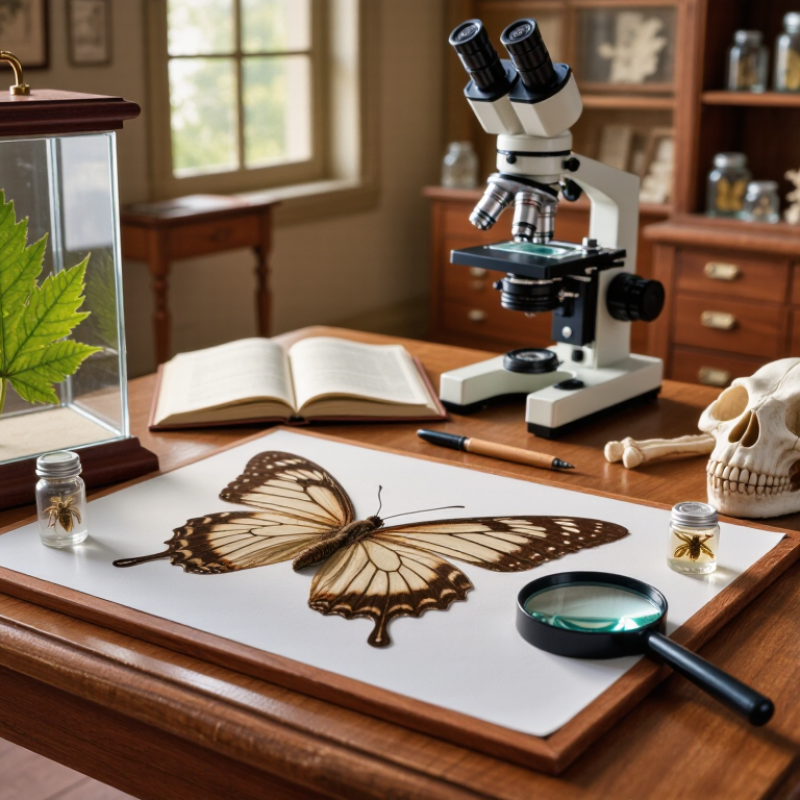
Animal specimens are preserved parts or whole organisms used to study anatomy, species identification, disease, and environmental change. They include pinned insects, cleaned skeletons, taxidermy mounts, microscope slides, and tissue samples stored for genetic analysis. A specimen becomes far more useful when its label records the species, collection date, location, and preparation method. Without that information, even a beautifully preserved animal can lose much of its research value.
Preservation choices depend on the question being asked. Fluid storage can retain soft tissues, while drying or taxidermy helps maintain visible form; frozen tissue may better support some DNA studies. Each method has limits. No method preserves every feature equally. The Smithsonian’s National Museum of Natural History reports holding more than 148 million specimens and objects, illustrating the scale of long-term collection care. GBIF’s 2023 annual report describes a network containing billions of biodiversity occurrence records, including digitized collection data; these records are not a count of physical specimens. Careful storage, stable temperatures, pest monitoring, and clear documentation help collections remain useful over time.
Tips: Match the preservation method to the research goal, and keep the specimen’s label and digital record together. Check storage conditions regularly; small changes in humidity can damage delicate wings or labels.
How Specimens Help Identify and Classify Species
Animal specimens give researchers durable evidence for deciding what a species is and how it differs from close relatives. A preserved bird wing can reveal feather patterns; a fish’s scales or a beetle’s tiny antennae may hold useful diagnostic traits. Researchers compare these features across multiple specimens, not just one unusual individual. Age, sex, season, and natural variation can change appearance. That matters.
A reference specimen, often called a type, anchors a scientific name to a physical example. Later researchers can examine it when descriptions are unclear or classifications change. Carefully recorded labels add context: where and when the animal was collected, its habitat, and who identified it. Tissue samples may also support DNA comparisons, especially when outward traits overlap. Yet genetic evidence needs careful interpretation and strong documentation. A specimen is not the animal. Color can fade, and preservation can distort soft tissues. Even a well-kept collection has gaps, so scientists should note uncertainty rather than force a neat answer. Museum drawers make comparisons possible across decades, including with newly collected animals from the same region. That continuity helps reveal whether two forms are distinct species, local variation, or a classification that needs revision.
What Specimens Reveal About Anatomy, Evolution, and Disease
Why Are Animal Specimens Important for Research?
A preserved specimen lets researchers examine structures that photographs can hide. In a bird’s wing, for example, the arrangement of bones and joints helps explain how movement is supported. A small detail can matter: a ridge, tooth, or healed fracture may reveal how an animal used its body. Measurements from many specimens also show how anatomy varies with age, sex, and environment. Yet preservation can change color or shrink soft tissue. The evidence is useful, but never perfect.
Comparing specimens across species helps researchers investigate evolution. Similar bone patterns may point to shared ancestry, while differences can reflect adaptations to distinct habitats. A fossil, a museum specimen, and a recently collected animal each offer different kinds of evidence. Their labels and collection histories matter, too. Without location or date, an otherwise striking specimen may answer fewer questions than expected.
Specimens can also preserve signs of disease, such as damaged bone, unusual growths, or parasites. These clues help researchers identify patterns across populations and time. But appearance alone rarely proves a diagnosis. Microscopic examination, medical records, or genetic analysis may be needed, depending on the case. There is room for doubt. Researchers must consider whether an injury occurred before or after death, and whether preservation altered what they see. Careful documentation makes those limits visible.
How Collections Track Biodiversity and Environmental Change
A pinned moth, a fish preserved in alcohol, or a bird skin carries a place and a date. Together, these specimens let researchers compare historical ranges with modern surveys. In 2021, the Global Biodiversity Information Facility reported more than one billion accessible species-occurrence records. Many are linked to natural-history collections (GBIF, 2021). That scale matters. Researchers can examine collection dates, locations, body measurements, and preserved tissues for signs of shifting ranges or changing environments.
IPBES estimated that around one million animal and plant species face extinction risk (Global Assessment, 2019). Specimen records can help show where declines or range shifts may be occurring, especially where field surveys are sparse. A century-old insect label may place a species in a town where it is now rarely observed. The record is not neutral, though. Older collecting favored accessible places and certain species; labels can also be vague. Those gaps deserve careful attention, not confident maps. Even a drawer of well-dated specimens can raise useful questions: when did a species disappear from a landscape, and what else changed nearby?
Ethical Practices in Specimen-Based Research
Why Are Animal Specimens Important for Research?
Ethical Practices in Specimen-Based Research
Animal specimens can answer questions that images or cell cultures cannot, but their scientific value depends on careful stewardship. Each sample should serve a clear purpose. Researchers should explain why existing data or non-animal methods cannot answer the question. That explanation matters. It helps prevent collection driven by habit rather than need. Teams should use the fewest specimens that can produce meaningful results and reduce pain or distress whenever live animals are involved. For preserved material, records should note its origin, collection context, storage conditions, and any uncertainty. A label is not enough.
Ethical work continues after collection. Staff need training in handling, sanitation, secure storage, and respectful disposal. Access should be limited to people with a legitimate research role. Researchers should protect location data when disclosure could threaten vulnerable species. Good documentation supports reproducible results and may help later teams avoid unnecessary collection. Still, records can be incomplete, and gaps in older specimens may be impossible to fix. That is uncomfortable. It should be stated plainly, not hidden behind polished methods language. Before a project begins, review by an appropriate ethics committee and a practical oversight plan can help identify risks to animals, ecosystems, and communities connected to the research.

 '
