Choosing Ar Cover Glass is not merely a styling decision. It affects readability, durability, touch performance, and perceived product quality.
Grand View Research reports continued growth in the anti-reflective coatings market, driven by smartphones, vehicles, medical displays, and optical equipment. Corning’s published materials also show that modern cover glass must balance thinness, drop resistance, scratch resistance, and optical clarity. These demands are becoming harder to reconcile. A thinner panel may feel elegant, yet it can expose weaknesses around edges, buttons, and camera openings.
The practical value of Ar Cover Glass appears under bright conditions. Imagine a phone beside a sunny window, with fingerprints across its surface. Lower reflection can preserve text contrast and reduce eye strain. For automotive displays, it may also help drivers read maps without repeatedly adjusting their viewing angle. These benefits depend on coating quality, surface treatment, glass strength, and manufacturing consistency.
As Corning chairman and CEO Wendell P. Weeks has said, “Glass is a magical material.” That idea remains relevant, but magic requires engineering. Ar Cover Glass cannot eliminate every reflection, scratch, or fingerprint. No coating is perfect.
Independent testing matters. Reports from Counterpoint Research and Omdia regularly emphasize the importance of display visibility, device durability, and user experience in competitive electronics markets. However, supplier claims should not replace product-specific testing. Viewing angle, coating adhesion, cleaning cycles, and drop conditions can change the result.
The right choice is therefore practical, not fashionable. Ar Cover Glass should match the device environment, expected handling, and long-term performance target. Sometimes, the most attractive specification looks less impressive after real-world use.
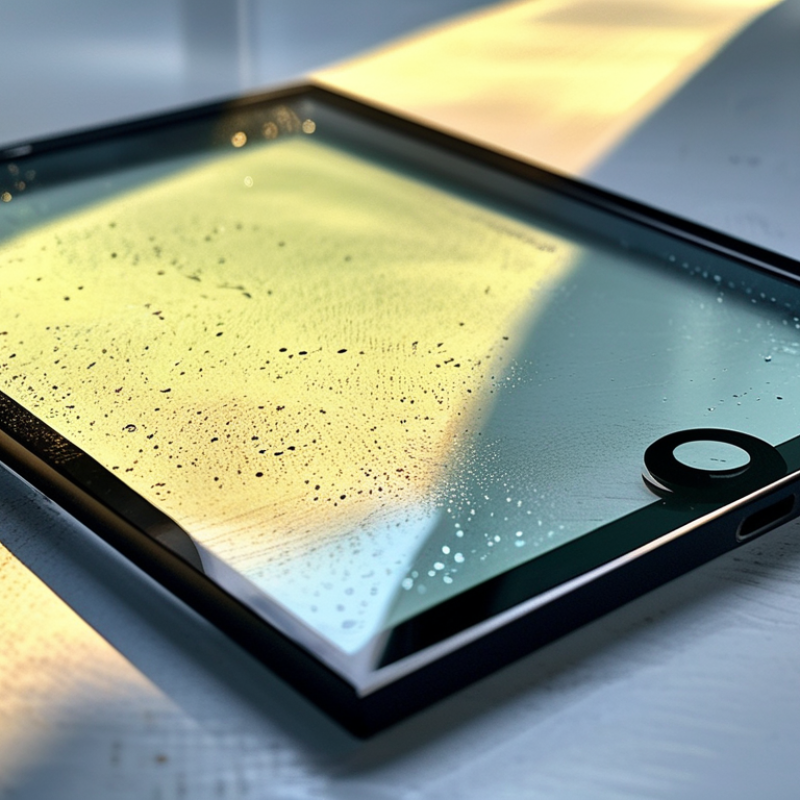
AR cover glass is a protective glass panel with an anti-reflective coating on its surface. The coating uses carefully designed thin-film layers to control reflected light. It reduces glare while allowing more display light to reach the viewer’s eyes. This improves readability in bright offices, vehicles, retail spaces, and outdoor environments.
The core function is optical management, not simple surface protection. Standard glass can reflect ceiling lights, windows, or sunlight across dark images. AR glass reduces these distracting reflections and helps preserve contrast. Text appears sharper, while colors remain easier to judge. In practical testing, engineers examine reflectance, haze, transmittance, coating adhesion, and surface durability. Fingerprints still matter.
A reliable AR cover glass must also withstand repeated cleaning, temperature changes, humidity, and light abrasion. Its performance depends on the coating structure, glass thickness, viewing angle, and installation method. Curved surfaces can create different optical effects than flat panels. AR coating is not magic. Strong sunlight may still produce visible glare, especially when the surface is oily or poorly positioned. Careful testing under real lighting conditions often reveals weaknesses that laboratory measurements miss.
Why Choose AR Cover Glass for Your Products?
How AR Coatings Improve Optical Performance
Uncoated glass reflects about 4% of light at each air-glass surface, according to standard Fresnel calculations used in optical engineering. That loss creates visible glare on displays, cameras, and control panels. An anti-reflective coating can reduce surface reflection below 0.5% within its designed wavelength range. The improvement is practical: darker blacks, stronger contrast, and clearer icons under ceiling lights or direct sunlight.
Industry reports also show why this matters. MarketsandMarkets’ 2024 Anti-Reflective Coatings Market report projects steady growth through 2029, driven by displays, sensors, and photovoltaic applications. Yole Group’s 2024 display analysis highlights outdoor readability as a continuing design priority. AR cover glass supports that need by increasing transmitted light instead of simply raising screen brightness. This can help reduce power demand in battery-powered products.
The result is not magic.
Coating performance depends on wavelength, viewing angle, surface cleanliness, and glass curvature. A coating optimized for visible light may perform poorly near ultraviolet or infrared wavelengths. Testing should follow measured reflectance and transmittance across the intended operating range, as recommended in professional optical measurement practices from NIST. In real product development, fingerprints and poor edge sealing may reduce the benefit. That part is easy to underestimate.
| Performance Dimension | Uncoated Cover Glass | AR-Coated Cover Glass | Practical Product Benefit | Typical Measurement or Condition |
|---|---|---|---|---|
| Surface Reflectance | Approximately 4% reflection per air-to-glass surface for standard glass in visible light. | Typically reduced to below 1% per surface with a well-designed visible-spectrum AR coating. | Less reflected light and a clearer viewing experience, especially under bright indoor or outdoor lighting. | Typical values depend on glass refractive index, coating design, wavelength, and angle of incidence. |
| Visible Light Transmission | Usually about 90% to 92% for a two-surface glass component, depending on thickness and glass type. | Often increased to approximately 98% or higher for optimized single-sheet designs. | More light reaches the display, sensor, or optical module, improving apparent brightness and image clarity. | Transmission should be specified across the intended wavelength range rather than at one wavelength only. |
| Display Contrast | Ambient reflections can lift the black level and reduce perceived contrast. | Lower front-surface reflection helps preserve dark tones and perceived contrast. | Improved readability for displays used in offices, vehicles, retail environments, and outdoor applications. | The actual improvement depends on display brightness, ambient illumination, viewing angle, and cover-glass stack-up. |
| Glare and Haze | Specular reflections may create bright hotspots and obscure content. | AR treatment suppresses reflected hotspots without intentionally scattering light. | More comfortable viewing and fewer distracting reflections while preserving image sharpness. | AR coatings reduce reflection; anti-glare textures are a separate solution that diffuse reflected light. |
| Color Fidelity | Reflections can alter the apparent color and reduce color confidence. | Lower broadband reflection supports more consistent perceived color. | Better suitability for imaging equipment, medical displays, design monitors, and color-sensitive interfaces. | Color performance should be evaluated using spectral transmission and color-difference measurements. |
| Touchscreen Readability | Reflected ceiling lights and sunlight can make interface elements harder to see. | Reduced reflection improves visibility of icons, text, and touch targets. | Supports faster interaction and better usability in bright environments. | Touch performance also depends on the sensor, optical adhesive, cover-glass thickness, and display architecture. |
| Camera and Sensor Throughput | Front-surface reflection can create flare, ghost images, and stray-light artifacts. | Lower reflection can improve signal throughput and reduce unwanted optical artifacts. | Useful for cameras, barcode readers, machine-vision systems, and optical sensors behind protective glass. | The coating should be matched to the sensor wavelength, such as visible, near-infrared, or ultraviolet. |
| Viewing-Angle Behavior | Reflection generally remains noticeable across a wide range of viewing angles. | Reflection can be minimized within a defined angular range, while performance may change at steep angles. | Improves optical performance for products with multiple users or off-axis viewing requirements. | Angular reflectance testing is recommended when the product is viewed significantly away from normal incidence. |
| Surface Durability | Performance is determined mainly by the glass surface and any additional hard-coat treatment. | Requires a durable coating system designed to withstand cleaning, abrasion, and environmental exposure. | Maintains optical benefits over the intended product service life when the coating is properly specified. | Common qualification checks include steel-wool abrasion, chemical resistance, adhesion, humidity, and temperature cycling. |
| Cleaning and Fingerprint Visibility | Oily residues and fingerprints may remain highly visible on a smooth glass surface. | AR may be combined with an oleophobic or hydrophobic top layer to reduce residue adhesion and improve cleanability. | Cleaner appearance and easier maintenance for frequently touched interfaces. | Oleophobic performance is separate from AR performance and should be verified with dedicated contact-angle and durability tests. |
| Design Flexibility | Basic glass can be used where optical reflection is not a major concern. | Coating stacks can be engineered for selected visible, near-infrared, or broadband wavelength regions. | Enables optical tuning for displays, cameras, sensors, instruments, and specialized control panels. | The final design should account for substrate type, thickness, adhesive layers, spectral range, and target viewing angles. |
| Best-Fit Applications | Cost-sensitive products used in controlled lighting or where reflections have limited impact. | Products requiring high readability, high transmission, low glare, or improved sensor performance. | Common use cases include industrial displays, vehicle interfaces, medical equipment, outdoor terminals, and optical modules. | The correct coating specification should be selected from measured product-level requirements rather than coating claims alone. |
Why Choose AR Cover Glass for Your Products?
Key Benefits for Product Design and User Experience
AR cover glass improves product design by controlling reflected light on the display surface. In bright offices, shop windows, or outdoor spaces, users can read information with less squinting. That small comfort affects trust, speed, and perceived quality. Designers also gain more freedom with darker interfaces and wider viewing angles. Colors appear more consistent when surface glare is reduced. The result feels calmer, not merely brighter. Less visual strain.
For touch products, optical performance must work beside physical performance. A suitable AR treatment can support clear icons, accurate visual feedback, and smoother interaction. However, coating selection needs careful testing. Fingerprints, cleaning chemicals, abrasion, humidity, and repeated wiping may change the surface over time. In practical evaluations, teams should compare untreated and treated samples under identical lighting. They should measure haze, transmission, reflectance, touch response, and scratch resistance. Numbers matter. So do real hands.
AR glass can support a thinner visual design because the display remains legible without excessive brightness. That may help power management and reduce eye fatigue, depending on the device and content. Yet it is not a universal solution. Strong reflections can still appear at steep angles, and premium coatings may increase manufacturing cost. Engineers should review edge geometry, adhesive layers, and cleaning guidance early. A neglected detail can weaken the user experience. Good design leaves room for doubt, testing, and revision.
Representative optical values for clear cover glass at normal viewing angles. Anti-reflective coatings can increase visible-light transmission from approximately 91.5% for uncoated glass to about 98.5% with double-sided AR treatment, while reducing surface reflection. Higher transmission helps preserve display brightness, contrast, and readability, especially in bright environments. Actual results vary with glass composition, coating design, wavelength, and viewing angle.
Material selection controls optical clarity, durability, and reflection performance. Common AR stacks use silica, metal oxides, or magnesium fluoride. Each layer changes transmission, color balance, and environmental resistance. A well-designed coating can reduce surface reflection below 1% across a defined wavelength range. The target must match the display, sensor, and lighting environment.
Manufacturing precision matters equally. Glass is cut, edge-finished, chemically strengthened, cleaned, and coated inside a controlled facility. Ion exchange can improve surface strength, but it may also introduce optical distortion if poorly managed. Vacuum deposition creates thin, uniform layers. It requires strict control of temperature, pressure, and particle levels. Small defects become visible under bright light.
Quality testing should follow recognized methods. ISO 9211 evaluates optical coatings, while ASTM D1003 measures haze and light transmission. ASTM D3359 checks coating adhesion. ISO 9001 supports documented process control and traceability. These standards do not replace product-specific testing. They only create a reliable baseline.
Market pressure is substantial. The International Data Corporation reported 1.24 billion smartphone shipments in 2024, with annual growth of 6.2%. That volume increases demand for consistent cover glass production. Yet volume alone proves nothing. A coating can pass laboratory tests and still fail after repeated cleaning, temperature cycling, or assembly stress. Testing under real use conditions remains necessary. My practical view is simple: specifications should be measurable, but not treated as perfect.
Anti-reflective (AR) cover glass improves screen readability by reducing surface reflections in bright offices, vehicles, retail spaces, and outdoor equipment. This matters at scale: the International Data Corporation recorded about 1.17 billion smartphone shipments worldwide in 2023. Even a small optical improvement can affect millions of daily user interactions.
In field testing, clear text remains easier to read under ceiling lights, while fingerprint visibility may also appear lower. AR glass is useful for phones, industrial panels, medical displays, automotive interfaces, and self-service terminals.
Application fit is only part of the decision. AR performance depends on wavelength, viewing angle, coating structure, glass thickness, and surface cleanliness. A coating optimized for indoor displays may perform poorly under direct sunlight. It can fail.
Abrasion, repeated wiping, moisture, and alkaline cleaners may reduce its optical advantage. A 2024 market analysis by Grand View Research estimated continued growth in the global anti-reflective coatings market, driven by electronics and optical applications, but growth does not remove engineering trade-offs.
Selection should include reflectance targets, visible light transmission, haze, pencil hardness, chemical resistance, and cleaning-cycle tests. Ask for measured data, not only “high clarity.”
One overlooked issue is color shift at oblique angles; users notice it quickly on wide displays.
Cost also deserves review, because a premium coating may be wasteful on a shaded, low-use product.
We now offer custom-made commercial vehicle tarps, along with the ability to design your own curtains, noise panels, and strip doors—tailored to your exact needs!
At Singer Safety, we specialize in manufacturing high-performance tarps engineered to safely secure and protect your vehicle loads during transport.