Why Choose Pe Waterproof Tarp for Global Sourcing?
Global sourcing increasingly demands materials that balance protection, cost, and responsible procurement. Pe Waterproof Tarp offers a practical solution for covering machinery, agricultural goods, construction materials, and outdoor inventory. Its woven polyethylene structure resists rain, sunlight, tearing, and repeated handling. In a container yard, a reinforced hem and rust-resistant eyelets can prevent water from reaching stacked cartons during sudden storms.
The market context supports careful material selection. PlasticsEurope reported approximately 400.3 million tonnes of global plastics production in 2022 through its Plastics—The Facts 2023 report. This scale shows polyethylene’s industrial importance, but it also highlights procurement responsibility. Buyers should request material specifications, coating details, tensile-strength results, and documented quality-control procedures. Details matter.
Pe Waterproof Tarp is not automatically the best choice for every application. That gap matters. Performance depends on fabric weight, lamination quality, seam construction, UV treatment, and storage conditions. UNEP’s 2023 Turning off the Tap report calls for stronger circularity and reduced plastic waste across product systems. Therefore, experienced importers should compare durability against expected service life, rather than choosing only the lowest quotation.
Reliable suppliers can provide pre-shipment inspection records, test samples, packaging photographs, and traceable batch information. ISO 2859-1 sampling practices may support consistent inspection decisions. Buyers should also verify destination-market labeling and environmental requirements. No single report answers every sourcing question. However, combining technical testing, supplier audits, and realistic field trials creates a more credible purchasing decision for international Pe Waterproof Tarp procurement.
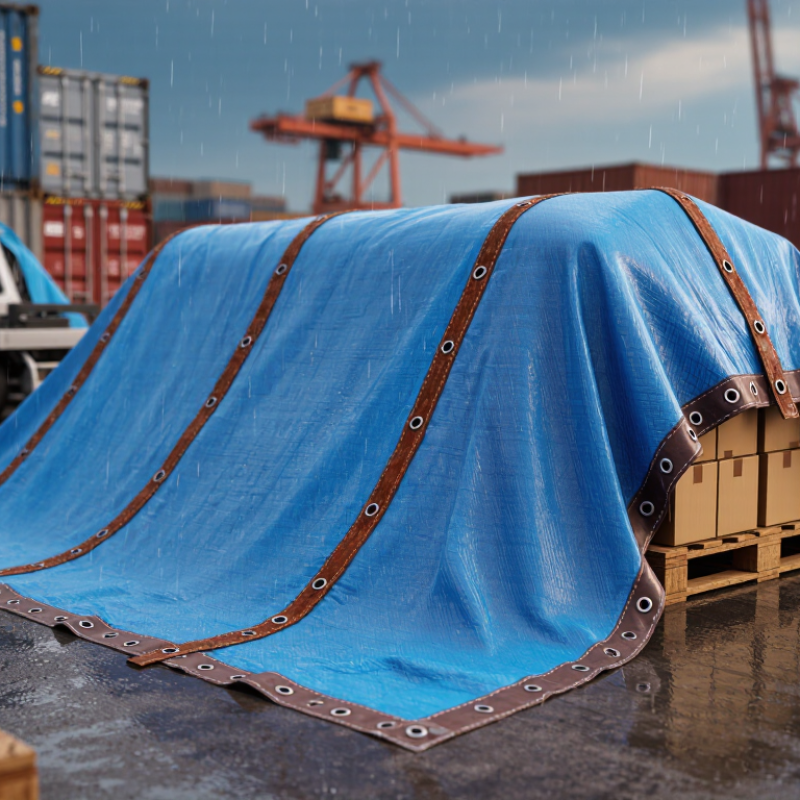
Why Choose PE Waterproof Tarp for Global Sourcing?
PE tarp construction starts with 60–250 GSM woven polyethylene fabric. GSM means fabric weight per square meter. Lower GSM tarps are lighter and easier to fold. Higher GSM options provide stronger tear resistance and better handling in demanding conditions. The woven base creates a grid of flat polyethylene tapes. A laminated coating then helps block rain and surface moisture.
In practical sourcing, material selection should match the application. A 60–90 GSM tarp may suit temporary covers or lightweight packaging. For outdoor storage, 120–180 GSM often offers a better balance. Heavy-duty work may require 200–250 GSM fabric, reinforced hems, and rust-resistant eyelets. UV treatment matters under direct sunlight. However, it should be verified through test data, not assumed from appearance.
Tips: Ask for GSM tolerance, tensile strength, tear strength, coating thickness, and seam details. Request samples before placing a large order. Check the tarp after folding, stretching, and brief water exposure. A heavier tarp is not always better. It may cost more and become difficult to handle. I have found that weak corners can ruin an otherwise strong sheet. That detail is easy to miss. Suppliers should provide consistent specifications, inspection records, and clear packing information for reliable global sourcing.
A 0.1–0.3 mm laminated polyethylene coating creates a practical waterproof barrier. It covers woven fabric gaps and reduces seepage during rain, storage, and transport. In factory inspections, water resistance depends on coating thickness, lamination temperature, and edge sealing. Thickness alone is not enough.
Grand View Research estimates the global tarpaulin sheets market will grow steadily through 2030, supported by construction, agriculture, and logistics demand. Plastics Europe reported 400.3 million tonnes of global plastics production in 2022. These figures show strong material availability, but they do not guarantee product quality. Buyers should request coating-thickness records and test results.
ISO 811 provides a hydrostatic pressure method for evaluating fabric resistance to water penetration. ASTM D751 also offers relevant procedures for coated fabrics. A reliable supplier should provide test conditions, sample dimensions, and failure points. Ask whether testing covers seams, folded corners, and repaired areas.
A 0.1 mm coating may reduce cost and weight, yet it can feel less forgiving under repeated folding. A 0.3 mm layer usually offers greater abrasion protection, although poor lamination can still cause peeling. I would not choose by thickness alone. Color, yarn density, UV exposure, and intended service life deserve equal attention. Suppliers should disclose tolerances honestly, because “waterproof” can mean very different performance levels in real weather.
Why Choose PE Waterproof Tarp for Global Sourcing?
Strength and Durability: Tensile Ratings Above 500 N/5 cm
For global sourcing, a PE waterproof tarp should offer more than a low purchase price. A tensile rating above 500 N/5 cm indicates strong resistance against pulling forces. This matters when tarps cover building materials, agricultural loads, or outdoor equipment. A woven polyethylene base gives the sheet structure, while the laminated coating helps block rain and surface moisture. In practical use, thick fabric feels firmer in the hands and resists stretching around tied corners. Still, no tarp is indestructible.
I have seen weak products fail at eyelets, not across the main fabric. That detail is easy to miss. Buyers should check tensile strength in both directions, tear resistance, coating adhesion, and seam quality. Test reports should identify the method, sample size, and testing conditions. Temperature also matters. Cold weather can make plastic materials less flexible, while intense sunlight may weaken untreated surfaces over time. A reliable supplier should provide samples before large orders and accept reasonable inspection requirements.
Tips: Pull the sample gently around its eyelets. Inspect pinholes under bright light. Compare actual dimensions after folding and unpacking. Ask whether the 500 N/5 cm rating applies to warp, weft, or both. One overlooked seam can change the whole result.
Strength and Durability: Tensile Ratings Above 500 N/5 cm
Representative procurement benchmarks show that heavy-duty and industrial PE waterproof tarps can achieve tensile ratings above 500 N/5 cm in both warp and weft directions. Higher tensile strength supports better resistance to pulling, wind load, handling, and repeated outdoor use.
Why Choose PE Waterproof Tarp for Global Sourcing?
Quality Standards: UV Resistance Tested for 200–500 Exposure Hours
For global sourcing, a PE waterproof tarp must handle more than rain. It may face strong sunlight, heat, wind, and repeated folding. UV resistance testing helps buyers estimate how the fabric may perform outdoors. A controlled test exposes tarp samples to ultraviolet light for 200 to 500 hours. Technicians then inspect color fading, cracking, brittleness, and loss of strength.
Testing details matter. A 500-hour result sounds stronger than a 200-hour result, but the numbers need context. Lamp type, temperature, humidity, and exposure cycles can change the outcome. Reliable suppliers should provide test conditions, sample details, and inspection results. Buyers can also request production samples before placing large orders. Real samples reveal surface texture, edge finishing, and coating consistency.
Field experience still matters.
Laboratory exposure cannot copy every climate. Coastal salt, desert dust, and tropical rainfall may create different stresses. A tarp can pass a laboratory test and still age faster at a busy outdoor site. That limitation deserves honest attention. Sourcing teams should compare test reports with intended use, storage methods, and expected service time. Clear specifications reduce misunderstandings across borders. They also make quality conversations more practical when actual performance falls short.
Why Choose PE Waterproof Tarp for Global Sourcing?
Global Sourcing Factors: Sizes, GSM, MOQ, Certifications, and Lead Times
PE waterproof tarps suit global sourcing because their specifications can be adjusted for different climates and applications. In sourcing projects, I check finished size, not only cutting size. A 10 × 20-foot tarp may lose several centimeters after hemming. That detail affects coverage on construction sites and outdoor storage areas. Common GSM options range from lightweight 80 GSM sheets to heavy-duty 240 GSM materials. Higher GSM usually improves strength, but it also increases weight, freight cost, and handling effort. There is no perfect GSM.
MOQ can vary widely by size, color, printing, and packaging method. A standard blue tarp may support a lower MOQ than a custom-sized, reinforced sheet. Ask suppliers to separate production MOQ from packaging MOQ. This distinction often reveals hidden costs. Request a pre-production sample. It can expose weak hems, uneven welding, or poorly fitted eyelets before bulk manufacturing.
Certifications should match the destination market and intended use. Buyers may request material declarations, UV-resistance test results, tear-strength data, or restricted-substance reports. A certificate alone is not enough; verify its testing scope and date. Lead times commonly include sampling, material preparation, production, inspection, and shipping. For repeat orders, reserve capacity before the rainy season. My own planning has sometimes underestimated port congestion. A realistic schedule should include buffer days, especially for customized sizes or third-party inspections.
| Sourcing Factor | Common Options or Planning Range | What to Confirm with the Supplier | Practical Buying Consideration |
|---|---|---|---|
| Sizes and formats | Examples of commonly requested sheet sizes include 2 × 3 m, 3 × 4 m, and 4 × 6 m. PE tarpaulin is also supplied in rolls, with widths and lengths varying by producer and specification. | Finished dimensions and tolerances; whether measurements are cut size or finished size; roll width; hem construction; eyelet spacing; and whether custom dimensions are available. | Confirm the usable finished size, not just the nominal size. Custom sizes may require a separate production run and can affect minimum order quantity and lead time. |
| Fabric weight (GSM) | Light-duty products are often around 60–90 g/m²; general-purpose options commonly fall around 100–180 g/m²; heavier-duty constructions may be approximately 180–250 g/m² or more. | Whether the quoted GSM covers the finished laminated fabric; weave and coating construction; weight tolerance; and any test method used for measurement. | GSM is a useful comparison, but it does not determine performance on its own. Compare construction, tear strength, UV resistance, seams, and intended use as well. |
| Minimum order quantity (MOQ) | For planning purposes, stock colors and standard sizes may be available in smaller lots, while custom colors, printing, or dimensions can require several hundred to several thousand pieces. Actual MOQs vary widely. | MOQ per size, color, and design; whether mixed sizes can be combined; sample availability; setup charges; and pricing at several order quantities. | Request a written quotation that separates product price, customization costs, packaging, samples, and any applicable export or freight charges. |
| Certifications and testing | Documentation may include a quality-management certificate for the manufacturing site, material test reports, or market-specific compliance declarations. Requirements depend on destination market and end use. | Certificate holder, issuing body, scope, validity, product or site coverage, and test-report sample details. Ask whether REACH or RoHS documentation is relevant to the intended market and product. | Do not assume a factory certificate certifies every tarp. For UV, flame-retardant, or chemical claims, request test reports for the relevant construction and confirm the required standard with the buyer or regulator. |
| Lead times | As an initial planning estimate, stocked products may take about 1–3 weeks to prepare, while customized production may take about 3–8 weeks. These are indicative ranges, not guaranteed delivery times. | Production time versus transit time; sample and artwork approval; peak-season capacity; inspection schedule; port handling; and the shipping term used in the quotation. | Build in time for pre-production samples, testing, inspection, customs clearance, and possible delays. Confirm the dispatch date and estimated arrival separately. |
| Waterproofing and durability | PE tarpaulins commonly use woven polyethylene fabric with a laminated coating. Performance depends on fabric construction, coating, seams, and exposure conditions. | Water-resistance test method, seam and hem details, UV-treatment claim and test evidence, eyelet material, and warranty conditions. | Specify the expected application—such as temporary covering, storage, or outdoor use—and request samples or test evidence for performance-critical orders. |
Planning note: The ranges above are general sourcing estimates, not universal specifications. Confirm current availability, test requirements, commercial terms, and delivery schedules directly with each supplier before placing an order.
We now offer custom-made commercial vehicle tarps, along with the ability to design your own curtains, noise panels, and strip doors—tailored to your exact needs!
At Singer Safety, we specialize in manufacturing high-performance tarps engineered to safely secure and protect your vehicle loads during transport.