Global sourcing depends on more than favorable prices. It depends on stable warehouse conditions, reliable handling, and controlled operating costs. UNCTAD’s Review of Maritime Transport reports that ships carry over 80% of global merchandise trade by volume. Every shipment may pass through docks, cold rooms, and distribution centers. These transition points can expose goods to dust, insects, humidity, and temperature swings.
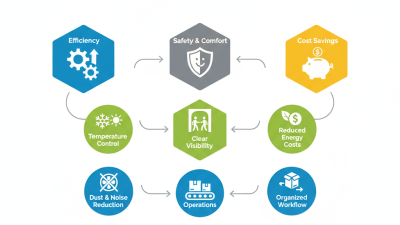
Plastic strip curtains offer a practical barrier between working zones. Flexible PVC strips allow forklifts and workers to pass without opening a rigid door. They can help limit air exchange around loading bays, chilled storage rooms, and production areas. The U.S. Department of Energy identifies air leakage as an important source of building energy loss. The International Energy Agency also reports that buildings consume about 30% of global final energy. Small openings deserve attention.
The details matter.
In practice, a warehouse manager may notice the difference beside a busy dock. Pallets move through quickly, while colder air stays more contained. Clear strips can improve visibility. Colored or ribbed strips may support safety and privacy. However, plastic strip curtains are not a universal fix. Poor overlap, incorrect thickness, or damaged hangers can reduce their value. They can also obstruct high-speed traffic when selected carelessly.
A dependable sourcing decision should compare material grade, temperature range, strip overlap, replacement availability, and installation support. Food, pharmaceutical, and industrial facilities should also confirm applicable hygiene, fire, and workplace requirements. These checks reflect guidance from organizations such as ISO and local safety authorities. The evidence is useful, but site testing remains essential. Real performance can differ.

Plastic strip curtains are flexible panels hung from a rail across a doorway. Their overlapping strips usually consist of clear or tinted plastic, often PVC. People and carts can pass through without opening a solid door. The strips then fall back into place. Simple, but useful.
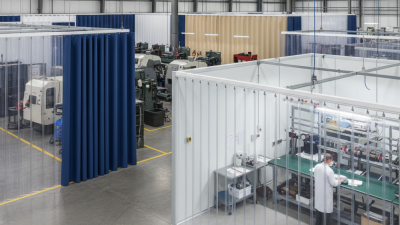
In a warehouse, they can help separate work areas and reduce drafts, dust, and noise. They also let light pass through, so staff can see movement on the other side. They are not doors, and they do not create an airtight seal. In cold conditions, some materials may stiffen; frequent cart traffic can also leave scratches or gaps. These details are easy to overlook when comparing suppliers.
Global sourcing depends on steady movement between receiving, storage, and dispatch areas. Plastic strip curtains can keep these routes accessible while separating work zones. At a busy dock, a forklift can pass through flexible strips without waiting for a solid door to open. The strips fall back into place afterward.
That can help limit drafts, airborne dust, and some temperature exchange between adjoining spaces. It may matter when shipments move from a chilled holding area to a packing zone. Clear strips also let workers see approaching carts and pallets. Visibility matters. Still, curtains are not airtight, and frequent traffic can leave gaps or wear the strips. They should not replace barriers designed for specific fire, security, or temperature-control requirements.
For sourcing teams, practical selection starts with the opening dimensions, traffic frequency, and the environment on each side. A warehouse handling narrow hand carts may need a different strip width and overlap than one used by forklifts. Check whether the material suits the expected temperatures and cleaning routine. A small trial at one doorway can reveal snagging, poor visibility, or uncomfortable drafts before wider installation. Results vary, and that is easy to underestimate when planning from a specification sheet alone.
Plastic strip curtains help global sourcing teams separate work zones while limiting dust, drafts, insects, and temperature loss. Material choice matters more than appearance. Standard PVC is economical and flexible, while low-temperature PVC performs better around chilled storage. Thermoplastic polyurethane offers stronger abrasion resistance and clearer visibility. Polyethylene can suit lighter-duty openings, but it may stiffen in cold conditions. Antistatic grades are useful where dust control and equipment protection matter.
Design for traffic and conditions Design should match traffic, not just doorway size. Overlapping strips improve isolation, while wider strips allow carts and forklifts to pass more easily. Ribbed surfaces can reduce sticking, although they may collect dirt. Sliding or removable systems support frequent deliveries. According to PlasticsEurope’s Plastics—the Fast Facts 2024, global plastics production reached 413.8 million tonnes in 2023. This scale supports broad material availability, but recycled content, formulation, and regional standards can differ. That variation deserves careful checking.
Plastic strip curtains can help global sourcing facilities control airflow around loading bays, cold rooms, and production zones. Their value depends on measured performance, not appearance. A practical evaluation starts with a baseline. Record door-open time, indoor temperature, energy use, dust levels, and forklift traffic for one week. Then install a trial section with documented strip thickness, overlap, height, and mounting method. Keep the conditions comparable. Short tests help.
Efficiency should be measured during busy shifts, not only quiet hours. Use temperature loggers on both sides of the opening. Check whether the strips return quickly after pallet movement. Observe damaged edges, sticking surfaces, and gaps caused by poor overlap. In refrigerated areas, compare compressor runtime before and after installation. A reduction may indicate better separation, but weather and workload can distort results. Repeat measurements across different days. This is where many reports become too confident.
Cost analysis should include purchase, freight, installation labor, cleaning, repairs, replacement strips, and expected service life. A low initial price can become expensive if frequent forklift contact causes early damage. Calculate monthly cost and energy savings separately. Then test payback under conservative, expected, and difficult operating conditions. A spreadsheet is useful. It is not proof. Procurement teams should also confirm material compatibility, fire-safety documentation, worker visibility, and local compliance requirements. Ask installers to document dimensions and maintenance intervals. Leave room for uncertainty; supply schedules, exchange rates, and seasonal temperatures can change the result.
This 12-month procurement model compares the estimated total cost of managing a 10 m wide × 4 m high industrial opening. Plastic strip curtains typically require lower installation and replacement spending than rigid doors, while also reducing the need to keep openings fully closed during frequent personnel and forklift traffic. Actual results depend on traffic volume, climate, material grade, and local labor and energy prices.
Installation quality decides whether plastic strip curtains reduce drafts or become costly decoration. The U.S. Department of Energy notes that uncontrolled air leakage can represent roughly 5–30% of heating and cooling energy use. Correct overlap, mounting height, and door clearance therefore matter during global sourcing operations.
Select curtain material for temperature, traffic, and chemical exposure. Measure the opening twice, including forklift clearance and ceiling obstructions. Strips should touch the floor lightly, not drag across it. Overlap commonly ranges from 25% to 100%, depending on wind pressure and temperature control needs. ASHRAE guidance emphasizes maintaining designed airflow paths; a curtain that blocks people but leaves wide side gaps is not performing well. In practice, installation teams sometimes trust catalog dimensions too much. That is a mistake worth admitting.
Tips: Use a rigid, corrosion-resistant rail. Label replacement strips by thickness and length. Inspect weekly for torn edges, curled sections, and missing hangers. Clean with mild detergent, since abrasive chemicals can reduce flexibility and visibility. Keep a simple inspection log. The International Organization for Standardization’s ISO 9001 approach supports documented checks and corrective actions, even for small warehouse systems. A practical test is visible: hold a lightweight paper strip near the opening and watch for uncontrolled movement. If it flutters strongly, review overlap, gaps, and nearby exhaust fans.
We now offer custom-made commercial vehicle tarps, along with the ability to design your own curtains, noise panels, and strip doors—tailored to your exact needs!
At Singer Safety, we specialize in manufacturing high-performance tarps engineered to safely secure and protect your vehicle loads during transport.