What Are the 2026 Top Types of Industrial Strip Curtains?

Industrial strip curtains are becoming more specialized as factories pursue tighter climate control, cleaner production, and safer material flow in 2026. The International Energy Agency reports that industry consumed about 37% of global final energy in 2022. Small openings can therefore create expensive losses when heated or cooled air escapes repeatedly. The U.S. Department of Energy also identifies industrial facilities as major energy users, making doorway control a practical efficiency measure.

This guide examines the leading industrial strip curtains for modern facilities. PVC strip curtains remain versatile for warehouses, loading bays, and internal production zones. Polar-grade curtains suit refrigerated rooms. Anti-static and welding curtains address more demanding risks. Food-grade options support hygienic processing areas, while sound-control strips help reduce noise between workspaces. Performance depends on more than thickness. Strip overlap, door traffic, temperature, chemical exposure, and installation quality all matter.

William P. Bahnfleth, Ph.D., an ASHRAE Fellow and specialist in HVAC performance, emphasizes a useful principle: controlling unwanted air movement supports comfort and energy efficiency. That principle applies directly here. No ranking is perfect. A curtain that performs well beside a freezer may fail near a forklift route. Transparent PVC can improve visibility, yet it may scratch quickly in harsh traffic. The best choice is not always the heaviest option. It is the one matched carefully to the opening, environment, and daily work pattern.
What Are the 2026 Top Types of Industrial Strip Curtains?

What Industrial Strip Curtains Are and How They Work

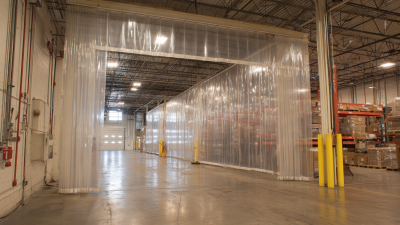
Industrial strip curtains are flexible barriers made from hanging plastic strips. They divide work areas without building a permanent wall. In 2026, common top types include clear PVC, ribbed PVC, insulated strips, anti-static curtains, and cold-resistant curtains. Each type serves a different working condition.

The strips hang from a metal track and overlap along the opening. People can push through them easily. Forklifts can pass with limited delay. After movement, the strips fall back into place and reduce air exchange. Clear strips improve visibility near busy doorways. Ribbed surfaces can resist frequent contact and reduce scratching. Insulated strips help control cold air around storage rooms. Anti-static materials may suit areas handling sensitive equipment. However, no curtain solves every problem. Poor overlap or incorrect thickness can reduce performance.

Tips: Measure the opening carefully before installation. Check temperature, traffic frequency, and cleaning needs. Leave enough overlap for wind pressure. Wipe the strips regularly, because dust can make them cloudy and stiff. Inspect the top hooks and track every month. A curtain that looks fine may still leak air at the edges. During site checks, I have found that small gaps often matter more than expected. Choose practical access over appearance, but review that choice after real use.

The Leading Strip Curtain Types in 2026

In 2026, industrial strip curtains are becoming more specialized as facilities manage heat, dust, noise, and traffic. The leading strip curtain types include PVC, low-temperature, anti-static, welding-grade, and insulated systems. Each type solves a different operational problem. Choosing by appearance alone is risky.

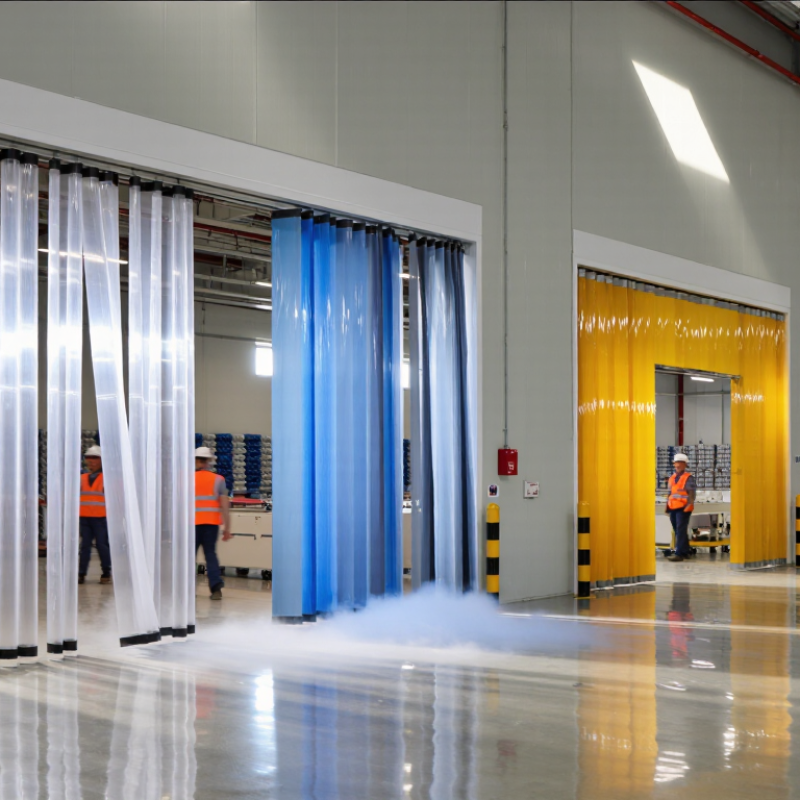
Standard clear PVC curtains suit warehouses, loading bays, and internal partitions with frequent pedestrian movement. They preserve visibility while reducing drafts and airborne dust. Ribbed strips resist scratching and handle carts better, although their texture can reduce visual clarity.

Low-temperature formulations remain flexible in chilled rooms and freezer approaches. They can still stiffen during severe cold or poor storage. That detail is often overlooked. Anti-static curtains support areas where static management is required.

Welding curtains control intense light and sparks around fabrication zones, but they need suitable shade ratings and secure mounting.

Insulated, multi-layer curtains are gaining attention where temperature stability matters more than rapid access. They reduce energy loss, yet may slow movement and complicate cleaning. In practice, installers should measure opening size, overlap, floor clearance, airflow, and washdown needs before ordering.

I have seen poorly measured curtains curl at the edges and leave cold gaps. Even experienced teams can miss this. A reliable specification also checks strip thickness, hanger strength, replacement access, and documented material performance. Materials should be reviewed against the site’s actual temperature, traffic, and cleaning routine.

Materials, Designs, and Performance Features

What Are the 2026 Top Types of Industrial Strip Curtains?

Materials, Designs, and Performance Features

Clear PVC remains a leading choice for warehouses, loading bays, and food-processing entrances. It allows forklift operators to see approaching traffic while reducing drafts, dust, and temperature loss. For refrigerated rooms, low-temperature PVC stays more flexible when ordinary vinyl becomes stiff. That difference matters at a busy doorway. Ribbed PVC adds surface strength and can handle frequent contact from carts and pallets. However, it may reduce visual clarity slightly.

Anti-static PVC suits areas where dust control and static management are important. It needs proper grounding and regular cleaning to maintain performance. Some facilities also use TPU strips where stronger abrasion resistance and chemical tolerance are required. Material selection should follow actual temperature, traffic, and cleaning conditions, not just purchase price. I have seen thick curtains fail early because their mounting hardware was too weak.

Design affects daily efficiency. Overlapping strips provide better separation, while lighter overlaps allow easier pedestrian movement. Sliding frames help when wide equipment passes through, but they require more floor and wall space. Weighted bottoms can reduce swinging in windy openings. Performance should be checked through strip thickness, overlap percentage, tear resistance, transparency, and stated operating temperature. Small gaps at the edges can undermine an otherwise expensive installation. Measurements are often imperfect, especially around uneven floors, so site testing remains worthwhile.

What Are the 2026 Top Types of Industrial Strip Curtains?

Comparative performance index for common industrial strip curtain materials and designs. Scores range from 1 (lower) to 5 (higher) and reflect typical material characteristics rather than a laboratory certification.

Summary: Clear PVC provides strong visibility and balanced everyday performance. Ribbed PVC improves durability in high-traffic openings, while low-temperature PVC is designed to remain flexible in chilled environments. Anti-static PVC supports areas where electrostatic control matters, and EVA offers high flexibility with good optical clarity.

Industrial Applications for Each Curtain Type

What Are the 2026 Top Types of Industrial Strip Curtains?

Industrial Applications for Each Curtain Type

Industrial strip curtains in 2026 are selected by traffic, temperature, hygiene, and visibility. Standard clear PVC curtains suit warehouses, loading bays, and internal production zones. They preserve sightlines while limiting dust, drafts, and conditioned-air loss. The International Energy Agency reports that buildings consume about 30% of global final energy. Small openings deserve attention. The U.S. Energy Information Administration also reports that space heating accounts for roughly 32% of commercial building energy use. A well-fitted curtain can support better separation, although it cannot replace sound insulation or mechanical maintenance.

Low-temperature PVC curtains serve freezer rooms and chilled storage areas. Their flexibility reduces cracking near cold doors. Ribbed or impact-resistant curtains work better beside forklifts and pallet traffic. They tolerate repeated contact, but damaged strips still require prompt replacement. Tinted welding curtains help separate fabrication zones from nearby workers. They reduce glare and ultraviolet exposure when properly rated. Clear visibility is useful, but it should not override task-specific protection.

Food-processing rooms often use smooth, washable PVC surfaces. The 2022 FDA Food Code emphasizes cleanable, nonabsorbent equipment surfaces. That principle supports hygienic curtain selection and scheduled cleaning. Anti-static curtains suit controlled electronic or powder-handling areas, subject to a documented risk assessment. Field inspections often reveal poor overlap and weak mounting hardware. That detail matters. A technically suitable curtain may still fail when gaps, dragging strips, or unsuitable floor clearance remain.

How to Select the Right Strip Curtain for Your Facility

What Are the 2026 Top Types of Industrial Strip Curtains?

Selecting the right strip curtain starts with the opening, not the product label. Measure doorway width, height, traffic frequency, and temperature difference. According to the U.S. Department of Energy’s Manufacturing Energy and Carbon Footprints report, U.S. manufacturing used 24.8 quadrillion Btu in 2018. Small air leaks deserve attention.

For busy forklift entrances, overlapping PVC strips offer flexible access and reduce drafts. Clear PVC improves visibility near people and vehicles. Ribbed strips suit abrasive traffic and resist surface damage better. Cold rooms need low-temperature PVC that remains flexible below freezing. Anti-static materials may be suitable for controlled manufacturing areas, but verify site requirements with a qualified specialist. One material cannot solve every problem.

Consider strip thickness, overlap, mounting hardware, and replacement access. A 50% overlap may provide easier passage, while higher overlap can improve separation but increase resistance. The U.S. Department of Energy notes that infiltration depends on pressure differences, temperature, wind, and opening conditions. That makes a curtain’s real performance highly site-specific. A neat installation can still fail if forklifts push through constantly. I would test one doorway before outfitting the entire facility. Record indoor temperature, air movement, visibility, and maintenance needs for several operating shifts.

What Are the 2026 Top Types of Industrial Strip Curtains? - How to Select the Right Strip Curtain for Your Facility

Strip Curtain Type Typical Material Typical Temperature Range Common Strip Thickness Best Applications Main Benefits Important Limitations Selection Guidance
Clear PVC Strip Curtains Transparent flexible PVC Approximately -15°C to 50°C 2–4 mm Warehouses, loading bays, production entrances and pedestrian openings Good visibility, reduced drafts, dust control and easy pedestrian access Can become stiff in cold conditions and may scratch or discolor with heavy use Choose for general indoor or moderate outdoor separation where visibility is important
Ribbed or Reinforced PVC Curtains Ribbed flexible PVC Approximately -15°C to 50°C 3–5 mm Forklift doorways, busy traffic lanes and material-handling areas Higher abrasion resistance and improved strip recovery after vehicle traffic Less optical clarity and typically higher cost than smooth PVC Select when repeated forklift contact or impact is expected
Cold-Temperature PVC Curtains Low-temperature flexible PVC Approximately -40°C to 0°C 2–4 mm Cold rooms, freezers, refrigerated docks and temperature-controlled storage Remains more flexible at low temperatures and limits air exchange Usually less suitable for hot processes and may require regular cleaning to prevent icing Use the lowest expected operating temperature, not the average room temperature, for specification
Polar-Grade Strip Curtains Specially formulated low-temperature PVC Approximately -60°C to 0°C 2–4 mm Deep-freeze rooms, blast-freezer entrances and cold-chain logistics Maintains flexibility in severe cold and supports frequent access Higher purchase cost and lower suitability for environments exposed to heat or solvents Select for sub-zero operations where standard PVC becomes rigid or cracks
Anti-Static Strip Curtains Static-dissipative PVC Typically -15°C to 50°C 2–3 mm Electronics assembly, clean production zones and dust-sensitive workspaces Helps reduce electrostatic charge accumulation and airborne particle attraction Requires a properly designed grounding system; it is not automatically explosion-proof Confirm electrical-resistance requirements and facility grounding before installation
Welding Protection Curtains Welding-grade PVC, usually tinted Typically -15°C to 50°C 1–3 mm Welding bays, fabrication shops and maintenance areas Helps screen visible and ultraviolet radiation while containing sparks and spatter Not a substitute for a welding helmet, protective clothing or approved fire barriers Match the curtain shade and fire-performance requirements to the welding process and local regulations
Food- and Hygienic-Grade Curtains Smooth, cleanable PVC suitable for hygienic areas Typically -15°C to 50°C 2–3 mm Food processing, beverage plants, clean storage and washdown areas Smooth surfaces are easier to wash, inspect and maintain Must be verified for the specific sanitation chemicals, temperatures and compliance requirements Request material documentation and establish a cleaning schedule before use
Insect- and Pest-Control Curtains Clear or colored flexible PVC Typically 0°C to 40°C 1.5–3 mm Food entrances, service doors, waste areas and loading zones Helps reduce flying-insect access while allowing people and carts to pass Performance depends on correct overlap, cleanliness and control of nearby attractants Use with sanitation, door management and pest-control procedures rather than as a standalone solution
High-Speed Door Companion Curtains Flexible PVC strips used beside or behind powered doors Selected according to the facility environment 2–4 mm High-traffic logistics corridors and temperature-sensitive openings Provides secondary separation and can reduce air movement when the main door is open May obstruct powered-door sensors, vehicles or emergency egress if poorly positioned Coordinate dimensions, mounting height and safety clearances with the door system
Practical Selection Checklist: Measure the opening width and height, identify the lowest and highest operating temperatures, estimate pedestrian and vehicle traffic, determine the required visibility and overlap, check exposure to chemicals or welding radiation, and verify hygiene, fire-safety, electrical and emergency-egress requirements before ordering.
'