Choosing the best sound absorbing panels starts with a simple question: what do you hear in the room? A sharp echo in a kitchen, ringing speech in a meeting room, and bass that lingers in a studio are different problems. One panel type will not solve them all. Small rooms behave differently.
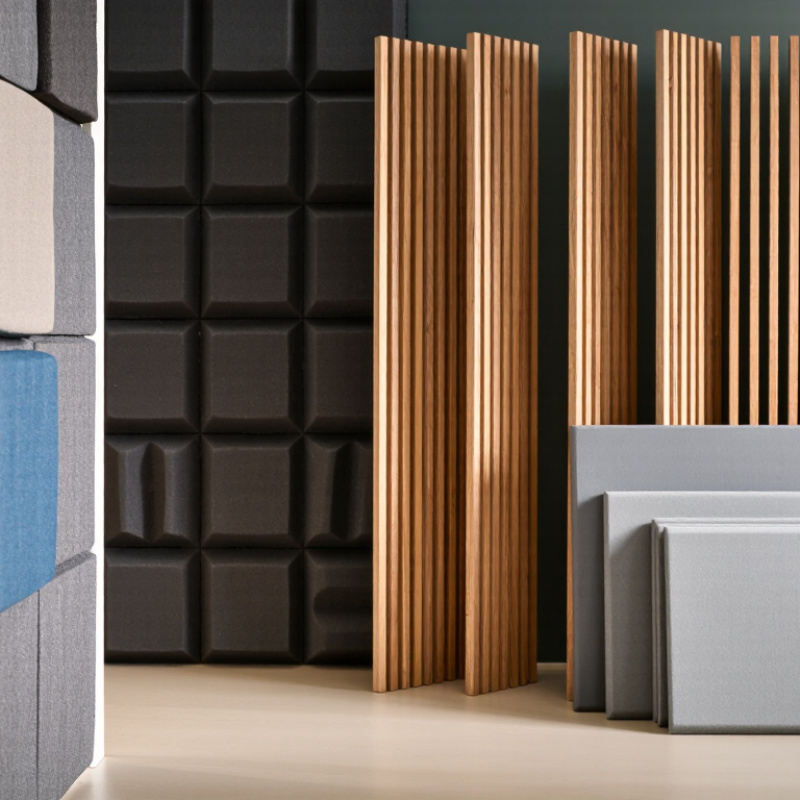
Acoustics professor Trevor Cox has studied how sound behaves in real spaces. A fair paraphrase of his work is this: listen to the room before deciding how to treat it. That distinction matters. Porous panels made with mineral wool or fiberglass can reduce reflections across useful frequency ranges when properly designed and placed. Fabric-wrapped panels offer a clean finish; PET panels may suit projects prioritizing lightweight materials. Acoustic foam is easy to handle, but its performance varies, especially for low frequencies. Slatted wood panels can combine absorption with a distinctive appearance, though their backing and spacing affect results.
Look beyond color and thickness. Check test data, intended frequency range, installation guidance, and suitability for the room. A handclap can reveal obvious flutter echo, but it cannot measure everything. Details matter. A few panels placed at reflection points may improve speech clarity, while covering every wall can make a room feel unnaturally subdued. This guide compares the main types of sound absorbing panels, explains where each tends to work best, and highlights the trade-offs worth checking before you buy. The right choice depends on the room, its surfaces, and how people use it.
Sound-absorbing panels reduce noise by converting some sound energy into heat through friction inside porous materials. When a voice or a sharp handclap reaches a panel, its fibers slow the sound waves. Less reflected sound means less echo and clearer speech. The room may feel calmer, though the sound source itself has not become quieter.
Material, thickness, and placement matter. Fiberglass and mineral-wool panels often absorb a broad range of frequencies; thin foam is generally less effective at low bass. ASTM C423 measures absorption in a reverberation room. Its Noise Reduction Coefficient, or NRC, averages results at 250, 500, 1,000, and 2,000 Hz, rounded to the nearest 0.05.
An NRC of 0.85 helps compare products, but it does not mean a room’s noise drops by 85 percent. Panels absorb reflections; they do not replace insulation or seal gaps.
Tip: Put panels at ear height near strong reflection points, such as the wall opposite a desk. Leave a small air gap behind thicker panels when practical; it can improve lower-frequency absorption. Test with a clap and listen again. Results vary, and one panel rarely fixes a lively room.
Common Types of Sound-Absorbing Panels
Fabric-wrapped panels are a familiar choice for offices, studios, and living rooms. A fabric cover surrounds a porous core, often made from fiberglass or mineral wool. Sound enters the panel and loses energy within its fibers. Thicker panels, or panels spaced slightly off the wall, can absorb lower frequencies more effectively. Handle exposed cores carefully during installation.
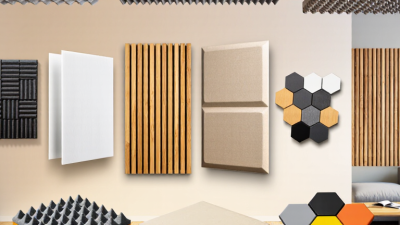
Foam panels are lightweight and easy to cut. They can reduce reflections and echo, especially at mid and high frequencies, but thin foam does little for deep bass. Mineral wool and fiberglass panels often provide broader absorption when their thickness and placement are suitable. Wood slat panels combine a hard surface with absorbent material behind it; their results depend on the backing and gaps, not appearance alone. Recycled-fiber panels are another option, though density and performance vary by product. One detail is easy to overlook: panels absorb sound inside a room, but they do not automatically block noise from passing through walls. A few panels placed randomly may disappoint. Measure the room, identify the main reflection points, and compare test data before choosing.
Material and construction shape which sound a panel absorbs. Porous mineral wool, glass fiber, and polyester fiber let sound enter small air spaces, where friction reduces its energy. Thickness matters: a thicker panel generally absorbs lower frequencies more effectively. A 25 mm panel may tame speech reflections, while deeper construction can reach farther into bass. An air gap behind a panel can also improve low-frequency absorption. Still, material alone does not predict performance.
Check laboratory data, not just material descriptions. Under ASTM C423, the Noise Reduction Coefficient (NRC) averages absorption measurements at 250, 500, 1,000, and 2,000 Hz, rounded to the nearest 0.05. That useful figure can hide weak performance at a particular frequency. Perforated wood panels with a cavity work differently from porous panels; their absorption depends on hole pattern, backing, and cavity depth. One common specification mistake is treating NRC as the whole room. It is not.
Tips: Compare ASTM C423 results at individual frequencies, and confirm the tested mounting matches your installation. For a small meeting room, try a sample on the wall and listen for reduced slap echo. Leave some distance from the wall when practical. A neat-looking panel can still miss the room’s main acoustic problem.
| Panel material and construction | Indicative NRC range | Typical absorption strengths | How construction affects performance | Common applications |
|---|---|---|---|---|
| Fiberglass core with breathable fabric facing | About 0.70–1.05 | Mid and high frequencies; thicker panels and wall air gaps can improve lower-frequency absorption. | Core thickness, density, mounting depth, and the fabric’s airflow resistance all matter. A tightly sealed or non-breathable covering can reduce absorption. | Offices, studios, classrooms, and meeting rooms. |
| Mineral wool core with fabric facing | About 0.75–1.05 | Broadband absorption, especially through the mid and high frequencies; thicker builds can help lower in frequency. | Performance depends on thickness, airflow resistivity, panel edges, and whether the panel is mounted directly or spaced away from the wall. | Rooms needing general reverberation control, including studios and public spaces. |
| Recycled PET fiber panel | About 0.40–1.00 | Usually strongest in the mid and high frequencies; thicker, suitably dense panels can absorb more broadly. | Fiber density, thickness, surface pattern, and mounting air gap produce substantial differences between panels. Check test data for the exact configuration. | Offices, schools, and other interiors where a lightweight, cleanable panel is useful. |
| Open-cell acoustic foam | About 0.30–0.90 | Primarily mid and high frequencies; thin foam is generally less effective at low frequencies. | Thickness, cell structure, profile, and an air gap affect results. Decorative surface shapes do not by themselves guarantee better absorption. | Small rooms and controlled environments where lightweight, exposed-surface treatment is suitable. |
| Perforated or slotted wood facing with an absorptive backing | About 0.30–0.90 | Can be designed for selected frequency ranges; performance varies with the panel design and backing. | Perforation size and spacing, cavity depth, backing material, and panel mounting form an acoustic system. Some designs are tuned to absorb more strongly at lower frequencies. | Auditoriums, halls, and interiors where a durable, hard-faced finish is desired. |
Note: NRC values are indicative ranges, not guarantees. NRC is a rounded average of absorption measurements at 250, 500, 1,000, and 2,000 Hz; it does not describe performance at every frequency, particularly deep bass. Compare independent test results for the exact panel thickness, facing, and mounting method.
What Are the Best Types of Sound Absorbing Panels?
Choosing Panels for Different Rooms and Noise Problems
The right panel depends on what you hear. In a living room with sharp echoes, fabric-wrapped fiberglass or mineral-wool panels can absorb mid- and high-frequency reflections. Place them near the first reflection points: beside a sofa, or on the wall opposite a television. For low, boomy notes in a music room, thin wall panels are often inadequate. Add thicker absorbers or corner bass traps. They take up more space, but can better address bass buildup.
For classrooms, reverberation affects how clearly students hear speech. ANSI/ASA S12.60 sets a maximum reverberation time of 0.6 seconds for core learning spaces up to 10,000 cubic feet, and 0.7 seconds for spaces from 10,000 to 20,000 cubic feet. These targets are useful reference points, not a substitute for measuring a room. Look for absorption data tested under ASTM C423, which reports how much sound a material absorbs across specified frequencies. NRC is helpful, but it does not tell the whole story. A panel can soften room echo without stopping noise passing through a wall. That distinction matters. In kitchens or damp rooms, check that the panel’s finish suits the conditions; attractive fabric may not be practical there.
Typical Noise Reduction Coefficient (NRC) ratings by panel type
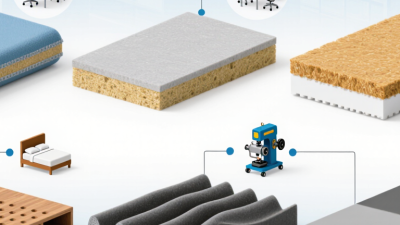
Higher NRC generally means more absorption of speech-range sound, making thick fiberglass or mineral-wool panels useful for echo-prone offices and studios. Foam and PET panels can suit lighter-duty treatment, while heavy curtains offer modest absorption. Values shown are representative; actual ratings vary by product, thickness, mounting, and test method. For bass noise, thicker panels or purpose-built bass traps are usually needed.
Panel effectiveness should be judged by tested absorption, not appearance. ASTM C423 measures sound absorption in a reverberation room; the Noise Reduction Coefficient (NRC) averages results at 250, 500, 1,000, and 2,000 Hz, rounded to the nearest 0.05. A higher NRC can help with speech-range reflections, but it does not describe performance at every frequency. Low bass may still linger. Thick mineral-fiber or fiberglass panels generally absorb more broadly than thin foam, while perforated panels depend on their backing and air gap.
Room targets give those numbers context. ANSI/ASA S12.60 sets a maximum reverberation time of 0.6 seconds for furnished, unoccupied classrooms up to 10,000 cubic feet, and 0.7 seconds for rooms between 10,000 and 20,000 cubic feet. These are useful benchmarks, not guarantees for every room. Measure the space and consider its ceiling height, furnishings, and noise sources before choosing coverage.
Compare cost per installed square foot, including frames, fabric, mounting, and labor—not panel price alone. Ask for ASTM C423 test results and check whether the tested thickness and mounting match your planned installation. A lower-cost panel may need more coverage to achieve a similar result. Quotes also vary by region, so a single price range can mislead. I would compare two or three local bids; I have seen the mounting details matter more than expected.
We now offer custom-made commercial vehicle tarps, along with the ability to design your own curtains, noise panels, and strip doors—tailored to your exact needs!
At Singer Safety, we specialize in manufacturing high-performance tarps engineered to safely secure and protect your vehicle loads during transport.