China Top 10 Industrial Curtain Manufacturers 2026

China’s industrial curtain sector is entering 2026 with broader product choices and sharper technical expectations. Buyers now examine more than price.

Industrial curtains can separate welding bays, control dust, reduce noise, and protect temperature-sensitive work areas. Their performance depends on details.

Material thickness matters. So do welding quality, track design, fire resistance, chemical compatibility, and installation accuracy. A weak roller can undermine an otherwise excellent enclosure.

Industrial safety consultant Michael H. Peterson explains, “A curtain succeeds when its material, hardware, and working environment are evaluated as one system.”

That principle guides this overview of China’s top 10 industrial curtain manufacturers for 2026. The selection considers manufacturing experience, product consistency, customization ability, inspection procedures, delivery performance, and technical support. Certifications and test reports also deserve close attention. They should be checked against the intended application, not accepted as decoration.

Some factories specialize in PVC strip curtains. Others focus on retractable welding screens, cleanroom partitions, acoustic barriers, or large industrial enclosures. Their strengths are not interchangeable.

A ranking can never describe every production floor. It may also change when pricing, export service, or raw-material quality shifts. That is worth admitting.

This guide therefore treats the list as a practical starting point, not a final purchasing decision. Before ordering, buyers should request samples, drawings, load details, and documented performance data. A short factory audit can reveal more than polished website photographs.

The right supplier should provide a curtain system that fits the process, workers, building, and maintenance plan. In 2026, dependable industrial curtains will be judged by performance after installation, not promises before delivery.
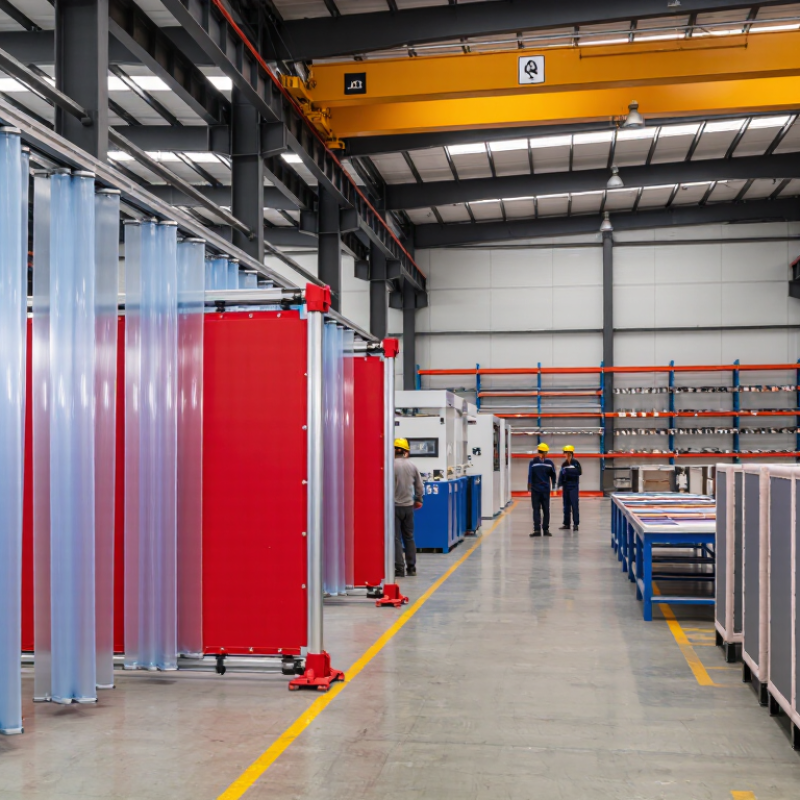
China Top 10 Industrial Curtain Manufacturers 2026

Industrial Curtain Types: PVC Strip, Welding, Cleanroom, and Acoustic Systems

Industrial Curtain Types: PVC Strip, Welding, Cleanroom, and Acoustic Systems

Industrial curtains are practical zoning tools, not simple plastic dividers. PVC strip curtains reduce drafts, dust, and forklift traffic while keeping visibility near loading doors. A 2024 Grand View Research report valued the global industrial fabrics market at over USD 150 billion, reflecting strong demand for durable textile and coated-material solutions. Thickness, overlap, temperature range, and fire performance still matter more than appearance.

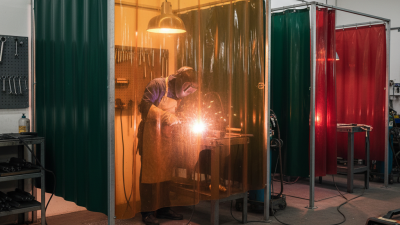
Welding curtains need controlled light transmission and heat resistance. EN ISO 25980 provides guidance for welding screens and transparent protection materials. A poor color choice can strain workers’ eyes. That detail is often missed. Cleanroom curtains require low-shedding surfaces, sealed edges, and compatibility with cleaning chemicals. MarketsandMarkets projects the cleanroom technology market to grow from about USD 12.7 billion in 2023 to USD 18.6 billion by 2028. However, curtain selection alone cannot guarantee particle control; airflow design and maintenance remain decisive.

Acoustic curtain systems use dense, layered fabrics to soften reflected noise around compressors, presses, and test areas. Grand View Research reports continuing expansion in the global acoustic insulation market, driven by stricter workplace comfort expectations and industrial noise concerns. In practice, measured reverberation matters. A thicker curtain is not always better. Manufacturers considered for 2026 should disclose test methods, abrasion data, replacement parts, and installation tolerances. Product claims deserve verification. Even experienced buyers sometimes overlook the gap between laboratory ratings and a busy factory floor.

China Top 10 Industrial Curtain Manufacturers 2026 – Industrial Curtain Types

This chart compares representative commercial curtain material thicknesses by system type. Acoustic curtains are substantially thicker because they use sound-absorbing layers, while PVC strip, welding, and cleanroom curtains generally use thinner flexible films. Actual specifications vary according to application, fire rating, temperature, visibility, hygiene, and noise-control requirements.

2026 Ranking Criteria: Quality, Capacity, Certifications, Lead Time, and Service

China Top 10 Industrial Curtain Manufacturers 2026

2026 Ranking Criteria: Quality, Capacity, Certifications, Lead Time, and Service

This ranking evaluates manufacturers through practical, measurable evidence. Quality checks include curtain thickness, heat resistance, stitching, welding, and hardware durability. Factory audits also review sample consistency, inspection records, and failure handling. Certifications matter, but documents alone cannot prove daily production discipline. Independent testing and verified project references provide stronger evidence.

Capacity includes machinery, trained staff, monthly output, and material availability. Lead time is measured from approved drawings to shipment, not from the first inquiry. Reliable suppliers explain production schedules clearly and report delays early. Service covers technical drawings, installation guidance, spare parts, and communication after delivery. A small response gap can stop an entire workshop.

Tips: Request a dated sample, inspection report, and realistic production schedule. Ask how rejected materials are recorded. Confirm whether certifications match the exact product and factory. The lowest price may hide thinner materials or weaker support. A perfect ranking is impossible. Conditions change, and some public data remains incomplete. Buyers should reassess performance before signing large contracts.

Performance Benchmarks: 2–4 mm PVC Thickness and −20°C to 60°C Operation

China’s leading industrial curtain manufacturers are increasingly judged by measurable performance, not catalogue claims. For 2–4 mm PVC curtains, material weight is roughly 2.6–5.6 kg/m², assuming PVC density near 1.3–1.4 g/cm³. Thicker sheets usually resist impact and airflow better. They also demand stronger rails and safer anchors.

The −20°C to 60°C operating range deserves closer inspection. ASTM D746 testing shows that low-temperature brittleness depends on formulation, plasticizer selection, and aging. A curtain may remain flexible at −20°C, yet repeated folding can expose weaknesses. At 60°C, softening and plasticizer migration may increase. ASTM D638 tensile testing and ISO 4892-3 weathering data should support supplier claims. A simple temperature label is not enough.

In practical audits, I would request thickness records from several points, not one sample. A 2 mm curtain can measure less near welded edges. That matters. EN 1598 guidance is useful for evaluating transparent welding-screen applications, although it does not certify every industrial curtain design. Reports from PlasticsEurope also emphasize additives, service life, and environmental exposure when assessing flexible PVC performance. Buyers should compare tear strength, seam quality, light transmission, and cold-flex testing. Some specifications still look precise but remain incomplete. Expect gaps, and document them.

Compliance Framework: ISO 9001, CE, RoHS, Fire Safety, and Hygiene Standards

China Top 10 Industrial Curtain Manufacturers 2026

Compliance Framework: ISO 9001, CE, RoHS, Fire Safety, and Hygiene Standards

Selecting an industrial curtain manufacturer requires more than comparing prices or fabric thickness. A reliable supplier should provide a current ISO 9001 certificate with a verifiable certification scope. This standard supports controlled purchasing, production records, inspections, and corrective actions. It does not automatically prove that every curtain meets performance requirements.

CE compliance needs careful review. It applies only when the product or its components fall under relevant European requirements. Ask for the applicable directives, technical file, declaration, and test evidence. For curtains containing motors, sensors, or control panels, RoHS documentation should identify restricted substances and component references. Generic statements are weak evidence. Details decide.

Fire safety depends on the installation environment and local building rules. Request flame-retardancy test reports showing the tested fabric, method, and classification. A certificate for a similar material may not cover the supplied model.

Hygiene standards matter in food, pharmaceutical, and clean production areas. Check surface cleanability, low particle shedding, chemical resistance, and documented batch control. Physical samples can reveal seams, eyelets, odors, and coating defects that paperwork misses.

Manufacturers with practical experience should explain limitations instead of promising universal compliance. Some documentation may be incomplete or outdated. That deserves review, not blind trust. Factory audits, sample testing, and traceable inspection records provide stronger assurance than certificates alone. Procurement teams should also confirm installation instructions, maintenance intervals, and change-control procedures before approval.

China’s Top 10 Industrial Curtain Manufacturers in 2026: Profiles and Comparison

China Top 10 Industrial Curtain Manufacturers 2026

China’s top 10 industrial curtain manufacturers in 2026 are best compared through measurable capabilities, not marketing claims. Their profiles show differences in PVC fabric quality, welding accuracy, track design, and installation support. Grand View Research estimates continued growth in the global industrial curtain market through 2030, driven by dust control, temperature separation, and safer factory layouts. Demand is visible on shop floors.

Several leading Chinese manufacturers provide curtains for welding areas, warehouses, clean production zones, and cold-chain facilities. The strongest suppliers usually offer coated fabrics above 0.5 millimeters thick, reinforced hems, stainless-steel fittings, and replaceable rollers. Some also provide flame-resistant materials with documented test results. Check the certificate, not only the sales brochure. The International Organization for Standardization stresses documented quality systems, while China’s National Bureau of Statistics reported manufacturing investment growth in 2024, supporting continued demand for factory separation equipment.

Price comparisons can mislead. A low quotation may exclude site measurement, track reinforcement, or future panel replacement. The ten profiles should therefore be assessed against delivery time, load calculations, fabric transparency, weld strength, and after-sales response. One weakness remains: public supplier data is often incomplete, making rankings partly dependent on verified project evidence. Buyers should request production samples, inspection records, and references from similar facilities. Small details matter. A curtain that drags on the floor can fail quickly.

China’s Top 10 Industrial Curtain Manufacturers in 2026: Profiles and Comparison

Anonymized comparison of commonly documented industrial curtain product capabilities, materials, standards, and service specifications.

Rank Manufacturer Profile Core Product Focus Typical Curtain Materials Common Operating Temperature Typical Thickness Typical Panel Width Primary Application Areas Customization Capability Common Compliance References Typical Export & Service Strength
1 Profile 01 PVC strip curtains and flexible partition systems Transparent PVC, ribbed PVC, anti-static PVC -15°C to +50°C 1.5–4.0 mm 100–400 mm Warehouses, loading bays, workshops, cold-chain areas High: dimensions, overlap, track type, color and mounting options REACH, RoHS, ISO 9001 quality systems Standardized export packaging and repeat-order production
2 Profile 02 Industrial roller curtains and retractable partitions PVC-coated polyester, fire-retardant coated fabric -30°C to +70°C 0.6–1.2 mm Up to approximately 6 m per curtain section Factories, logistics centers, clean production zones High: manual or motorized operation and custom dimensions EN 13501-1 classifications where applicable, CE-related component requirements Suitable for containerized export and project-based supply
3 Profile 03 Welding screens and spark-resistant curtain systems Fire-resistant PVC, coated fiberglass fabric, welding-grade screen material -20°C to +80°C 0.4–1.0 mm 1.0–2.0 m per screen panel Welding cells, metal fabrication, maintenance workshops Medium to high: screen color, frame, caster and track options EN ISO 25980 for welding curtain applications, applicable fire-performance tests Strong suitability for distributor and OEM orders
4 Profile 04 High-temperature and heat-resistant industrial curtains Silicone-coated fiberglass, PTFE-coated fabric, heat-resistant textile Approximately +200°C to +550°C, depending on material 0.5–2.0 mm 0.5–2.0 m per panel Foundries, heat-treatment lines, glass and metal processing High: layered construction, reinforced edges and custom suspension systems Material-specific fire, thermal and mechanical test documentation Best suited to technical projects requiring specification review
5 Profile 05 Cleanroom and controlled-environment curtains Low-shedding PVC, antistatic PVC, transparent cleanroom film +5°C to +40°C in typical controlled environments 0.3–1.5 mm 100–300 mm for strip formats Electronics, pharmaceutical, food and precision assembly areas High: low-particle layouts, overlap ratios and cleanroom-compatible hardware ISO 14644 environmental requirements, RoHS and REACH where applicable Documentation-focused supply with batch and material traceability options
6 Profile 06 Cold-room and temperature-control curtains Flexible PVC, polar-grade PVC, insulated multi-layer curtain material Approximately -40°C to +50°C 2.0–4.0 mm 200–400 mm Cold storage, refrigerated transport, food processing and distribution High: low-temperature formulation, overlap and anti-frost configurations Food-contact or hygienic documentation when specified by the buyer Commonly supplied in standardized kits for fast installation
7 Profile 07 Acoustic and dust-control industrial curtains PVC-coated textile, acoustic fabric, multilayer sound-absorbing composites -10°C to +60°C 1.0–6.0 mm 1.0–2.0 m per curtain panel Compressors, workshops, construction zones and machinery areas High: modular panels, acoustic layers and overlapping configurations Project-specific acoustic and fire-performance testing Well suited to site-measured, made-to-order installations
8 Profile 08 Heavy-duty PVC partition curtains Opaque PVC-coated fabric, reinforced polyester, abrasion-resistant PVC -20°C to +70°C 0.8–2.0 mm 1.0–3.0 m per panel Mining, heavy manufacturing, vehicle service and material handling Medium to high: reinforced hems, windows, zippers and track systems REACH, RoHS and customer-specific durability requirements Focused on robust construction and competitive project pricing
9 Profile 09 Anti-static and ESD-control curtain solutions Conductive or dissipative PVC, antistatic coated fabric +5°C to +50°C 0.5–2.0 mm 100–400 mm or custom panel sizes Electronics, battery production, laboratories and precision assembly High: grounding accessories, resistance targets and custom layouts IEC 61340-5-1 principles and customer ESD-control specifications Technical parameter confirmation is normally required before ordering
10 Profile 10 Modular industrial enclosure and containment curtains PVC-coated polyester, transparent PVC, flame-retardant textile -20°C to +80°C 0.6–1.5 mm 1.0–3.0 m per module Robotics, packaging lines, temporary barriers and maintenance areas Very high: modular frames, doors, windows, rails and access points Applicable CE, fire-performance and machinery-area safety requirements Flexible for OEM, engineering and short-run customized projects
'