Finding the right blackout curtains from China requires more than comparing prices on a supplier platform. The fabric may look dense in photographs, yet small light gaps can appear around the edges after installation. This guide explains how to evaluate manufacturers, materials, stitching, lining, and delivery terms with practical care. It is written for importers, retailers, hospitality buyers, and homeowners seeking dependable results.
A reliable sourcing process begins with clear specifications. Define the curtain width, drop, fabric weight, blackout rating, header style, color, and packaging requirements. Ask suppliers for recent product photographs, fabric samples, and test documentation where available. A physical sample can reveal softness, odor, seam quality, and actual light-blocking performance. Test it beside a bright window, not only in a showroom.
Look closely at manufacturing experience. Review factory images, production capacity, quality-control procedures, and references from similar buyers. Confirm whether the supplier produces the curtains directly or uses another workshop. Request a written quotation that separates fabric, sewing, accessories, packaging, shipping, and possible inspection costs. Payment protection and clear contracts also reduce avoidable risk.
Some assumptions may fail. A lower price does not always mean better value, while a polished catalog does not prove consistent production. Even detailed inspections cannot remove every risk. Samples can differ from bulk orders if specifications are vague. Therefore, approve a pre-production sample and define acceptable tolerances before manufacturing begins. With careful verification, practical testing, and honest communication, buyers can source blackout curtains that perform well and arrive as expected.
Finding suitable blackout curtains from China begins with a precise product brief. Describe the room, window size, mounting method, and expected darkness level. A bedroom may need near-total light blocking, while a media room may require stronger glare control. Measure the window width, height, frame depth, and space above the frame. Measure twice.
Specify the fabric weight, weave, lining, color, and finished dimensions. Dark fabric does not always provide better blackout performance. Ask for a sewn sample and test it beside a bright window. Check light leakage around the edges, not only through the fabric. Include thermal insulation, noise reduction, wrinkle tolerance, and washing instructions if these features matter. My early specifications were too vague, so suppliers interpreted “blackout” differently. That mistake created delays and uneven samples.
Your requirements should also cover construction and delivery details. State the header style, grommet size, hook type, hem depth, stitching density, and packaging method. Request fabric composition, colorfastness results, and relevant safety documentation. A reliable supplier should explain test methods instead of making broad claims. Confirm sample approval before discussing bulk production, and record every change in writing. Consider minimum order quantities, acceptable defects, inspection timing, and replacement terms. These details feel minor until cartons arrive with mismatched panels. Include local installation conditions and applicable import requirements, because a curtain can look excellent yet fit poorly in the intended room.
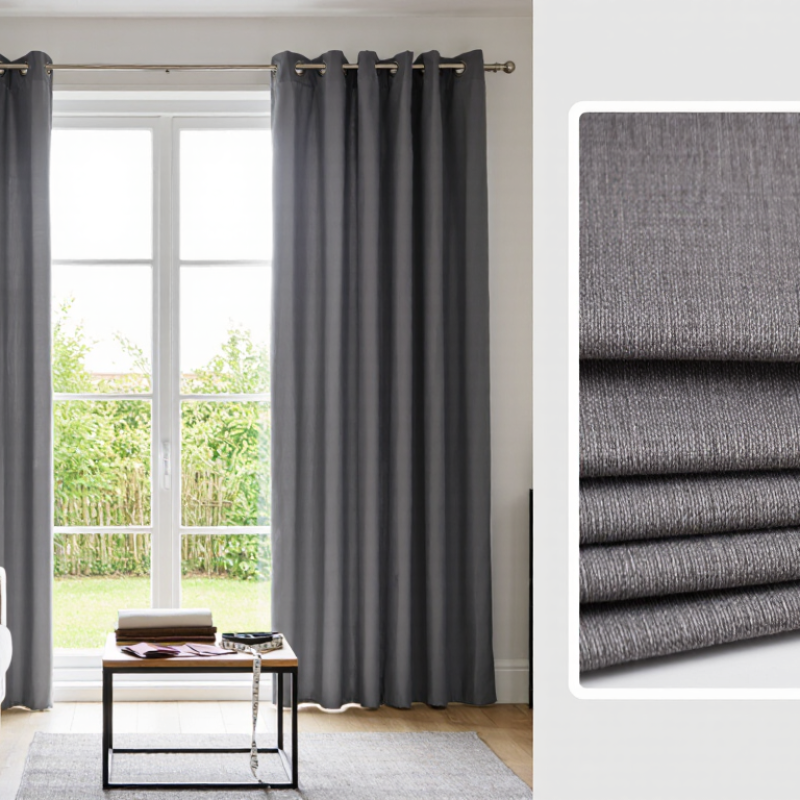
When sourcing blackout curtains from China, compare fabric structure before judging appearance. Polyester is common, affordable, and resistant to shrinking. Woven jacquard feels heavier, but its pattern may allow small light leaks. Three-pass coated fabric blocks light strongly through layered foam or acrylic backing. However, coating quality can decline after repeated washing. Ask for fabric weight, coating thickness, and wash-test results.
Light blocking depends on more than the fabric. A full blackout panel can still fail when sunlight enters through side gaps, the top, or the floor. Request samples in a dark room, then inspect them against a bright window. The U.S. Department of Energy reports that conventional draperies may reduce window heat loss by up to 10%. It also notes that medium-colored draperies with white backing can reduce solar heat gain by about 33%. Thermal performance improves with a close fit, dense fabric, and an air gap. Dark fabric is not automatically warmer.
Tips: Ask suppliers for independent laboratory reports, not only factory claims. Check color fastness, formaldehyde limits, odor, seam strength, and washing shrinkage. Measure room temperature near the glass before and after installation. Results vary. My practical concern is often overlooked: a thick curtain may block light well but trap moisture near a cold window. Request installation guidance, packaging details, and a pre-shipment sample approval.
| Fabric Type | Typical Construction | Typical Weight | Light Blocking | Thermal Performance | Moisture & Care | Main Advantages | Important Checks When Sourcing |
|---|---|---|---|---|---|---|---|
| Triple-Weave Polyester | Three-layer woven structure with a dense middle layer; normally uncoated. | 280–360 g/m² | 90–98% Higher with a dense face and dark middle yarn. |
Good Usually reduces heat transfer by about 15–25% when fully covering the window. |
Low moisture absorption; generally machine washable at a gentle temperature. | Soft drape, no peeling coating, good durability, and practical for large-volume production. | Request a light-box test, check fabric weight, inspect seam slippage, and confirm shrinkage after washing. |
| Coated Polyester | Polyester face fabric with an acrylic, polyurethane, or similar opaque coating on the reverse. | 240–380 g/m² | 95–100% Can provide near-total darkness when the edges are sealed by the window treatment. |
Very good Typically reduces solar heat gain by about 20–35%, depending on color and lining. |
Low water absorption; coating may require gentle washing and careful ironing. | Strong light blocking, smooth appearance, and efficient performance at moderate fabric weight. | Check coating odor, cracking, flaking, yellowing, wash durability, and compliance with applicable chemical standards. |
| Foam-Backed Polyester | Polyester face fabric bonded to a foam backing, commonly acrylic or polyurethane foam. | 350–550 g/m² | 95–100% Usually excellent, especially with a dark or opaque backing. |
Excellent Can reduce heat transfer by approximately 25–40% with full window coverage. |
Limited tolerance for high heat; folding and washing must follow the backing supplier’s instructions. | High opacity, stronger insulation, fuller drape, and some additional sound absorption. | Test bonding strength, odor, foam uniformity, edge curling, peeling after washing, and packaging compression damage. |
| Polyester–Cotton Blend | Woven blend combining polyester durability with cotton’s natural hand feel. | 260–380 g/m² | 85–95% Usually requires a lining or dense construction for stronger blackout performance. |
Good Typically reduces heat transfer by about 15–25%; lining can improve results. |
Cotton can absorb moisture and may shrink; pre-washing or dimensional testing is important. | Natural appearance, comfortable touch, and good breathability compared with fully coated fabrics. | Confirm fiber ratio, colorfastness, shrinkage, pilling resistance, and whether a separate blackout lining is included. |
| Polyester Jacquard | Patterned woven construction with textured or raised motifs; may include a blackout middle layer. | 300–450 g/m² | 85–98% Varies considerably with yarn density, color, and backing construction. |
Good Usually provides about 15–30% heat-transfer reduction when densely woven or lined. |
Generally easy to maintain; textured surfaces may require lower mechanical agitation. | Decorative appearance, dimensional texture, and strong suitability for premium interior projects. | Check pattern repeat, reverse-side opacity, snag resistance, color consistency, and fabric width tolerance. |
| Linen-Look Polyester | Polyester yarns engineered to imitate the irregular texture and visual character of linen. | 220–340 g/m² | 75–92% Usually needs a blackout lining to achieve near-total darkness. |
Moderate to good Typically reduces heat transfer by about 10–25%, depending on lining and color. |
Low moisture absorption and relatively stable dimensions; normally easier to care for than real linen. | Natural visual effect, lower wrinkling, and often a lighter, softer drape. | Ask for the actual blackout percentage, inspect slubs and loose yarns, and verify whether the lining is included in the quotation. |
| Two-Layer Curtain with Blackout Lining | Decorative face fabric combined with a separate opaque lining, often polyester-based. | 400–650 g/m² | 95–100% Excellent when the lining overlaps the window edges. |
Excellent Often reduces heat transfer by about 25–40% because of the additional air space and lining. |
Care requirements depend on both layers; separate washing may be necessary. | Best balance of decorative flexibility, privacy, darkness, and thermal control. | Check lining attachment, layer alignment, panel weight, hanging hardware capacity, and cleaning instructions. |
When evaluating Chinese blackout curtain manufacturers, inspect more than catalog photos. Request a factory audit, production address, export history, and recent quality records. A reliable supplier should explain fabric construction clearly. Ask whether the curtain uses a woven blackout layer or a coated backing. Coated fabrics may block light well, but they can crack after repeated washing.
Use measurable tests. The U.S. Department of Energy reports that windows can represent 25–30% of residential heating and cooling energy use. Good curtains may reduce heat transfer, but sellers should not promise dramatic energy savings without test evidence. Request fabric weight, light-blocking results, colorfastness data, and shrinkage measurements. ISO 105 standards can support colorfastness testing, while ASTM D3776 helps verify fabric weight. Check whether the report matches the exact production material, not an older sample.
Small details reveal manufacturing discipline. Examine the top hem, grommet spacing, lining edges, and sewing tension. Pull the curtain gently. Loose threads matter. Order samples from different production batches when possible. I once found a curtain that looked fully opaque in a showroom, yet leaked light around the side seams at home. That mistake changed my inspection checklist. Ask for wash-test photos, carton drop-test records, and pre-shipment inspection results. Supplier claims are useful, but independent verification is stronger. Sometimes, the cheapest quotation hides thinner fabric, weaker hardware, or inconsistent dye lots.
How to Find the Best Blackout Curtains from China?
A reliable supplier should provide certification documents before discussing large orders. Ask for reports covering light-blocking performance, fabric composition, colorfastness, and restricted substances. Check the laboratory name, report date, tested material, and supplier details. A certificate image alone proves little. Confirm whether the report matches the exact curtain fabric, lining, and accessories you will receive.
Request fabric swatches and one finished sample before approving production. Test the sample in a real bedroom during daylight. Check the edges, stitching, grommets, hem weight, and blackout coverage around the window. Measure the finished width and length yourself. Small differences matter. I once treated a digital color image as accurate, but the actual fabric looked warmer under indoor lighting. That was avoidable.
Pricing should show more than a unit figure. Request a clear breakdown for fabric, sewing, packaging, sampling, shipping, and any customization. Compare quotations with identical sizes and specifications. Ask whether the price changes by color, lining, or order volume. Confirm the minimum order quantity for each size and color, not only the total order. A lower MOQ may carry a higher unit cost. That can still make sense for a trial shipment. Put approved specifications, tolerances, inspection methods, and payment terms in writing. Leave room for questions. You may discover that your first specification was incomplete.
A practical 100-point evaluation framework for verifying certifications, samples, pricing, and minimum orders before placing a purchase.
Prioritize sample performance and documentation. Check blackout test results, fabric composition, colorfastness, dimensional stability, and applicable requirements such as REACH or OEKO-TEX® STANDARD 100. Compare quotations only after confirming specifications, packaging, lead time, and MOQ.
Finding the best blackout curtains from China requires more than comparing catalog prices. Define fabric weight, light-blocking performance, lining, dimensions, stitching, and packaging before requesting quotations. Ask suppliers for production photos, test reports, and recent export experience. A sample should hang beside a sunny window. Check edge leakage, smell, drape, and color under daylight. Small details matter.
Shipping problems often begin before the goods leave the factory. Confirm carton dimensions, gross weight, shipping terms, loading dates, and required documents in writing. Compare sea, rail, and air options against your delivery deadline, not only the freight quote. Arrange a pre-shipment inspection when most units are packed. Inspect measurements, fabric shade, hooks, seams, labels, and carton strength. Photograph defects and record quantities. My first inspection found uneven hems that samples had not shown. The production schedule had already become tight. That experience taught me to inspect earlier.
Long-term supplier management needs regular communication and measurable records. Track defect rates, delivery accuracy, response time, packaging damage, and customer feedback. Share clear corrective actions after each shipment. Keep approved samples and specifications for future comparison. Review pricing carefully when fabric or freight costs change. Do not depend on friendly messages alone. Written agreements protect both sides. Suppliers can improve, but only when expectations are specific and repeated. Even a reliable factory may miss a detail during busy seasons. Review performance every quarter and keep a backup source qualified.
We now offer custom-made commercial vehicle tarps, along with the ability to design your own curtains, noise panels, and strip doors—tailored to your exact needs!
At Singer Safety, we specialize in manufacturing high-performance tarps engineered to safely secure and protect your vehicle loads during transport.