Choosing the right welding curtains is more than comparing colors, sizes, or prices. These barriers help control welding light, sparks, heat, and workspace visibility in busy fabrication areas. For global buyers, the decision also involves material quality, flame resistance, mounting design, maintenance needs, and supplier reliability.
This guide reviews ten welding curtains selected for practical industrial use. Each option is examined through details that matter on the shop floor, including panel thickness, grommet strength, frame compatibility, portability, and cleaning requirements. A curtain hanging beside a steel workbench must remain stable when air moves through the workshop. Its viewing window should provide useful protection without making nearby tasks difficult. Clear product information and traceable manufacturing experience also deserve attention.
No single curtain suits every facility. A small repair bay may need a lightweight folding screen, while a production line may require wider, reinforced panels. Some product claims sound convincing but need closer verification. Published test data may not reflect daily wear, and installation quality can change performance. That is worth remembering. Buyers should confirm technical specifications, sample quality, shipping details, and after-sales support before placing large orders. The following top ten welding curtains offer a practical starting point, not an automatic answer. Compare them against your work environment, equipment layout, worker movement, and purchasing standards. Small details often decide whether a curtain remains useful after months of sparks, dust, and repeated handling. Safety comes before appearance.
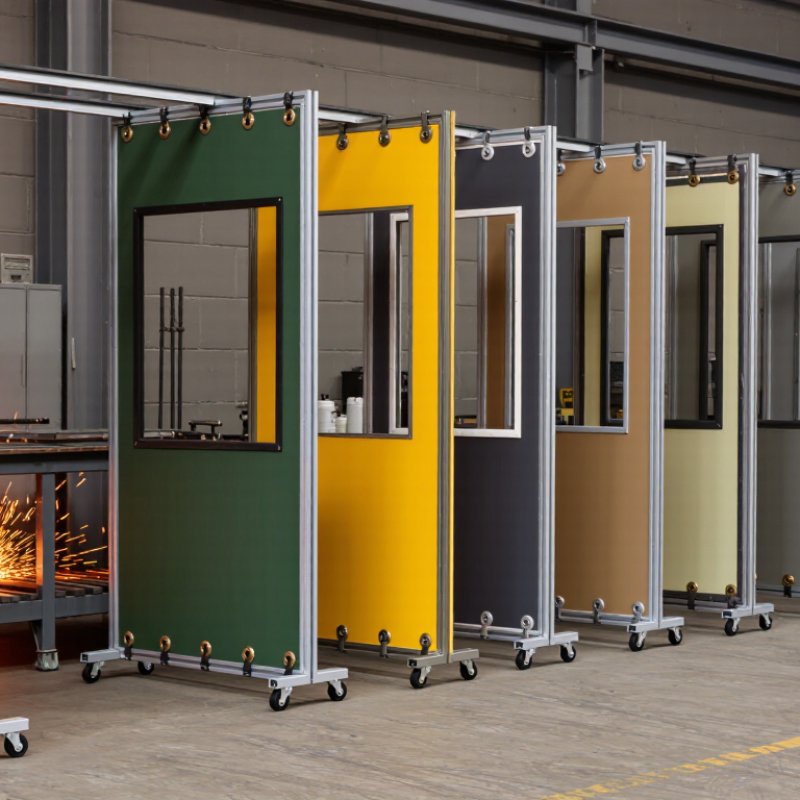
Welding curtains are protective barriers used to control arc light, sparks, and limited heat exposure. Their most important task is filtering ultraviolet and visible radiation around the welding zone. UV radiation can injure unprotected eyes and skin, even when the arc looks partially hidden. Infrared filtering also matters, but not every curtain blocks IR equally. Buyers should request verified test data rather than trust color alone. A darker curtain is not automatically safer.
Shade levels describe how much light passes through the material. They should not be confused with the optical shade of a welding helmet or filter lens. Transparent and tinted curtains can improve visibility while reducing arc glare for nearby workers. However, workers still need suitable personal eye protection. Keep this distinction clear.
Fire rating deserves equal attention. Look for documented flame resistance, test methods, and laundering or aging conditions. A curtain may resist ignition during testing but perform differently after collecting oil, dust, or metal particles. Inspect hems, seams, eyelets, and floor clearance regularly. Small gaps can expose people to reflected arc light. Mounting the curtain close to the work area usually improves control, but ventilation must remain adequate. This balance is easy to overlook. It is also where many installations need a second review. Temperature range, fabric weight, curtain size, and local certification requirements should guide the final selection.
For global buyers, welding curtains should be judged by safety evidence, not color or price. ISO 25980 focuses on curtains, screens, and strips used around welding areas. It addresses protection from harmful optical radiation and helps define suitable material performance. A curtain should reduce ultraviolet and intense visible light reaching nearby workers. It should also fit the work zone without leaving exposed gaps.
Flame resistance requires a separate review. ASTM D6413 evaluates textile flammability through a vertical flame test. It can show whether fabric ignites, burns, or continues glowing after exposure. NFPA 701 examines flame propagation in certain textile and film applications. These tests are not interchangeable. A product passing one test does not automatically satisfy another. Ask for the exact test method, fabric construction, test date, and laboratory report.
EN 13501-1 classifies reaction to fire for construction products, including some curtain materials when the application fits its scope. Buyers should check the declared classification and mounting conditions. In practical inspections, I look at seams, hems, eyelets, and floor clearance. Small openings can expose operators to radiation. A frequent mistake is trusting a certificate without checking the tested thickness or coating. I have seen materials perform differently after repeated folding and welding-spatter contact. That deserves honest re-evaluation. Procurement teams should match the standard to the workplace, local requirements, and installation method.
The chart maps four recognized fire and welding-screen benchmarks to common procurement profiles. A value of 1 means the standard is directly relevant to the buyer requirement; it does not represent product certification or test performance.
ISO 25980 addresses transparent welding curtains and screens; ASTM D6413 evaluates vertical flame resistance of textiles; NFPA 701 covers fire propagation testing for textiles and films; EN 13501-1 defines reaction-to-fire classification for construction products and building elements.
For global buyers, welding curtains should be compared beyond price. PVC thickness affects durability, heat resistance, and handling. Thinner panels are lighter and easier to move, but they may crease or wear faster near busy workstations. Thicker PVC usually offers better stability. It can also increase shipping weight.
Panel size changes installation efficiency. A wide panel reduces gaps between welding areas, while smaller panels suit compact bays and temporary layouts. Measure the frame before ordering. A few extra centimeters can prevent exposed edges and unwanted light leaks. Weight matters during daily repositioning. Heavy curtains stay steadier, but workers may avoid moving them often.
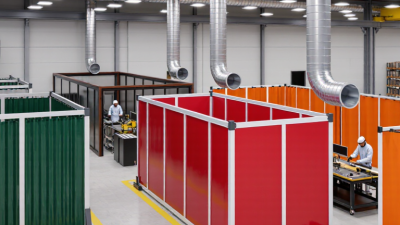
Opacity needs careful attention. Dark, opaque PVC helps shield nearby workers from welding arc flash and bright glare, while allowing limited visibility around the workspace. Transparent sections improve supervision, but they should not replace proper eye protection or site controls. Color, surface condition, and lighting can affect perceived opacity. No curtain is perfect.
Tips: Request thickness, panel dimensions, and weight per panel from the supplier. Check seams, eyelets, hems, and hanging hardware before purchase. Confirm fire-performance documentation and local workplace requirements. I once focused too much on thickness and overlooked panel weight; installation became unnecessarily slow. Compare the full setup, not one specification.
For global buyers, curtain selection should begin with arc type and amperage, not color. OSHA 29 CFR 1910.133 Table I-3 assigns minimum filter shades from 7 to 12 for many GMAW operations, depending on current. Plasma cutting can require shade 12 at 400–800 amps. These figures apply to operator lenses, not curtains. A curtain should limit ultraviolet and infrared radiation, contain sparks, and preserve visibility around the welding bay. Select products tested to ISO 25980:2014 or equivalent local requirements. Verify flame-resistance documentation before purchase.
MIG usually needs a dense, low-transmission curtain around active work cells. TIG arcs appear smaller, yet prolonged exposure still requires disciplined screening. Stick welding produces more spatter, so heavier, overlapping panels often perform better. Plasma generates intense light and hot particles; use heat-resistant barriers and greater separation.
Arc intensity changes with amperage, duty cycle, electrode type, and viewing angle. Shade is not everything. A pale curtain may reduce glare but fail at seams or damaged edges. In site inspections, gaps beneath panels are often overlooked. Keep the gap closed. I would also reassess color choices: vivid colors improve bay visibility, but they may distract workers near moving equipment. Test under actual lighting, not only catalogue photographs. OSHA welding guidance, ANSI Z49.1, and ISO 25980 offer a stronger purchasing basis than price alone.
Top 10 Welding Curtains for Global Buyers
Global buyers should compare welding curtains through documented performance, not attractive catalog photos. In practical workshops, certification is often the first filter. Request current test reports for flame resistance, UV filtering, and material safety. ISO 25980 may apply to welding curtains, while regional requirements can differ. A certificate without a matching product model creates risk. Check the report number, testing laboratory, and validity date.
Temperature range also deserves careful attention. Ask whether the stated range covers storage, installation, and daily operation. Many curtains perform differently near hot welding areas or cold loading docks. Confirm the material’s working range in writing. MOQ affects smaller projects, especially when buyers need several colors or custom sizes. Lead time should include production, inspection, packing, and shipping. A quoted “15 days” may exclude port delays and document preparation.
Tips: Request one sample, one test report, and one packing photo before placing a large order. Compare actual panel thickness, eyelet spacing, and flame-retardant labeling. I once underestimated replacement panels and focused too heavily on the initial price. That was a poor comparison. A reliable supplier should explain limitations clearly, including color fading, cleaning methods, and expected service life. Global purchasing becomes safer when every claim connects to a measurable document.
| Rank | Welding Curtain Type | Typical Material and Construction | Common Color / Visibility | Applicable Certification or Test Documentation | Typical Operating Temperature Range | Typical Standard Size | Typical Export MOQ | Typical Lead Time | Best-Fit Application |
|---|---|---|---|---|---|---|---|---|---|
| 1 | Transparent PVC Welding Curtain | Flexible PVC film, commonly 0.4–1.0 mm thick, supplied as panels or strips with reinforced edges. | Bronze, green, or amber tinted; permits visibility while reducing arc glare. | EN ISO 25980 test report where applicable; supplier declaration for flame-retardant PVC; material safety data sheet. | Approximately −15°C to +60°C | 1.8 × 1.8 m panel; custom widths and heights available. | 10–50 panels | 10–20 working days | Welding bays that require operator visibility and separation from nearby work areas. |
| 2 | Opaque PVC Welding Screen | Heavy-duty opaque PVC sheet with welded hems, eyelets, or mounting sleeves. | Dark green, orange, or red; blocks direct arc visibility. | EN ISO 25980 documentation where applicable; flame-retardancy test report; technical data sheet. | Approximately −15°C to +60°C | 1.8 × 2.0 m or 2.0 × 2.0 m panel. | 10–30 panels | 10–25 working days | Permanent or semi-permanent welding cells requiring strong visual isolation. |
| 3 | PVC Strip Welding Curtain | Overlapping PVC strips mounted on a galvanized or stainless-steel track system. | Tinted or opaque strips; easy walk-through access. | EN ISO 25980 documentation for welding-screen performance where applicable; flame-retardant test report. | Approximately −15°C to +60°C | Strips commonly 200–400 mm wide; lengths up to 4 m are widely available. | 20–100 strips or 1 complete set | 15–30 working days | High-traffic openings, production lines, and warehouse welding zones. |
| 4 | Silicone-Coated Fiberglass Welding Curtain | Textured fiberglass fabric coated with silicone for improved abrasion, oil, and spark resistance. | Usually red, gray, or black; generally opaque. | Flame-resistance test report such as ASTM D6413 or equivalent, depending on the market; EN ISO 25980 evaluation where applicable. | Approximately −50°C to +260°C continuous service | 1.8 × 1.8 m or 2.0 × 2.0 m panel. | 5–20 panels | 15–30 working days | Welding areas exposed to frequent sparks, moderate heat, and abrasion. |
| 5 | Fiberglass Welding Blanket Curtain | Woven fiberglass fabric with bound edges, grommets, or hook-and-loop joining sections. | Natural tan, gray, or black; opaque. | Flame-resistance and dimensional-stability test report; EN ISO 25980 assessment where used as a welding screen. | Approximately −20°C to +550°C, depending on fabric weight and exposure duration | 1.8 × 2.0 m or 2.0 × 2.5 m panel. | 5–20 panels | 15–35 working days | Heavy-duty spark containment and temporary hot-work partitions. |
| 6 | Silica-Fabric Heat-Resistant Curtain | High-silica woven fabric, normally used with reinforced hems and metal eyelets. | Usually gold, beige, or white; opaque. | High-temperature fabric test report; flame-resistance documentation; EN ISO 25980 evaluation where applicable. | Approximately −50°C to +1,000°C for short-duration exposure; lower for continuous use | 1.0 × 2.0 m or 1.8 × 2.0 m panel. | 3–10 panels | 20–40 working days | High-energy welding, cutting, and localized molten-metal splash protection. |
| 7 | PTFE-Coated Fiberglass Curtain | Fiberglass cloth with a low-friction PTFE coating and reinforced perimeter stitching. | Brown, black, or gray; opaque. | Coating technical data sheet; flame-resistance test report; EN ISO 25980 assessment where applicable. | Approximately −70°C to +260°C continuous service | 1.0 × 2.0 m or 1.5 × 2.0 m panel. | 5–15 panels | 20–35 working days | Applications requiring heat resistance, chemical resistance, and easy material release. |
| 8 | PVC-Coated Polyester Welding Curtain | Polyester scrim coated on both sides with flexible PVC for strength and cleanability. | Green, orange, gray, or red; opaque. | Flame-retardant PVC test report; EN ISO 25980 documentation where applicable; product safety data sheet. | Approximately −20°C to +70°C | 1.8 × 2.0 m panel or made-to-measure roll goods. | 10–50 panels | 15–30 working days | Cost-sensitive industrial partitions requiring tear resistance and easy cleaning. |
| 9 | Retractable Welding Screen Curtain | Retractable curtain fabric installed on a spring roller, cassette, or ceiling-mounted rail. | Opaque or tinted welding fabric; retracts when the work area is not in use. | EN ISO 25980 evaluation where applicable; flame-retardancy report; mechanical installation and load documentation. | Approximately −10°C to +60°C for PVC versions; fabric version depends on construction | Width commonly 1.0–2.5 m; drop commonly 1.5–3.0 m. | 1–5 complete units | 25–45 working days | Workshops with limited floor space or frequently changing welding layouts. |
| 10 | Mobile Welding Screen with Curtain Panels | Steel tube or angle-frame structure fitted with hinged, sliding, or removable PVC or textile panels. | Opaque or tinted panels; optional viewing sections. | EN ISO 25980 assessment for the screen material where applicable; flame-retardancy report; frame stability documentation. | Approximately −15°C to +60°C for PVC panels; higher for fiberglass fabric panels | 1.8 × 1.8 m or 2.0 × 2.0 m per folding section. | 1–10 units | 20–40 working days | Multi-purpose workshops requiring portable welding protection between workstations. |
We now offer custom-made commercial vehicle tarps, along with the ability to design your own curtains, noise panels, and strip doors—tailored to your exact needs!
At Singer Safety, we specialize in manufacturing high-performance tarps engineered to safely secure and protect your vehicle loads during transport.