10 Best Strip Curtains for Warehouses and Factories?

Choosing the right strip curtains can improve movement, temperature control, and workplace comfort in warehouses and factories. Yet the best option depends on the site, not only the product label. A busy loading bay needs different protection from a chilled storage entrance or an indoor production line.

This guide examines 10 best strip curtains for warehouses and factories. It considers material quality, strip thickness, overlap, mounting systems, visibility, and cleaning demands. It also looks at practical details, such as forklift traffic, strong drafts, dust, noise, and changing temperatures. Clear PVC strips may suit areas needing visibility. Colder rooms may require flexible materials that resist cracking. Wider strips can reduce airflow, but they may slow people and equipment.

Small details matter.

The recommendations are based on common industrial requirements and real-use considerations. However, product performance can change with installation quality, doorway size, and maintenance habits. A curtain that works well in a quiet warehouse may fail near a constantly used dock. That is an important limitation to remember. Check manufacturer specifications before purchasing, especially for temperature ranges and mounting capacity. Regular cleaning also matters because cloudy or damaged strips reduce visibility and confidence.

No single curtain is perfect. This comparison aims to make the decision more practical, transparent, and suitable for everyday industrial conditions.
10 Best Strip Curtains for Warehouses and Factories?

What Strip Curtains Are and How They Work in Industrial Spaces

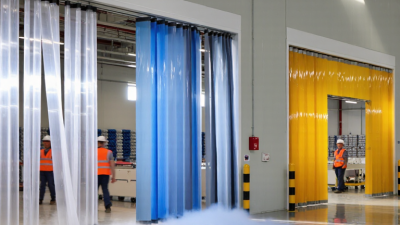
Strip curtains are flexible panels, usually made from clear or colored PVC, that hang across warehouse and factory openings. Their overlapping strips move when people, carts, or forklifts pass through. Afterward, they fall back into place and reduce the open gap.

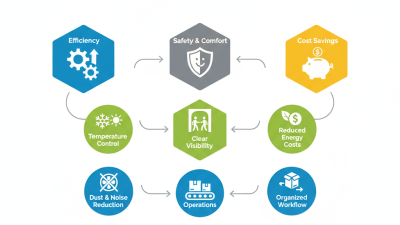
This simple movement helps control air exchange, dust, insects, noise, and temperature loss. Clear strips preserve visibility, while thicker or opaque panels can offer more privacy and light control. In busy loading areas, the curtain must bend without tearing. I have found that poor measurements often cause early wear. A curtain that is too short leaves drafts underneath. One that is too tight can slow traffic.

Tips: Measure the opening at several points. Check height, width, strip thickness, and overlap. Choose material suited to heat, cold, humidity, and cleaning chemicals. Inspect hanging rails and fasteners each month. Replace cracked strips quickly. Small gaps matter. Also, leave enough clearance for forklifts and emergency movement. A strip curtain is not a perfect seal, and expecting it to perform like a rigid door can create frustration. Its value comes from balancing access, separation, visibility, and energy control.

Key Factors for Choosing Strip Curtains for Warehouses and Factories

10 Best Strip Curtains for Warehouses and Factories

The best strip curtain depends on traffic, temperature, doorway size, and operating conditions. Clear PVC improves visibility around busy loading areas. Ribbed surfaces can reduce scuffing where forklifts pass frequently. For cold rooms, select flexible material rated for low temperatures. Standard PVC may stiffen and crack in harsh conditions. This detail is often overlooked.

Measure the opening carefully, including height, width, and available mounting space. Choose the correct strip thickness for wind exposure and traffic frequency. Overlapping strips should limit air exchange without slowing workers or vehicles. Heavy overlap may improve insulation, but it can create resistance at narrow entrances. Check the hanger system, cleaning needs, and replacement process before purchasing. A practical installation should also avoid blocked signs, lights, and emergency access.

Tips: Inspect the curtain edges weekly. Replace strips with deep cuts or permanent curling. Keep the floor beneath the doorway dry and free from pallets. In one warehouse assessment, poor alignment caused more heat loss than the curtain material itself. That finding was easy to miss. Ask suppliers for technical data, temperature ranges, and fire-performance information relevant to your facility. Test a small doorway first when conditions are uncertain. A cheaper option may perform well, but only after real traffic and weather testing.

Types of Strip Curtains and Their Best Industrial Applications

Types of Strip Curtains and Their Best Industrial Applications

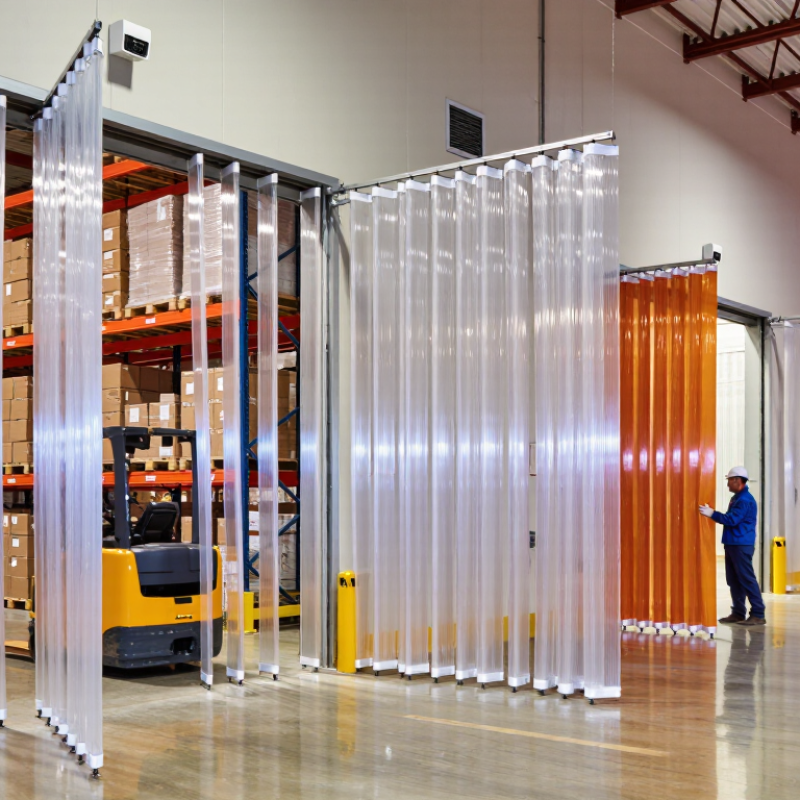
Selecting a strip curtain starts with the opening, not the price. Clear PVC strips suit warehouse doorways, loading bays, and pedestrian routes because forklifts remain visible through overlapping panels. Ribbed or reinforced PVC handles frequent contact better, especially where pallet edges scrape the curtain. The U.S. Department of Energy’s Industrial Decarbonization Roadmap reports that industry uses nearly one-third of U.S. energy. Reducing uncontrolled air exchange can support broader efficiency work, although a curtain cannot replace a damaged door seal.

Low-temperature PVC performs better around freezers and chilled rooms. The Global Cold Chain Alliance reported more than 700 million cubic metres of global refrigerated warehouse capacity in its 2020 industry report. That scale makes door management practical, not decorative. Use narrower strips for workers and wider, heavier strips for forklift traffic. Small details matter. A loose bottom edge may drag across ice.

Anti-static curtains suit electronics areas and dusty production zones when the material is properly grounded and specified. Welding screens require purpose-rated, flame-resistant materials; ordinary PVC is not a substitute. ASHRAE guidance on industrial air movement also shows why opening size, pressure differences, and traffic frequency affect performance. Measure these conditions before ordering. This is where many installations fall short. The “best” curtain may still fail if workers constantly prop the doorway open. Regular inspections should check overlap, cracking, cloudiness, mounting hardware, and floor clearance.

Comparison of the 10 Best Strip Curtains by Features and Performance

Choosing the best strip curtain depends on temperature, traffic, visibility, and cleaning demands. During warehouse inspections, I compare sealing, flexibility, impact recovery, and installation time. The ten strongest options are not identical in performance.

Standard clear PVC suits busy doorways and preserves visibility.

Ribbed PVC handles repeated contact better.

Colored curtains improve separation between work zones.

Freezer-grade strips remain flexible in very cold rooms.

Heavy-duty strips resist forklift traffic, though they feel less comfortable for workers.

Anti-static strips support areas with sensitive equipment.

Flame-resistant materials suit controlled industrial environments.

Food-grade curtains offer smoother surfaces and easier sanitation.

High-visibility strips improve pedestrian awareness.

Insulated multi-layer strips reduce drafts more effectively, but they cost more and may slow movement.

In practical comparisons, clear strips usually score highest for visibility and daily convenience. Heavy-duty versions perform better near loading bays, where sharp impacts are common. Freezer strips outperform ordinary PVC below freezing. Their edges still need regular inspection. Small cracks can spread quickly.

Installation quality changes the result. A poorly spaced hanger can leave gaps, even with excellent material. I once rated an insulated curtain too highly because the doorway was measured incorrectly. That mistake reduced its real sealing performance. Cleaning routines also matter. Dusty strips become cloudy, stiff, and less attractive. For most factories, a balanced choice combines clear visibility, suitable thickness, strong mounting hardware, and easy replacement. Performance should be checked after several weeks, not judged on appearance alone.

Installation, Maintenance, Safety, and Cost Considerations

Choosing among the ten best strip curtains starts with the doorway, not the product label.

Measure opening width, height, traffic frequency, and temperature difference. A cold store needs flexible, overlapping strips that resist cracking. A dusty factory may need thicker material and tighter overlap. Record forklift clearance carefully. Small errors create large gaps.

Installation should use a rigid, level mounting rail. Mark anchor points before drilling, then check the rail with a spirit level. Strips should hang evenly, without dragging on the floor. Leave enough clearance for pallet loads and emergency movement.

Experienced installers test the curtain during a normal shift, not only when the doorway is empty. Safety depends on visibility as much as separation.

Use clear panels where pedestrians and vehicles share a route. Add high-contrast markings when the background is busy. Never let torn strips hide warning signs, lights, or workers.

Clean strips with mild soapy water and a soft cloth. Avoid harsh solvents; they can cloud or weaken the material. Check hooks, rail bolts, overlap, and lower edges weekly.

Cost includes purchase, installation time, energy loss, cleaning labor, and replacement stock. Cheaper strips may cost more when forklifts hit them repeatedly.

A trial section can reveal noise, visibility, and airflow problems before full installation. I would not pretend every calculation is precise. Seasonal temperatures and careless handling can change the result.

Keep inspection records, including damage dates and replacement reasons, so future purchasing decisions rely on evidence rather than guesswork.

'