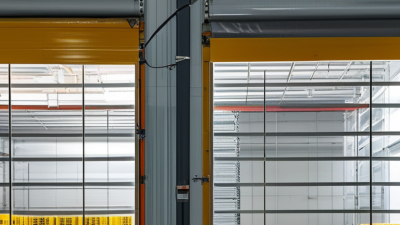
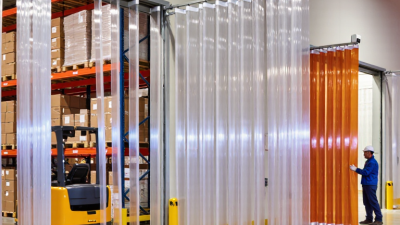
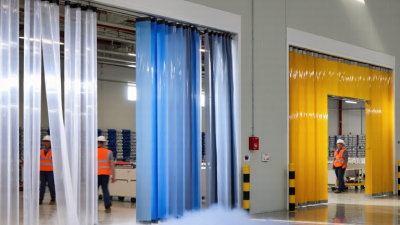
Commercial and industrial doorways face constant pressure. Employees move through them. Forklifts pass between storage zones. Cold air, dust, insects, noise, and humidity can enter with every opening. Strip curtains offer a simple barrier while keeping daily traffic moving.
Facilities consultant Laura Bennett explains the purpose clearly: “A good doorway controls the environment without becoming an obstacle.” Her observation reflects what many warehouses experience. Flexible PVC strips overlap across an entrance. They part when a person, cart, or vehicle passes. Then they fall back into place. The result is not a sealed room. It is a practical reduction in unwanted air exchange and exposure.
The benefits depend on careful selection. Clear strips improve visibility near busy aisles. Ribbed or reinforced materials may suit frequent forklift traffic. Colder rooms often require heavier grades and tighter overlaps. Food-processing areas need surfaces that support disciplined cleaning. Installation height also matters. Poorly aligned strips can drag, curl, or leave uncomfortable gaps.
There is no universal solution. Strip curtains cannot replace a fire-rated door, proper ventilation, or a documented hygiene program. They may also reduce visibility when selected poorly. That part is easy to overlook. A site assessment should consider temperature differences, traffic speed, doorway width, cleaning routines, and worker feedback.
In practice, the best system feels almost unnoticed. Air movement becomes gentler. Noise softens slightly. The doorway still works. Sometimes, that modest improvement is the real measure of value.
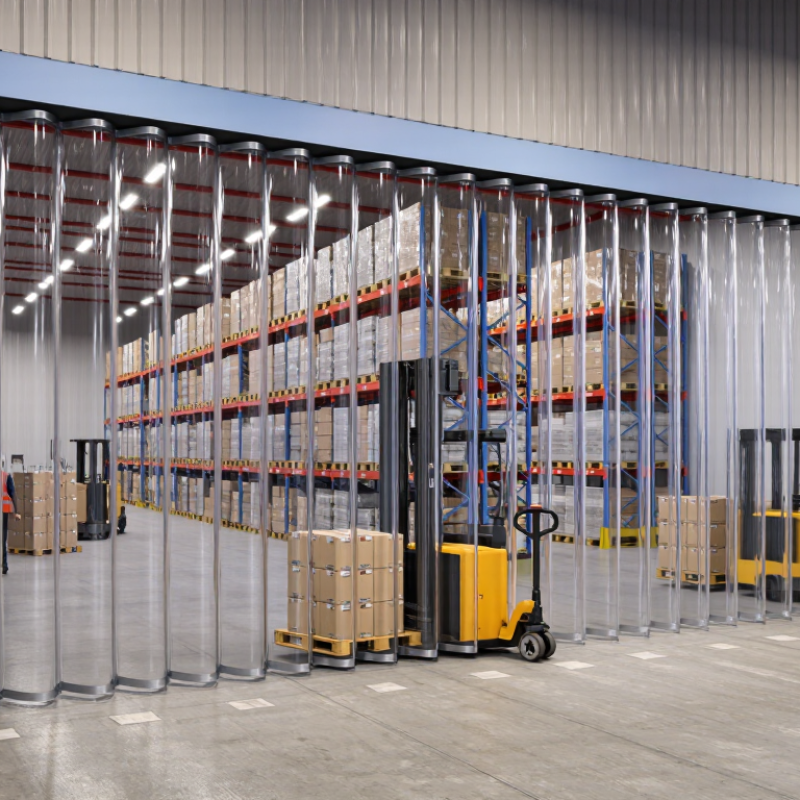
Strip curtains are flexible strips, usually made from clear PVC or similar durable material. They hang from a rail above a commercial or industrial doorway. People, carts, and forklifts can pass through without opening a solid door.
The strips overlap slightly, creating a movable barrier. Their weight helps them fall back into place after traffic passes. They reduce drafts, dust, insects, noise, and temperature exchange between work areas. Clear material also preserves visibility, which matters near busy loading bays.
In a cold warehouse, workers may notice fewer icy drafts around the entrance. In a food preparation area, the curtain can help separate clean and active zones. Results vary, though. Strong wind, poor overlap, or damaged strips can reduce performance.
Tips: Measure the doorway carefully before installation.
Choose strip thickness based on traffic, temperature, and impact risk.
Keep the bottom edge close to the floor, but allow safe movement.
Clean clear strips regularly, because grease and dust can quickly reduce visibility.
Inspect the rail and fasteners each month.
Replace cracked or heavily scratched strips.
A curtain may not solve every airflow problem, especially where pressure differences are severe.
Getting professional advice can prevent an expensive, imperfect fit.
Why Use Strip Curtains for Commercial and Industrial Doors?
Key Benefits for Commercial and Industrial Doorways
Commercial and industrial doorways often lose conditioned air during busy hours. Strip curtains create a flexible barrier while allowing people, carts, and forklifts to pass. Clear PVC strips can preserve visibility between work areas. This helps operators notice approaching traffic before entering a doorway.
The benefits are practical. Strip curtains can reduce dust movement, drafts, insects, and noise between zones. In refrigerated rooms, they may help limit warm-air exchange when doors remain open. In loading areas, overlapping strips can soften wind pressure and improve worker comfort. They also support cleaner production spaces by separating receiving, storage, and processing areas.
Small details affect performance. Strip thickness, overlap, mounting height, and material should match the doorway’s traffic and temperature. A narrow opening may need tighter overlap. A forklift route may need stronger, easier-swinging strips. Poor measurements cause gaps. Rushed installation creates problems.
They are not a complete solution. Strong winds, heavy contamination, or frequent impacts can reduce their effectiveness. Regular checks should look for torn strips, loose hardware, and cloudy surfaces. Dirty curtains can reduce visibility and make a workplace feel neglected. Cleaning methods must suit the strip material, since harsh chemicals may cause cracking. A facility manager should review traffic patterns after installation and adjust the design when daily operations change.
Strip curtains create a flexible barrier while allowing personnel, vehicles, and equipment to pass through. They can help limit air movement, dust, insects, noise, and temperature exchange without requiring a solid door to remain closed. Actual results depend on curtain material, overlap, doorway size, traffic frequency, wind pressure, and installation quality.
Strip curtains help commercial and industrial doors control temperature without stopping daily traffic. Their overlapping PVC strips close the opening quickly after forklifts, carts, or workers pass through. This reduces the exchange of warm and cold air between adjacent spaces. The effect is practical. A warehouse door can remain accessible while the loading area feels less drafty.
The U.S. Energy Information Administration’s 2018 Commercial Buildings Energy Consumption Survey reported that space heating used about 32% of commercial site energy. Cooling accounted for roughly 11%. These figures show why uncontrolled air movement deserves attention. Strip curtains can support HVAC performance by limiting infiltration around frequently used doors. They also help separate freezer rooms, production zones, and dusty work areas. Better comfort often follows.
But they are not magic. Poor overlap, damaged strips, or excessive gaps can weaken air control. In my experience, curtains work best when installers match strip thickness, width, and temperature requirements to the doorway. A narrow entrance may need flexible strips, while a busy forklift route may require stronger material and wider clearance. Regular inspections matter. Even a small split can create a visible draft. The U.S. Department of Energy also recommends reducing uncontrolled air leakage as part of efficient building operation, though every facility should verify results through temperature readings and energy data.
Strip curtains can improve commercial and industrial doorways by reducing drafts, dust, noise, and temperature loss. Their effectiveness depends heavily on material and design, not appearance alone. In warehouse installations, I have found that flexible PVC works well for general traffic areas because it is durable, transparent, and easy to replace. Softer grades suit people and carts, while thicker strips handle frequent forklift movement better.
Temperature matters. Standard PVC may become stiff in cold rooms and too soft near heat sources. For chilled environments, choose a formulation designed for low temperatures. TPU can offer better flexibility and abrasion resistance, but its cost may be higher. Clear strips improve visibility, while tinted or opaque options provide privacy and light control. Overlapping panels should match traffic frequency and pressure conditions. Too much overlap slows movement. Too little overlap allows air and dust to pass.
Tips: Measure the opening carefully, including height, width, and mounting space. Check strip thickness, overlap, and replacement access before ordering. Ask for material data and cleaning guidance. Local fire and workplace requirements should also be reviewed. Do not assume one design fits every doorway. I once saw a curtain fail because the mounting rail was strong, but the strips were too narrow for heavy traffic. Small details matter.
| Material or Design | Typical Temperature Range | Visibility and Light Transmission | Main Performance Characteristics | Suitable Commercial or Industrial Uses | Recommended Design Considerations |
|---|---|---|---|---|---|
| Clear PVC Strip Curtains | Approximately -15°C to +50°C, depending on formulation and thickness | High transparency; supports visibility between work areas | Flexible, economical, easy to clean, and effective for reducing drafts, dust, insects, and noise | Warehouses, loading areas, workshops, retail backrooms, and pedestrian openings | Use overlapping strips and a robust mounting rail; select greater thickness for frequent forklift traffic |
| Low-Temperature PVC | Commonly about -35°C to +50°C, subject to product specification | Clear or tinted options are available; flexibility is retained better in cold conditions | Designed to resist stiffening and cracking in refrigerated or cold environments | Cold rooms, freezer entrances, chilled storage, and food distribution areas | Choose a strip width and overlap that limit air leakage while allowing carts and personnel to pass easily |
| TPU Strip Curtains | Often approximately -40°C to +80°C, depending on grade | Usually clear with good optical clarity | High elasticity, strong abrasion resistance, and good performance under repeated flexing | Busy industrial doorways, logistics facilities, food-processing areas, and high-cycle openings | Consider TPU where frequent traffic or impact would shorten the service life of standard PVC |
| Anti-Static PVC | Typically within the temperature range specified for the selected PVC formulation | Transparent or lightly tinted; visibility depends on the finish | Helps dissipate static charge when correctly grounded and installed as part of a suitable control system | Electronics handling, clean production areas, powder handling, and electrostatic-sensitive work zones | Verify electrical-resistance requirements, grounding arrangements, and applicable workplace standards before selection |
| Ribbed or Reinforced Strips | Depends on the base material; commonly similar to standard or low-temperature PVC | Reduced optical clarity compared with smooth clear strips | Improved resistance to scratching and mechanical wear in demanding traffic zones | Vehicle entrances, workshops, manufacturing plants, and high-impact access points | Use where durability is more important than maximum visibility; inspect ribs regularly for embedded debris |
| Welding-Grade Strips | Follow the manufacturer’s specified operating range | Tinted or opaque to reduce transmission of ultraviolet and visible welding radiation | Provides a flexible separation barrier; it is not a substitute for required personal protective equipment or a certified welding screen system | Welding bays, fabrication shops, repair areas, and controlled hot-work zones | Select the shade and installation arrangement according to the welding process and applicable safety requirements |
| Single-Sided Overlap | Not applicable; design configuration rather than material | Maintains a relatively open appearance and easy pedestrian access | Uses less material and creates lower resistance for people and light carts | Internal partitions, moderate-traffic corridors, and pedestrian doorways | A practical starting point is approximately 25% to 50% overlap, adjusted for wind and traffic conditions |
| Double-Sided Overlap | Not applicable; design configuration rather than material | Visibility remains possible with clear strips, although the layered surface is denser | Improves separation and reduces air movement, dust transfer, and temperature exchange | Refrigerated storage, exterior doorways, dusty work areas, and high-traffic industrial openings | Use when energy control and environmental separation are more important than minimum push-through force |
| Fixed or Sliding Track System | Not applicable; hardware configuration | Opening can be fully cleared when strips are moved aside | Fixed rails provide a simple barrier; sliding systems improve access for wide loads and equipment | Wide warehouse doors, maintenance access points, and areas with oversized loads | Check the wall structure, rail capacity, parking space, and clearance above the opening before installation |
Why Use Strip Curtains for Commercial and Industrial Doors?
Strip curtains can reduce drafts, dust, insects, and temperature loss around busy doorways. Their value depends on correct installation, not appearance alone. Measure the opening carefully, including height, width, traffic direction, and nearby equipment. Strips should overlap according to site conditions and hang close to the floor without dragging. Leave enough clearance for forklifts and pedestrians. A qualified installer should check the mounting rail, fasteners, and wall strength before daily use begins. Small mistakes matter.
Maintenance should be simple, but it is often neglected. Inspect the strips weekly for tears, cloudy surfaces, curled edges, or loose hangers. Clean them with mild soap and suitable water temperature. Harsh chemicals may weaken the material. Replace damaged strips promptly, especially near sharp corners or vehicle routes. I have seen curtains remain in service after their edges became difficult to see. That is a safety concern, not merely a cosmetic issue. Keep inspection records, even when nothing appears wrong.
Tips: Mark pedestrian and vehicle lanes clearly. Keep emergency exits unobstructed. Train workers to report damaged strips immediately. Adjust overlap after seasonal changes or process modifications. Do not assume a curtain is safe because it moves easily. Test visibility, clearance, and return movement during real operating hours. Ask workers what feels awkward; their feedback may reveal problems a checklist misses.
We now offer custom-made commercial vehicle tarps, along with the ability to design your own curtains, noise panels, and strip doors—tailored to your exact needs!
At Singer Safety, we specialize in manufacturing high-performance tarps engineered to safely secure and protect your vehicle loads during transport.